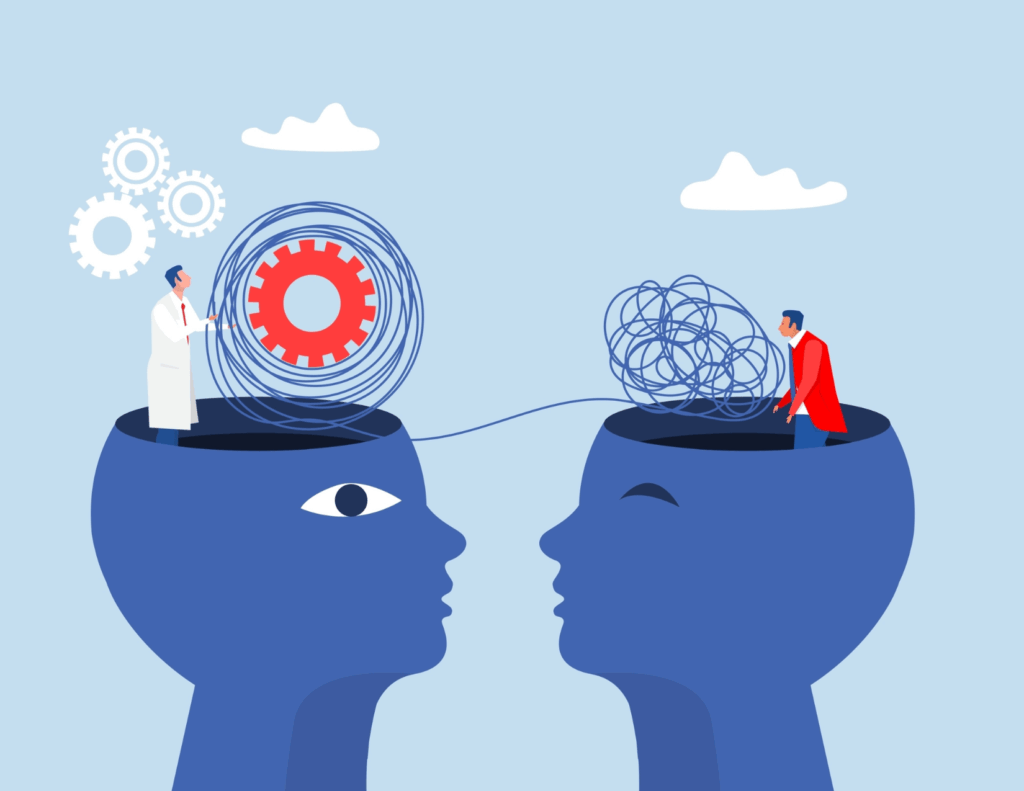
Curious about how basic psychology concepts can enhance your everyday life? This article dives into core psychological principles and demonstrates their practical applications, providing insights into psychology basics and understanding psychology in everyday life. Learn how psychology can help you improve communication, manage stress, and achieve personal growth.
Key Takeaways
- Psychology is the scientific study of the mind and behavior, originating in ancient Greece and formalized in 1879, with a focus on mental health and personal growth.
- Understanding psychology basics equips individuals with essential knowledge to recognize mental health issues, improve well-being, and enhance interpersonal relationships.
- Psychology’s goals include describing, explaining, predicting, and changing behavior, with various branches and subfields such as clinical, developmental, and health psychology playing crucial roles in addressing human behavior.
What is Psychology?
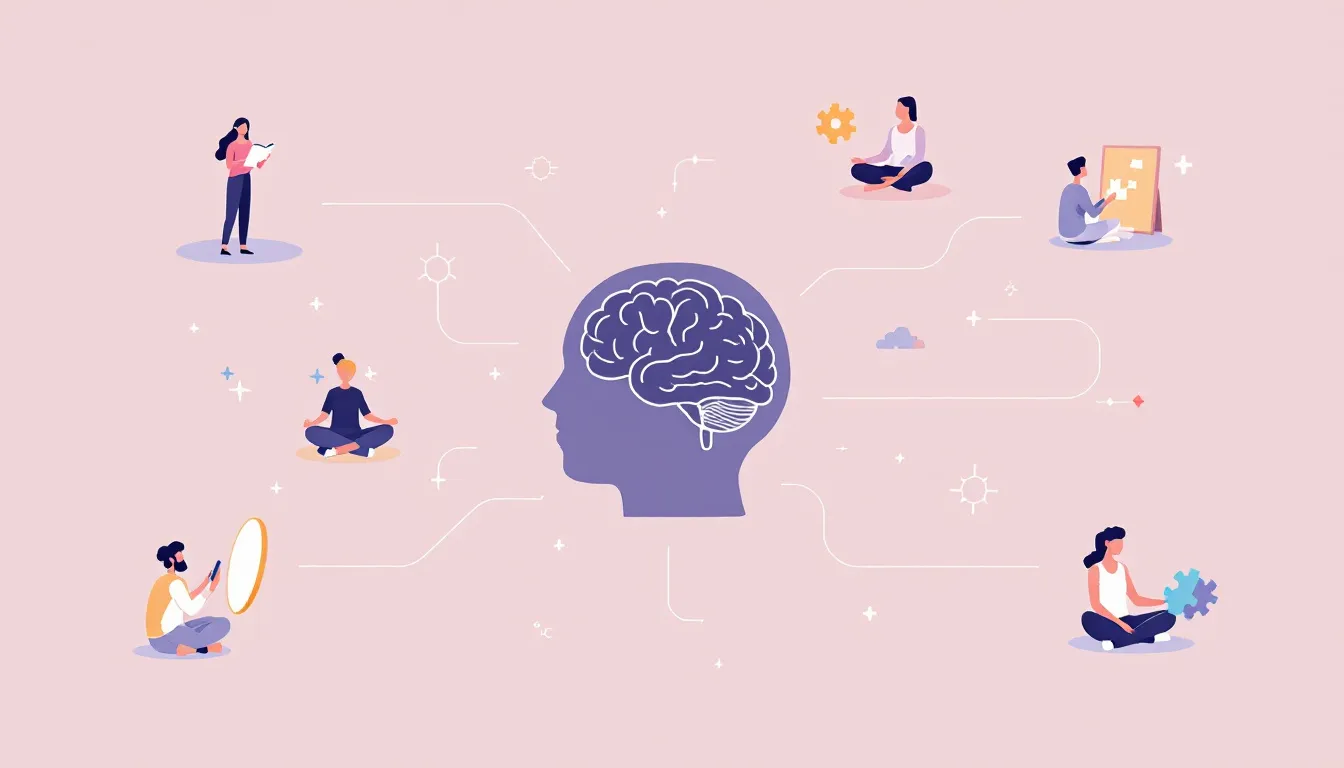
Psychology is fundamentally the scientific study of the mind. It also examines behavior in relation to mental processes. It encompasses both conscious and unconscious mind phenomena, allowing us to explore the depths of human experience. The term itself originates from the Greek word “psyche,” meaning mind or soul, and “logos,” meaning study, reflecting its profound roots in understanding the human condition. This field is often referred to as psychological science.
The history of psychology dates back to ancient Greece, where philosophers like Socrates, Plato, and Aristotle pondered questions about human consciousness and behavior. However, it wasn’t until Wilhelm Wundt established the first psychology laboratory in 1879 that psychology emerged as a formal scientific discipline. This pivotal moment marked the beginning of modern psychology, setting the stage for systematic exploration and empirical research.
Today, psychology plays a crucial role in promoting mental health and understanding human behavior. It has grown into a diverse field that addresses various aspects of human life, from mental processes and emotions to social interactions and personal growth. Studying psychology provides valuable insights into ourselves and others, improving our ability to navigate daily complexities.
What Are Psychology Basics?
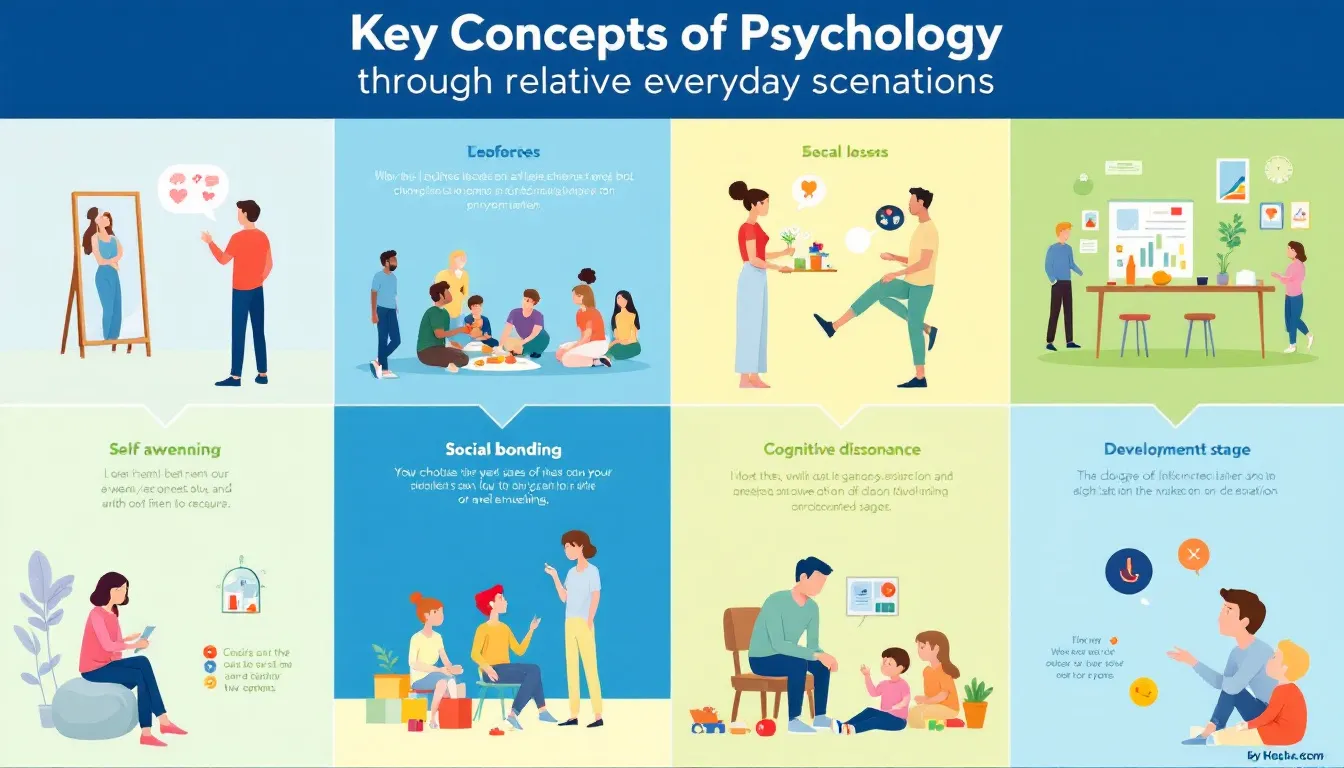
Psychology basics refer to the foundational concepts and principles that underpin the study of the mind and behavior. These basics are essential for anyone seeking to gain a basic understanding of human behavior, mental processes, and the factors influencing our actions and decisions. They provide a framework for exploring more advanced psychological theories and applications.
Understanding psychology basics is important because it equips individuals with the knowledge to recognize and address mental health issues, improve personal well-being, and enhance interpersonal relationships. Grasping these fundamental principles allows us to apply psychological insights to various aspects of life, including managing stress and improving communication skills.
It’s essential to distinguish between psychology basics and advanced psychology. While the basics provide a general understanding of key concepts and theories, advanced psychology delves deeper into specialized areas of research and practice. This distinction helps individuals build a solid foundation before exploring more complex topics and applications in the field.
Psychology Basics: Core Concepts and Theories
At the heart of psychology are core concepts and theories that help us understand the intricacies of human behavior and mental processes, including psychological processes. Cognition and memory, for example, are fundamental aspects of how we perceive, process, and retain information. These cognitive functions are crucial for learning, problem-solving, and decision-making.
Emotions and behavior are also central to psychology. Emotions influence our actions, relationships, and overall well-being, making them a key focus of psychological research. Understanding the interplay between emotions and behavior helps us navigate social interactions and manage our emotional responses more effectively.
Personality and individual differences further illustrate the complexity of human psychological traits. Various theories, such as psychoanalytic theory and humanistic psychology, offer insights into what shapes our personalities and how we differ from one another. These theories provide a comprehensive framework for exploring the diverse ways in which people think, feel, and behave.
Psychology Basics: How Patterns Build From Small to Large
Psychological patterns develop hierarchically, moving from small internal beliefs to broader and more entrenched ways of relating to the world. Understanding this progression helps clarify why some difficulties are situational and easier to change, while others are more pervasive and resistant. At the foundation are core beliefs, which can expand into attachment styles and, at their most entrenched level, personality disorders.
Core Beliefs (Schemas)
At the smallest level are core beliefs, often referred to as schemas. A schema is a deep, organizing belief about the self, others, or relationships that filters how experiences are interpreted.
For example, an abandonment schema reflects a core belief such as: “People I love will leave me.”
When this belief is triggered, it activates a predictable chain reaction:
-
Automatic thoughts: “I’m unlovable,” “They don’t really care,” “They’re pulling away,” “I care more than they do.”
-
Emotional responses: fear, loneliness, urgency, desperation.
-
Urges: to seek reassurance, pursue closeness, or prevent separation.
-
Behaviors: repeated texting, checking, clinging, accusations, overexplaining.
These behaviors often contribute to a self-fulfilling prophecy. For example, pursuing or pressuring a partner may lead them to withdraw, which then appears to confirm the original abandonment belief. In this way, core beliefs maintain themselves over time.
Attachment Styles
At the next level are attachment styles, which are patterns that emerge when multiple core beliefs combine with habitual coping behaviors. Attachment styles are primarily activated in close, emotionally significant relationships and are not pervasive across all areas of life.
For example, an anxious attachment style often includes:
-
Core beliefs such as abandonment, defectiveness or shame, and dependence.
-
Coping behaviors such as excessive reassurance-seeking, hypervigilance to signs of rejection, protest behaviors, blaming, or suspicion.
Attachment styles represent a relational pattern, not a personality disorder. They tend to show up most strongly in romantic relationships and can shift with insight, corrective experiences, and therapy.
Clinical Disorders (Previously Called Axis I)
Before personality disorders, it is useful to distinguish clinical disorders, previously referred to as Axis I disorders. These conditions also involve beliefs, emotional responses, and coping behaviors, but they are typically ego-dystonic, meaning they are experienced as distressing, unwanted, or inconsistent with how the person sees themselves.
Clinical disorders may involve maladaptive beliefs and coping strategies, but they do not necessarily include an insecure attachment style and do not define the person’s overall character or identity. Because these patterns are experienced as problems rather than as “who someone is,” they are generally more responsive to treatment.
Personality Disorders (Previously Called Axis II)
At the largest and most pervasive level are personality disorders, previously referred to as Axis II disorders. A personality disorder involves deeply ingrained core beliefs, attachment patterns, emotional responses, and behaviors that are rigid and present across multiple domains of life, including work, family, friendships, identity, and long-term goals.
Personality disorders are ego-syntonic, meaning the patterns feel consistent with the self and are experienced as “me” rather than as a problem to be removed. They always involve an insecure attachment style and are more entrenched than clinical disorders because they organize personality functioning as a whole.
Because these patterns are longstanding, inflexible, and characterological, they are generally more difficult to treat than individual schemas, insecure attachment styles, or clinical disorders. Change is possible, but it typically requires longer-term, structured therapeutic work.
Visual Summary: From Small to Large Psychological Patterns
| Level | Description | Scope |
|---|---|---|
| Core beliefs (schemas) | Deep beliefs that filter perception and trigger automatic thoughts, emotions, urges, and behaviors | Internal experience |
| Attachment styles | Clusters of core beliefs and coping behaviors activated in close relationships | Relationship domain |
| Clinical disorders (formerly Axis I) | Ego-dystonic conditions involving maladaptive beliefs and coping, not character-defining. These include anxiety, depression, OCD and others. | Situational / symptomatic |
| Personality disorders (formerly Axis II) | Ego-syntonic, pervasive patterns involving insecure attachment and identity. These include NPD, BPD, OCPD, and others. | All domains of life |
In summary, psychological difficulties often begin with specific core beliefs, expand into patterned ways of relating in close relationships, and, when deeply entrenched and ego-syntonic, shape broader personality functioning.
The Goals of Psychology

Psychology aims to describe and explain behavior and mental processes. It also seeks to predict and change these aspects effectively. These goals guide psychological research and practice, helping us understand and address various aspects of human behavior.
Each goal plays a crucial role in advancing our knowledge and improving mental health outcomes.
Describe
One of the foundational goals of psychology is to describe behavior and cognition accurately. This involves systematically observing and documenting observable behaviors to gather data that can provide insights into how individuals act and react in different situations. For instance, Pavlov’s experiments with dogs famously described their responses to stimuli, laying the groundwork for classical conditioning theory.
Observational methods play a critical role in describing behavior. Systematic observation and recording of behaviors enable psychologists to gather valuable data, building a comprehensive understanding of various psychological phenomena. This data serves as the basis for further research and theoretical development.
Explain
Once behaviors are described, the next goal is to explain why these behaviors occur. Psychologists create theories that provide a framework for understanding the underlying causes of behaviors. These theories are based on general laws of behavior derived from empirical research, offering explanations that can be tested and refined over time.
For example, cognitive psychology explores how mental processes like perception and memory influence behavior. Understanding these processes allows psychologists to explain certain behaviors and develop interventions for issues like cognitive biases and memory lapses.
Predict
Predicting behavior is another crucial goal of experimental psychology. By using empirical research findings, psychologists aim to forecast future behaviors based on observed patterns and relationships. For instance, classical conditioning can predict that associating a negative outcome with a stimulus may lead to phobia or aversion.
However, predictions in psychology are not always perfect. When a prediction is not confirmed, it indicates that the underlying explanation might need to be revised. This iterative process of prediction, testing, and revision is essential for refining psychological theories and improving their accuracy.
Change
The ultimate goal of psychology is to change behavior through effective interventions. After describing, explaining, and predicting behaviors, psychologists develop strategies to modify or control these behaviors to improve mental health and well-being. For example, systematic desensitization is an intervention used to treat anxiety disorders by gradually exposing individuals to anxiety-provoking stimuli in a controlled manner.
Implementing these interventions aims to foster personal growth and enhance quality of life. This goal underscores the practical applications of psychology in addressing mental health issues and promoting positive behavioral changes.
Psychology Basics Across Major Branches of Psychology
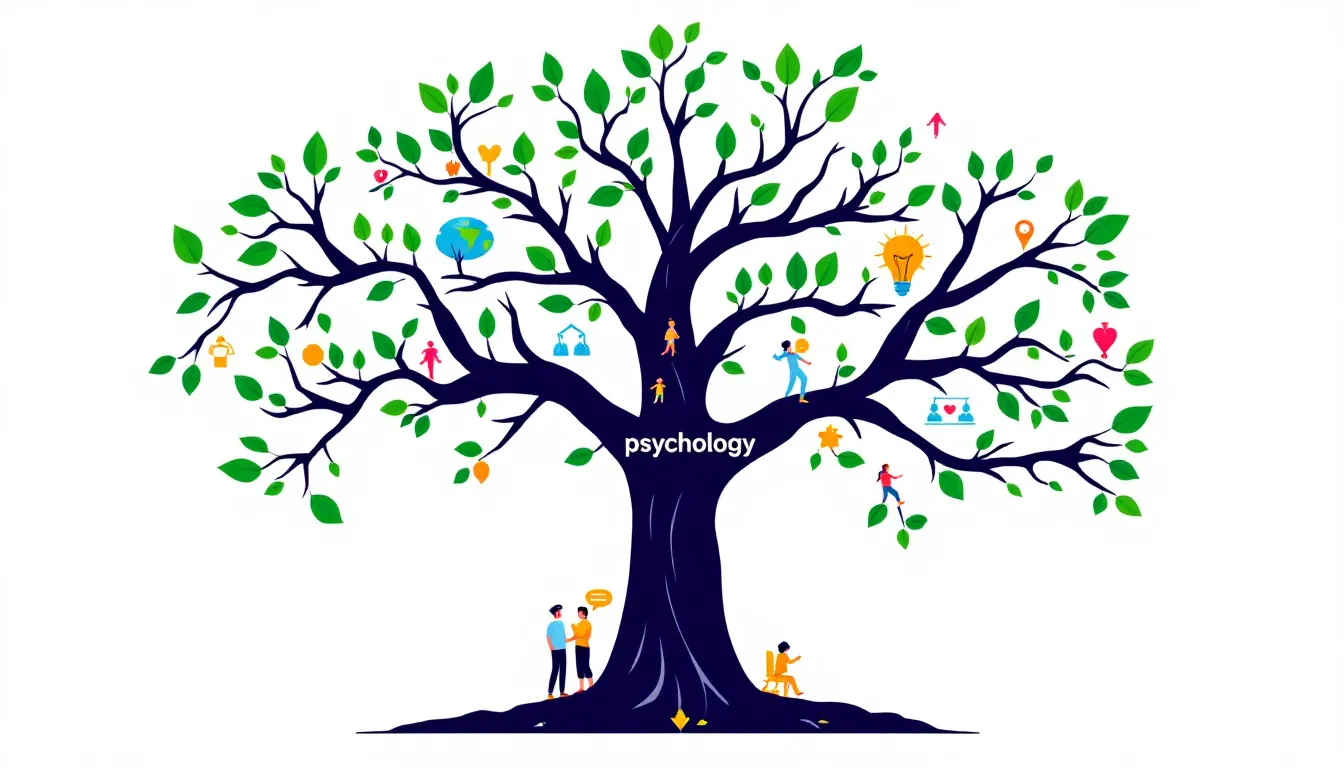
Psychology is a diverse field with several major branches, each offering unique perspectives on human behavior and mental processes. Key areas include behavioral psychology, cognitive psychology, humanistic psychology, clinical psychology, social psychology, developmental psychology, and positive psychology.
Each branch provides distinct insights and applications, from understanding learning and memory to promoting well-being and treating mental health challenges. In the sections that follow, we’ll take a closer look at some of these branches—such as behavioral, cognitive, clinical, social, developmental, and positive psychology—to explore how they shape our understanding of the mind and its impact on everyday life.
Behavioral Psychology Perspective
The behavioral perspective emphasizes observable behaviors and interactions with the environment, often downplaying internal processes such as thoughts and emotions. This approach operates on the principle that all animal behavior is learned through conditioning, which can be modified by manipulating environmental stimuli.
Classical conditioning, where a neutral stimulus is paired with a naturally occurring stimulus, and operant conditioning, which involves reinforcement or punishment to shape behavior, are key concepts within the behavioral perspective. These principles have practical applications in fields such as education, where techniques like positive reinforcement can enhance student engagement and learning.
However, critics argue that the behavioral perspective neglects free will and the complexities of human emotions, reducing individuals to mere responses to environmental stimuli. Despite these criticisms, the behavioral approach remains influential in understanding and modifying behavior.
Cognitive Psychology Perspective
Cognitive psychology investigates how people perceive, think, and remember information. This perspective focuses on internal mental processes that influence how we understand and interact with the world. For instance, cognitive psychologists explore how mental processes like thinking, memory, and perception affect behavior and decision-making.
Research in cognitive psychology has led to significant advancements in understanding various cognitive functions, including problem-solving, language processing, and memory retention. These insights have practical applications in fields such as education, technology, and mental health treatment, where understanding cognitive processes can enhance learning outcomes and therapeutic interventions.
Cognitive processes are often likened to the operations of a computer, focusing on data processing, storage, and retrieval. This analogy helps simplify complex mental functions and provides a framework for developing strategies to improve cognitive performance and address cognitive deficits.
Humanistic Psychology Perspective
The humanistic perspective in psychology emphasizes the inherent goodness of human beings and the importance of free will and personal growth, as well as the complexities of the human mind. Key figures associated with this perspective, such as Carl Rogers and Abraham Maslow, have contributed significantly to our understanding of human motivation and potential.
Self-actualization, a central theme of the humanistic perspective, represents the realization of one’s potential and personal growth. This concept underscores the importance of fulfilling one’s innate capabilities and striving for personal excellence. Humanistic psychology posits that individuals are driven by a desire for self-improvement and peak experiences.
Abraham Maslow’s hierarchy of needs illustrates how human motivation is structured, from basic physiological needs to higher-level needs like self-actualization. This model helps explain the different stages of personal growth and the factors that motivate behavior at each level.
Social Psychology Perspective
Social psychology examines how social behavior and interactions influence individual thoughts, feelings, and actions. Social psychologists study the impact of group dynamics, social norms, and cultural contexts on human behavior. This subfield explores topics such as conformity, persuasion, prejudice, and interpersonal relationships, providing valuable insights into how people relate to one another in everyday life.
Social psychologists often collaborate with other mental health professionals to develop interventions that promote positive social behavior and mental health awareness. Their research also informs psychological services in various settings, including schools and community organizations, helping to address social influences on mental health and well-being.
By understanding social behavior, social psychologists contribute to broader efforts within contemporary psychology to improve individual and societal outcomes through evidence-based practices.
Subfields of Psychology
Psychology encompasses a wide range of subfields, each focusing on different aspects of human behavior and mental processes. These subfields include:
- Clinical psychology
- Developmental psychology
- Health psychology
- Among others.
Each subfield contributes to our understanding of human behavior and offers unique insights and applications.
Clinical Psychology
Clinical psychology focuses on diagnosing and treating mental health conditions and mental illness. Clinical psychologists assess and address a wide range of mental health issues using various therapeutic techniques. They work with individuals of all ages and address severe mental health conditions, such as depression, anxiety, and schizophrenia.
Clinical psychologists typically work in private practice, hospitals, schools, and community mental health centers. They hold doctoral degrees and use psychotherapy (talk therapy) as a primary treatment for mental health conditions. While they do not prescribe medications, a clinical psychologist often collaborates with psychiatrists and other healthcare providers to ensure comprehensive clinical practice.
Common therapeutic techniques used by clinical psychologists include cognitive-behavioral therapy (CBT), which aims to alter negative thought patterns to improve emotional well-being. By addressing the biological, psychological, and social factors that contribute to mental disorders, clinical psychologists help individuals manage chronic conditions and improve their overall quality of life.
Developmental Psychology
Developmental psychology explores human growth and change throughout life, from infancy to old age. This subfield examines various aspects of development, including cognitive, emotional, and social changes that occur at different life stages. Developmental psychologists study these changes to understand how individuals evolve and adapt over time, including insights from child psychology.
Environmental factors play a significant role in influencing development. For example, a child’s upbringing, social interactions, and educational experiences can profoundly impact their cognitive and emotional development. By understanding these influences, developmental psychologists can develop strategies to support healthy development and address developmental challenges.
The insights gained from developmental psychology are crucial for understanding child development, aging processes, and the factors that promote human development, personal growth, and well-being throughout life. This knowledge helps inform practices in education, healthcare, and social policy, ultimately contributing to better outcomes for individuals and communities.
Health Psychology
Health psychology focuses on the interplay between psychological factors and physical health. This subfield aims to understand how behaviors, thoughts, and emotions influence physical health and well-being. Health psychologists work to promote healthy behaviors, prevent illness, and improve health outcomes.
Psychological techniques such as mindfulness practices, including meditation and deep breathing, have been shown to effectively reduce stress levels and enhance emotional resilience. Cognitive-behavioral techniques are also utilized to help individuals develop coping strategies for managing stress and improving mental health, thereby alleviating mental distress.
Managing stress is crucial for maintaining both mental and physical health. Incorporating stress-reducing techniques into daily routines enhances overall well-being and resilience against mental health issues. Health psychology provides valuable tools and strategies to manage mental health conditions and achieve a balanced and healthy lifestyle.
Everyday Applications of Psychology Basics
Psychology has numerous practical applications that can enhance everyday life. By understanding and applying psychological principles, individuals can improve their decision-making, communication skills, and overall quality of life.
These applications are relevant in various contexts, from personal relationships to professional settings.
Enhancing Communication Skills
Effective communication is essential for building strong relationships and navigating social interactions. Active listening, a psychological technique, fosters deeper understanding and effective communication between individuals. Active listening, which involves fully engaging in conversations and providing feedback, helps build trust and rapport.
Understanding nonverbal cues, such as body language and facial expressions, can significantly improve interactions and foster better relationships. Nonverbal cues often convey emotions and intentions more effectively than words, making them a critical component of effective communication.
Enhancing communication skills through active listening and awareness of nonverbal cues helps cultivate stronger interpersonal relationships and improve personal and professional lives. These skills contribute to personal growth and better conflict resolution.
Managing Stress
Managing stress is crucial for maintaining mental health and overall well-being. Various coping techniques, such as deep breathing, meditation, and physical exercise, can help individuals manage stress effectively. These techniques promote relaxation and reduce the physiological effects of stress on the body.
Engaging in hobbies and social activities can greatly enhance mental health and resilience against stress. Activities that bring joy and fulfillment provide a sense of purpose and help buffer against the negative effects of stress. Social support from friends and family also plays a vital role in stress management.
Incorporating these stress-reducing techniques into daily routines can lead to improved coping skills and better mental well-being. Health psychology provides valuable strategies for managing stress and promoting a balanced lifestyle.
Improving Learning and Education
Psychology offers valuable insights into improving learning and educational outcomes. Cognitive psychology studies brain function. It also examines how people think, learn, and solve problems. This research has various applications. It is relevant in the fields of education, technology, and mental health treatment.
Effective learning techniques, such as chunking, help break down information into manageable parts, optimizing learning outcomes. Spaced repetition, which involves reviewing material at increasing intervals, enhances retention and understanding of the material. These techniques are particularly useful in educational settings.
Incorporating active learning techniques, such as discussion and problem-solving, can significantly enhance educational outcomes. Engaging students in the learning process promotes deeper understanding and long-term retention. Understanding cognitive techniques is essential for optimizing learning strategies in educational contexts.
Research Methods in Psychology
Psychology distinguishes itself from other fields by employing scientific methods to ensure reliability and validity in scientific research. These methods include controlled experiments, longitudinal studies, and observational techniques, which help gather and analyze data on human behavior and mental processes.
Observational studies include:
- Naturalistic observation: allows psychologists to collect data in natural settings, providing valuable insights into behavior.
- Case studies: offer in-depth insights into individual behaviors and experiences over time.
- Longitudinal studies: track a population over time without manipulating variables, enabling researchers to observe changes and developments.
Ethical considerations in psychological research are paramount. Key principles include:
- Informed consent
- Confidentiality
- Managing potential biases during data collection These principles help protect research subjects and maintain the integrity of scientific investigation.
Career Paths in Psychology
A career in psychology typically requires extensive education and training. Most psychologists hold a doctoral degree (PhD or PsyD), which is essential for advanced practice in the field. This rigorous training prepares psychologists to conduct research, provide therapy, and contribute to various applied psychology fields.
Counselors, on the other hand, often hold a master’s degree in a mental health-related field. They provide support and guidance to individuals dealing with various life challenges, such as stress, relationship issues, and mental health problems. Counseling psychologists work in diverse settings, including schools, private practices, and community organizations.
Psychologists work in various roles and settings, including clinical psychology, developmental psychology, health psychology, and more. Continuing education and specialization in different subfields allow psychologists to stay current with advancements in the field and provide the best possible care to their clients.
The Future of Psychology
The future of psychology is closely tied to advancements in technology and digital psychology. Emerging technologies, such as virtual reality and artificial intelligence, are transforming how psychological research is conducted and how mental health services are delivered. These innovations offer new opportunities for enhancing treatment and accessibility.
Neuroscience is also playing an increasingly significant role in advancing psychological research. Understanding the brain’s structure and function allows psychologists to develop more effective interventions for mental health conditions and gain deeper insights into the biological underpinnings of behavior.
The role of psychology in society is evolving as well. As awareness of mental health issues grows, psychology will continue to play a critical role in promoting mental health, addressing mental disorders, and enhancing overall well-being. The integration of psychological principles into various aspects of daily life will further highlight the importance of this field.
Effective Clinical Psychology Services at Bay Area CBT Center
At Bay Area CBT Center, we provide in person and online psychological services in California, giving clients flexible access to evidence-based care. Our team includes highly trained clinical psychologists who work with individuals, couples, and families to address a wide range of mental health problems and mental disorders. Whether you’re looking for psychologists in San Francisco, a psychologist in San Diego, a psychologist in Los Angeles, or a psychologist in Oakland, we offer specialized care tailored to your needs.
We offer individual therapy, couples counseling, family therapy, and group therapy, as well as fully customized mental health retreats. A counseling psychologist or clinical specialist can help with the management mental health conditions, supporting clients through challenges like anxiety, depression, trauma, and relationship struggles.
A psychologist typically helps by examining psychological processes underlying thoughts, behaviors, and emotions. At Bay Area CBT Center, our clinical psychologists use this expertise to reduce mental distress, improve relationships, and strengthen coping skills. When a psychologist explore these underlying dynamics, clients gain insights that foster lasting change and resilience.
Our focus is on providing effective, compassionate care that addresses both immediate mental health problems and long-term growth. By combining research-backed methods with individualized support, our clinicians help you achieve meaningful, sustainable improvements in well-being.
Summary
Psychology is a multifaceted field that offers valuable insights into the human mind and behavior. By understanding the basics of psychology, we can enhance our mental health, improve our relationships, and navigate the complexities of daily life with greater ease. The core concepts and theories of psychology provide a foundation for exploring various branches and subfields, each contributing unique perspectives and applications.
From clinical psychology to developmental psychology and health psychology, the diverse subfields of psychology address different aspects of human behavior and mental processes. By applying psychological principles, we can improve communication skills, manage stress, and optimize learning and education. These everyday applications demonstrate the practical relevance of psychology in enhancing our quality of life.
As we look to the future, advancements in technology and neuroscience will continue to shape the field of psychology, offering new opportunities for research and treatment. The ongoing integration of psychology into various aspects of society underscores its importance in promoting mental health and well-being. By embracing the principles of psychology, we can unlock our potential and lead more fulfilling lives.