Parasocial Relationships: When Online Connection Starts to Feel Real

You open an app, a creator's latest post lands, and something clicks. Their humor fits. Their story feels familiar. You may never exchange a word, and the connection still feels real. That feeling has a name. A parasocial relationship is a one-sided bond with a media figure who does not know you. Naming it can change how you use a screen, and how you show up for the people actually next to you.
Key Takeaways
To define parasocial: it is a one-sided emotional bond with a celebrity, creator, streamer, podcaster, or AI character who does not know you.
Enjoying someone's work is not the same thing. The parasocial meaning shows up when you feel loyalty, protectiveness, or romance toward a person who cannot reciprocate.
These bonds are common and not automatically a problem. They become a concern when they replace friendships, a partnership, sleep, or the rest of your life.
The term comes from Horton and Wohl in 1956. Social platforms made the same pattern faster and harder to notice.
If the fixation starts to look like limerence, or if anxiety and loneliness are driving it, therapy can help you sort what the bond is doing for you.
What a Parasocial Relationship Is
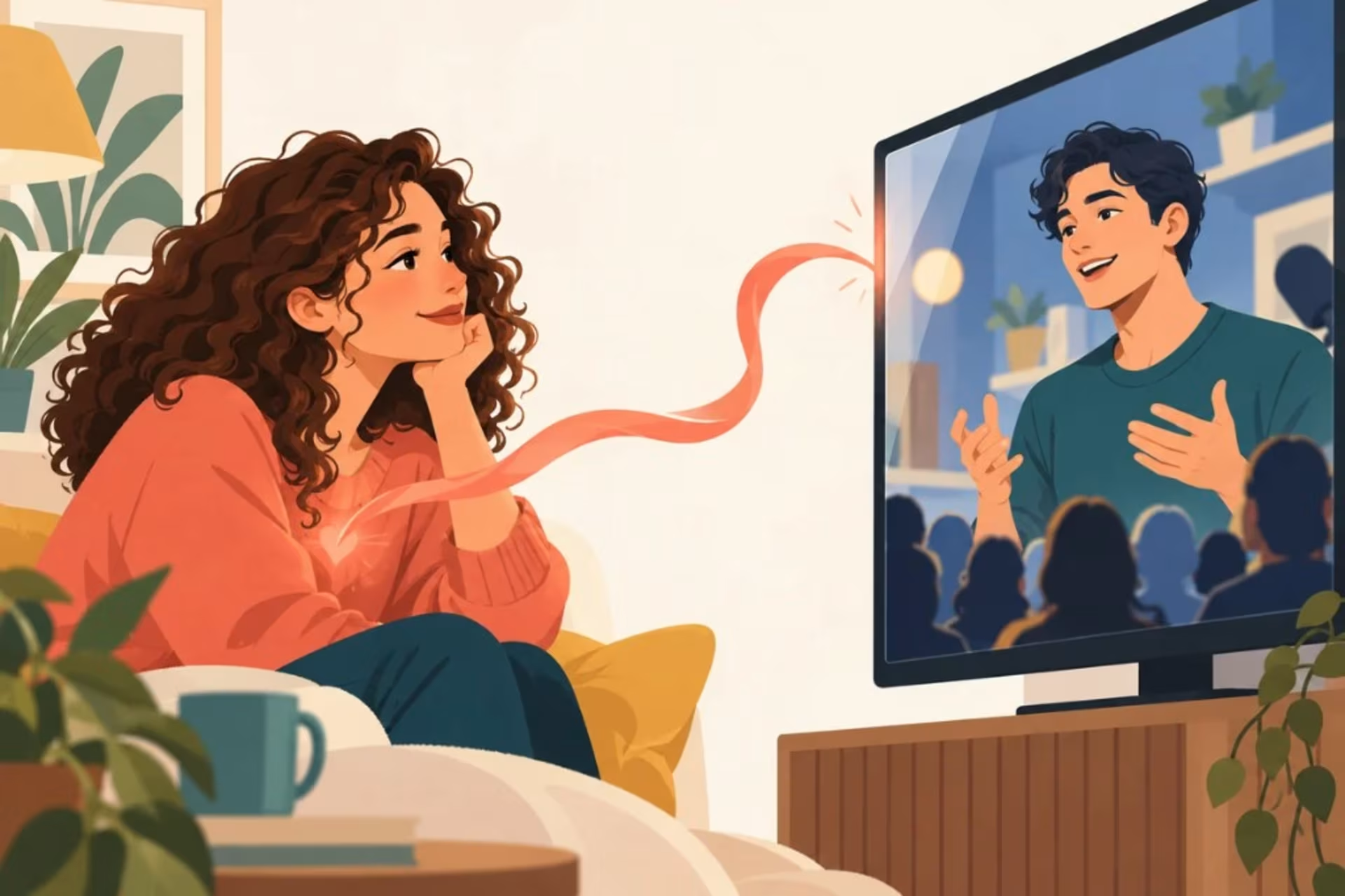
A parasocial relationship is a one-sided emotional bond between you and a public figure. The other person does not know you exist. There is no mutual support, and the bond can still feel like a friendship, or like a crush.
The care flows one way.
Personal details the person shares in public create a sense of closeness.
Repeated exposure makes them feel familiar.
The bond can stay light. It becomes a problem when it starts replacing people who can actually respond to you.
We see this pattern in clients dealing with anxiety, depression, loneliness, and relationship strain. The first step is telling enjoyment apart from a bond that has started to run the day.
From 1956 to a Constant Feed
Feeling close to someone on a screen is not new. What changed is the scale. Donald Horton and Richard Wohl coined the term in 1956 for the bond television viewers formed with hosts who spoke straight into the camera, as if the conversation were personal.
Radio hosts already drew that kind of loyalty. Television added a face, eye contact, and gesture.
Fan clubs, magazines, and reality television let people follow a life across years.
YouTube and blogs put creators in their own rooms, talking as if you were sitting there.
Instagram, Twitch, and TikTok made the feed continuous. A push notification can pull you back in at any hour.
Chatbots added a new version: a companion that answers you by name and never leaves.
Each shift made the bond easier to form and harder to notice. Entertainment and dependence can look the same from the inside.
A Moment of Connection, or an Ongoing Bond
People use the two phrases as if they were the same. They are not.
A parasocial interaction is the feeling during the show or the stream. You laugh with a host. You nod at a story. You close the app and the moment fades.
A parasocial relationship lasts between those moments. You think about the person off-screen. You worry when they go quiet. You feel loyal, or slighted, when their work changes. Researchers separate the in-the-moment feeling from the lasting bond because the lasting one is what starts to shape mood, time, and self-esteem. I will not quote a single correlation as if it settled the question. The useful distinction is simpler: a reaction during an episode is not the same as a relationship you carry all week.
How Feeds Make the Bond Stronger
A 1950s broadcast ended. A feed does not.
Stories, vlogs, and streams show ordinary life: breakfast, a workout, a grocery run. That used to be reserved for friends.
Comments, likes, and live chat feel like a reply, even when almost no follower gets one.
The feed keeps serving the creator who feels intimate, because that is what holds attention.
A person in Oakland can feel closer to a creator than to a neighbor, because the creator's content is built to land.
Hours can pass in that loop without it registering as anything unusual.
What It Looks Like in a Fandom

Taylor Swift's Eras Tour is a clear recent example. Long stories from the stage, lyrics that feel addressed to one listener, and surprise releases can make a fan feel personally understood. She does not know that fan. The feeling can still be strong.
K-pop fandoms built a similar closeness through daily video, birthday messages, and behind-the-scenes clips. Fan edits keep a persona in the feed between official posts. Streamers and podcasters do the same thing when they share a breakup, a family change, or a mental health stretch with a huge audience. The person becomes a fixture. Their news can crowd out news about actual friends.
Why the Bond Feels Real
This is not a glitch. Brains track faces, voices, and stories. A laugh on a screen can land in the same system as a laugh across a table. The bond is one-sided. The feeling is still a feeling.
Safety. For someone with social anxiety, there is no risk of saying the wrong thing.
A weekly episode or a daily upload can be the most reliable contact in a lonely stretch.
After a move or a breakup, the bond can stand in for company. That can help for a while, and it can also stall the next real relationship.
Shared fandom can also be a way into community, when it leads to people who can talk back.
Attachment, and When It Turns into Limerence
How you relate to a favorite creator often echoes how you relate to people. Someone with a steadier attachment style can enjoy the work and let it go. An anxious style can turn silence into rejection, and a hiatus into a breakup. An avoidant style can prefer the one-sided bond because nobody can leave in a way that requires a response.
Thoughts about a celebrity or creator can also become intrusive, the way limerence does: a fixation that organizes mood, sleep, and the rest of the day around a person who is not in the relationship. Limerence is not the same as liking someone's music. If the longing is for reciprocation that cannot happen, that article is the closer description. Therapy for the attachment pattern underneath tends to change both the online bond and the offline ones.
When It Helps, and When It Starts to Cost You

A parasocial bond can ease a lonely season, offer a role model who talks openly about depression or identity, or point someone toward a skill they then practice in real life. Talking about a favorite creator in therapy can also be a low-stakes way into needs that are hard to name.
The cost shows up when the bond becomes the main way you regulate emotion.
Time and care that could go to a friend, a partner, or family go to a feed instead.
Curated lives worsen comparison, including body image. Body image treatment is a different problem from fandom, and the feed is often where the two meet.
Some people stop dating, or stop asking for help, because the bond feels like enough.
Merch, subscriptions, and travel can outrun what you can afford.
A hiatus, a controversy, or a death can bring grief that surprises you, because the circuits involved are the ones used for real loss.
How It Meets Anxiety, Depression, and Trauma
Social anxiety makes a one-sided bond feel safer than a room. Depression can make passive watching easier than texting a friend. Cognitive behavioral therapy is one way to interrupt that loop. DBT builds another, for feelings that spike and then send you back to the app. Trauma can make a predictable creator feel safer than people who have been inconsistent. That stability is understandable. It is not a substitute for care. Trauma therapy, schema therapy, and EMDR look at the wound and at the digital habit in the same picture.
AI Companions
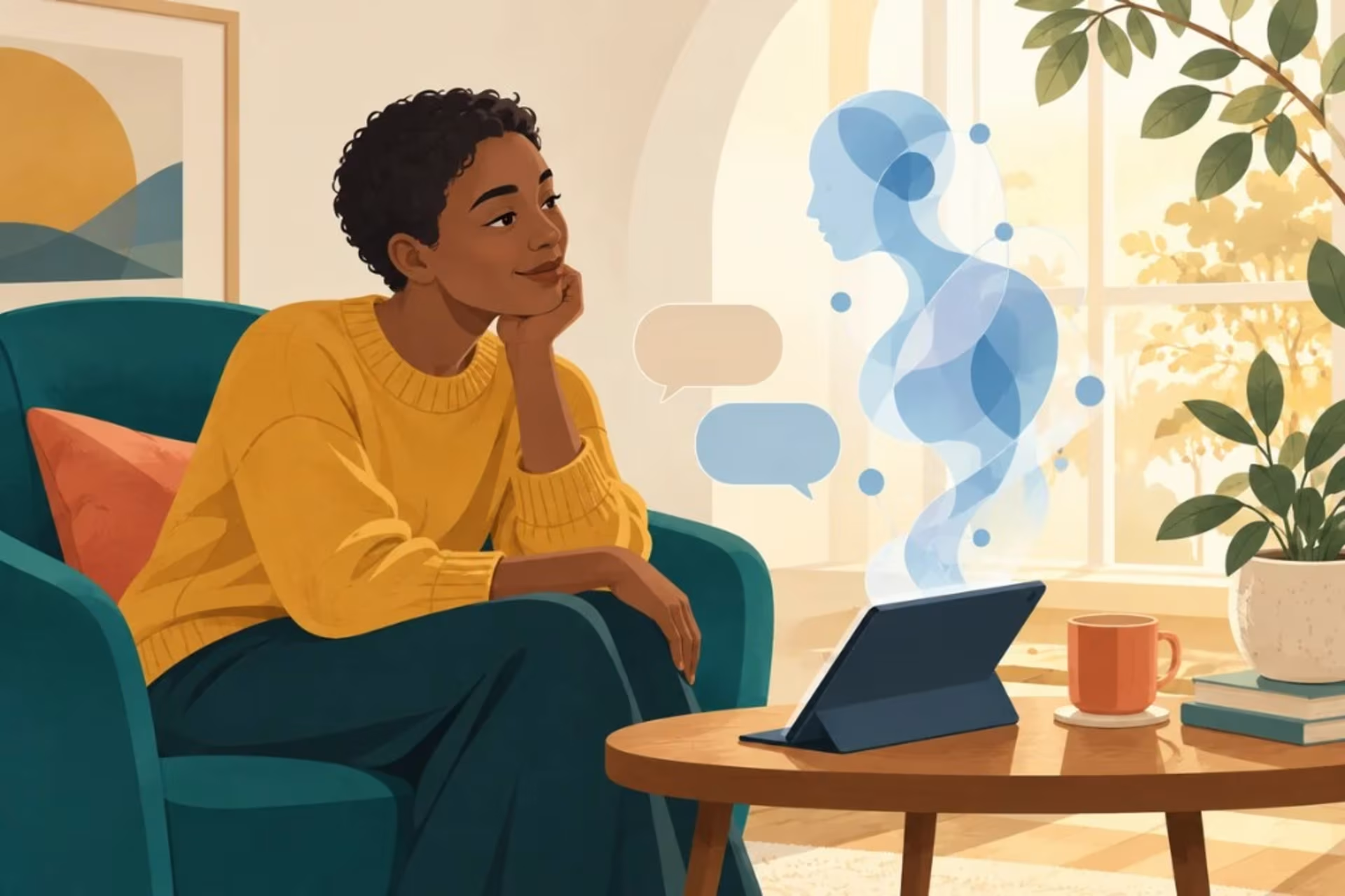
A chatbot that remembers your preferences and answers at any hour can feel closer than a celebrity, because it responds to you. That can be a low-stakes place to practice saying something hard, or a way through a bad night. The risk is mixing up a programmed reply with being known, and then expecting a partner to answer like software. The feelings can be subjectively real. The relationship is still one-sided. Therapy can look at where an AI companion fits without shaming you for using it.
A Short Self-Check

How much of the day goes to specific creators, compared with people who know your name?
Do your moods rise and fall mostly on the life of someone you have never met?
Have you canceled plans for a livestream or a fandom argument?
Do you feel jealous of other fans, or distressed when a comment goes unanswered?
Is this bond your main source of comfort?
Is it supporting your sleep, work, school, and relationships, or wearing them down?
Several yes answers are not a verdict. They mean the bond may have outgrown the job it was doing. Stronger signs include lost sleep, money you cannot afford, fantasies of a secret relationship with the creator, or trouble keeping friendships because the emotional energy is already spent. Harassment and trying to enter someone's private life are a different line. Treat the pattern as a signal of an unmet need, not as a personal failure.
Boundaries, and the Move Back to People

The aim is not to quit the internet. Set a time to check the feed, and leave the first hour of the morning and the last hour of the night alone. Unfollow accounts that spike comparison or checking. Remind yourself that you are seeing a curated slice, and that you are one of many viewers.
Then practice the smaller human version. A short conversation with a neighbor. A hobby group. A fan event that becomes an actual plan with someone who can answer. Awkwardness is part of the practice. Mindfulness-based therapy can help you notice the reach for the phone before it becomes the evening.
If a show ends, a creator goes quiet, or their values clash with yours, grief is a predictable response. Journaling, telling a friend, and muting the topic for a while are reasonable. So is asking what the bond was standing in for: safety, inspiration, or escape.
Partners, Parents, and the Rest of the House
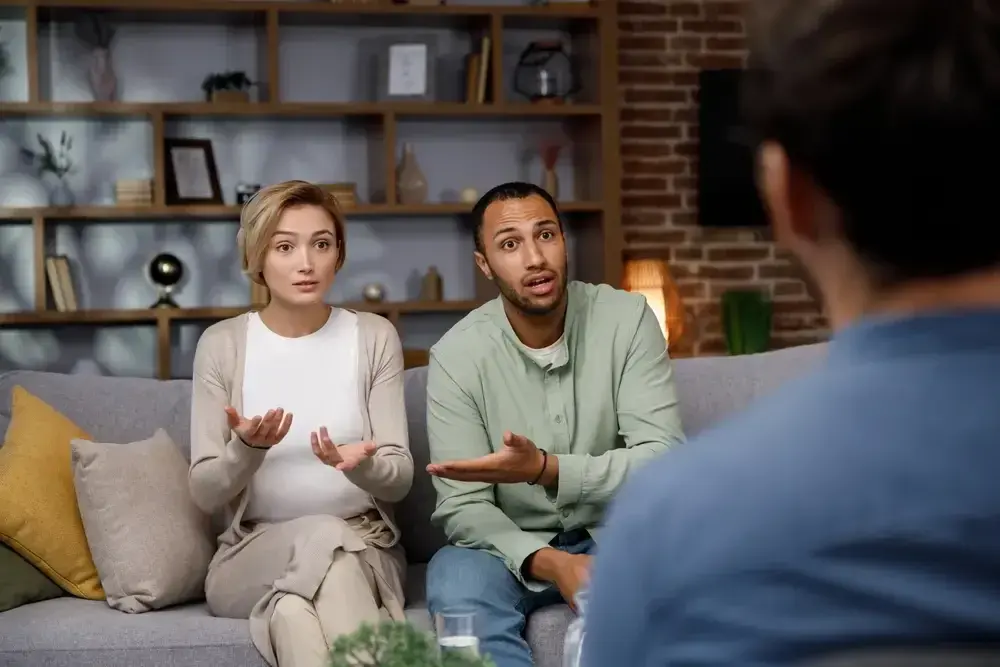
These habits do not stay on the phone. A partner can feel replaced when the time, attention, or money goes to a streamer. Parents can dismiss a teen's fandom, and a teen can use it to avoid the family. Couples therapy is a place to say that without shaming the interest. Family therapy can do the same when the tension is between a parent and an adolescent. Teen therapy helps when fandom is ordinary identity work and when it is covering isolation. The goal is not to confiscate the interest. It is to put it back in proportion to the relationships in the house.
Online educators can make therapy feel less strange. A podcast is not a treatment plan. When the feed becomes a reason to avoid care, that is the moment to look at it directly. Support groups are one way to practice being with people who can respond.
Where to Get Care

Bay Area CBT Center is a California practice. In-person care is at our offices through San Francisco therapy and Oakland therapy. Los Angeles therapy is online, with therapists matched to you. Online therapy across California covers the rest of the state. We use CBT, DBT, acceptance and commitment therapy, schema therapy, EMDR, and mindfulness, fitted to anxiety, depression, trauma, and the digital habits wrapped around them.
You can like a creator, stay in a fandom, and still want a life that is not organized around a person who cannot know you. If the bond is crowding that out, schedule a free consultation.
Frequently Asked Questions About Parasocial Relationships
<p>Parasocial describes a one-sided sense of relationship with a media figure or an AI character who does not know you. Enjoying their work is ordinary. The relationship piece is the ongoing loyalty, worry, or romantic feeling that continues when you are not watching.</p>
<p>No. They can offer company, a role model, or a way into a community. They become a problem when they replace sleep, money you need, or relationships with people who can respond to you.</p>
<p>Not always. Limerence is an intrusive romantic fixation organized around reciprocation, often with someone unavailable. A parasocial crush can stay light. It overlaps with limerence when the person's posts start running your mood and your day, and the longing is for a relationship that cannot be mutual.</p>
<p>Yes. A chatbot that answers you personally can feel closer than a celebrity. The feelings can be real. The bond is still one-sided. It helps as a supplement and starts to hurt when it replaces human intimacy or sets the standard for how a partner should respond.</p>
<p>Consider it if anxiety, low mood, or a trauma history is being managed mainly through a feed, if a partner or family member feels replaced, or if you cannot scale the checking back on your own. Care is available in San Francisco, Oakland, Los Angeles online, and across California by video.</p>