OCD Treatment
in San Francisco, CA
If you are searching for OCD therapy in San Francisco, you are in the right place. Our clinicians specialize in Exposure and Response Prevention and cognitive behavioral therapy for OCD — helping adults with intrusive thoughts, Pure O, contamination, checking, and related themes. Meet downtown or online anywhere in California.


the Bay




Bay Area CBT Center
Specialty OCD Therapy in San Francisco
OCD thrives on doubt, urgency, and the short-term relief of rituals. At Bay Area CBT Center, OCD treatment in San Francisco is built for that cycle — not for open-ended conversation that accidentally reassures the fear. We help you face uncertainty, interrupt compulsions, and reclaim the hours rituals have taken.
Whether you need an obsessive compulsive therapist in San Francisco for Pure O, taboo thoughts, or classic checking and washing, we start with a clear map of your triggers and a paced ERP plan. Care is available in our downtown office and by secure telehealth across California.
Recognizing the Pattern
When Therapy for OCD Can Help
OCD shows up differently for everyone. If these patterns sound familiar, specialty care can interrupt the loop before it takes more of your work, relationships, and rest.
Intrusive Thoughts
Unwanted, sticky thoughts, images, or urges that return again and again — even when you know they are irrational.
Compulsive Rituals
Feeling driven to wash, check, arrange, tap, or repeat actions to reduce anxiety or prevent harm.
Mental Compulsions
Silent rituals such as counting, praying, reviewing memories, or seeking certainty in your head to neutralize distress.
Need for Certainty
An overwhelming intolerance of uncertainty that fuels constant checking and reassurance-seeking.
Avoidance
Steering clear of people, places, objects, or topics that might trigger obsessions or rituals.
Time Lost to OCD
Hours each day spent on rituals, rumination, or mental reviewing that crowds out work and relationships.
Shame & Secrecy
Feeling embarrassed by your thoughts or rituals and hiding them from people closest to you.
Family Accommodation
Loved ones changing routines to help you avoid triggers — which often strengthens OCD over time.
Themes We See Often
Types of OCD We Treat
OCD is more than hand-washing. Treatments for OCD work best when they match your theme — so we tailor ERP and CBT to how your symptoms actually show up day to day.
Contamination OCD
Fear of germs, chemicals, illness, or “emotional contamination,” with washing, cleaning, or avoidance rituals.
Checking OCD
Repeated checking of locks, appliances, emails, or driving routes for fear of harm, mistakes, or responsibility.
Harm OCD
Intrusive thoughts about harming yourself or others — ego-dystonic fears treated carefully with ERP, not reassurance.
Sexual OCD / Taboo Thoughts
Unwanted sexual or taboo intrusive thoughts (including SO-OCD themes) that trigger mental rituals and avoidance.
Religious OCD / Scrupulosity
Fear of sin, blasphemy, or moral failure, with compulsive praying, confessing, or mental reviewing.
Relationship OCD (ROCD)
Obsessive doubt about your partner, feelings, or “the right person,” with constant analysis and reassurance-seeking.
Pure O (Purely Obsessional OCD)
Primarily mental compulsions — rumination, reviewing, neutralizing — with few visible rituals.
Symmetry, Ordering & Arranging
Need for things to look, feel, or be “just right,” with arranging, aligning, or repeating until it feels complete.
Just-Right / Perfectionism OCD
Perfectionistic standards and “not-just-right” experiences that drive repeating, rewriting, or delaying tasks.
Less Discussed Themes
Presentations People Often Miss
Many people only hear about washing and checking. Our OCD therapists in San Francisco also treat quieter patterns — mental rituals, postpartum onset, sensorimotor hyperawareness, and themes people are afraid to name out loud.



Counting OCD
Compulsive counting, lucky/unlucky numbers, or repeating actions a set number of times to prevent feared outcomes.
Health / Illness OCD
Obsessive health fears, body scanning, and medical reassurance-seeking beyond typical health anxiety.
Sensorimotor / Hyperawareness OCD
Fixation on breathing, blinking, swallowing, or other automatic bodily processes you cannot “un-notice.”
Magical Thinking OCD
Belief that thoughts or rituals can cause or prevent real-world events, fueling neutralizing behaviors.
Existential OCD
Obsessive rumination about reality, identity, death, or meaning that loops without resolution.
Postpartum OCD
Intrusive harm or contamination fears after childbirth, often with intense shame — highly treatable with ERP.
Responsibility / “Hit-and-Run” OCD
Fear of having caused harm without knowing it, driving endless checking, reviewing, or confession.
Emotional Contamination
Fear that people, places, or objects can “transfer” bad luck, identity, or emotional states.
Pedophilia OCD (POCD)
Unwanted, ego-dystonic intrusive thoughts involving children — a common OCD theme, not a desire; treated with specialized ERP.
Related Conditions
Obsessive-Compulsive Spectrum Conditions
We also treat closely related conditions that respond to specialized behavioral care — often alongside or in place of classic OCD protocols.
- Body dysmorphic disorder (BDD)
- Hoarding disorder
- Trichotillomania (hair-pulling)
- Excoriation (skin-picking) disorder
- Body-focused repetitive behaviors (BFRBs)
- Tourettic / tic-related OCD presentations






How Care Starts
What OCD Treatment Looks Like Here
First we clarify your obsession–compulsion cycle: what triggers the fear, what you do to feel safer, and what it costs you. Then we build a hierarchy — small, doable steps that teach your brain you can feel anxiety without performing the ritual.
Sessions stay collaborative and paced. You will practice between appointments, track what works, and adjust the plan as your confidence grows. The goal is lasting change — not white-knuckling forever.
Outcomes That Matter
What Treatment Can Help You Achieve
Our aim is not perfect certainty. It is a different relationship with doubt — so rituals lose their job and you can choose your day again.
- Identify obsessive thoughts without engaging or neutralizing them
- Tolerate anxiety and uncertainty without rituals
- Reduce and eliminate compulsive behaviors — physical and mental
- Stop reassurance-seeking from partners, friends, and the internet
- Reclaim hours previously lost to OCD each day
- Face feared situations through structured ERP
- Reduce shame around intrusive thoughts
- Live by your values — not by what OCD demands
Why Specialty Care Matters
Working With OCD Therapists Who Know the Disorder
Generic counseling often soothes anxiety with reassurance — and can strengthen OCD. Specialty clinicians design exposures, coach response prevention, and help loved ones stop accommodating rituals.



Our Approach
Care That Targets the OCD Cycle
Effective care requires specialized tools. Traditional talk therapy can make OCD worse by providing reassurance. We use gold-standard ERP and CBT designed for the obsessive-compulsive cycle — with room for ACT and mindfulness when they support your goals.
From contamination and checking to Pure O and postpartum OCD, we pace treatment so progress is sustainable. You leave sessions with concrete practices, not just insight.




Cognitive Behavioral Therapy
Cognitive Behavioral Therapy for OCD
When people ask how to treat OCD, research keeps pointing to the same answer: cognitive behavioral therapy for OCD , with Exposure and Response Prevention at the center. CBT helps you see the thoughts and beliefs that turn an intrusive image into an emergency — overestimating threat, needing certainty, and treating a thought as if it were a plan.
Treating OCD with cognitive behavioral therapy is practical and skills-based. In session you learn to identify the trigger, the interpretation that spikes anxiety, and the ritual that brings short-term relief. Between sessions you practice small exposures while resisting the compulsion — so your nervous system learns a new ending to the story.
ERP is the behavioral engine inside CBT for OCD. Want a deeper dive? Visit our dedicated page on ERP therapy.
Evidence-Based Options
Therapies We Offer for OCD
Research points to specific approaches that work. Your clinician draws from these to build a plan matched to your subtype and goals.
Exposure and Response Prevention (ERP)
The gold standard for OCD. Gradual exposure to triggers while resisting rituals — the core of lasting change. Learn more about ERP therapy.
Cognitive Behavioral Therapy (CBT) for OCD
CBT for OCD targets beliefs about threat, responsibility, and certainty so intrusive thoughts lose their urgency — and pairs tightly with ERP practice.
Acceptance and Commitment Therapy (ACT)
Change your relationship with intrusive thoughts — accept their presence while acting on your values, not OCD’s demands.
Habit Reversal Training (HRT)
Behavioral treatment for BFRBs such as hair-pulling (trichotillomania) and skin-picking (excoriation).
Comprehensive Behavioral (ComB) Model
Customized analysis of sensory, cognitive, and emotional triggers for body-focused repetitive behaviors.
Mindfulness-Based Cognitive Therapy
Observe obsessive thoughts as passing mental events rather than urgent facts that require immediate action.
Why Method Matters
Evidence-Based Treatments for OCD
Decades of studies show that CBT with ERP produces reliable outcomes for OCD — often more effective than medication alone, and stronger still when the two are combined thoughtfully. Our clinicians apply these protocols to your specific presentation, whether you need contamination exposures, checking hierarchies, or mental-compulsion work.
Specialty care understands how exposure retrains fear pathways and how response prevention stops the short-term relief that keeps rituals alive. That is the difference between talking about OCD and treating it.
What You Can Build
Personalized Care for Your Goals
We equip you with practical ERP and CBT tools you can use for life — a lasting change in how you relate to thoughts and uncertainty.

Individual Therapy
One-on-one ERP and CBT tailored to your specific obsessions and compulsions.

Family Support
Help loved ones support recovery without accommodating or enabling rituals.

Online Therapy
Telehealth lets you practice ERP where triggers often occur — at home — with the same expert care.
- Reduce Anxiety Lower baseline anxiety as rituals lose their grip.
- Stop Compulsions Break physical and mental ritual cycles.
- Reclaim Time Get back hours lost to OCD every day.
- Tolerate Uncertainty Live without needing absolute certainty.
- Improve Focus Return attention to work and relationships.
- Build Confidence Prove you can handle difficult emotions.
- Stop Avoidance Re-enter places and activities OCD blocked.
- Value-Driven Life Choose what you care about — not what OCD fears.
- Lasting Skills Lifelong ERP tools you can use on your own.
Where We Meet
San Francisco Office & Statewide Telehealth
Meet for OCD therapy in San Francisco at our Franklin Street office, or connect online from anywhere in California. Both formats deliver the same specialty ERP and CBT care.
San Francisco Office
45 Franklin St Suite #210
San Francisco, CA 94102
415-941-5373

Online Care
Online OCD Therapy Across California
You should not have to choose between specialty ERP and convenience. Secure video sessions deliver the same cognitive behavioral therapy for OCD you would receive in person.
Research shows online ERP can be as effective as face-to-face care. Whether you live in San Francisco or elsewhere in California, expert treatment is available on a schedule that fits Bay Area life.
Same Expert Clinicians
Your online therapist is the same vetted specialist you would see in person.
Flexible Scheduling
Morning, evening, and weekend slots that fit busy Bay Area schedules.
Secure & Private
HIPAA-compliant video sessions for confidential care.
All of California
Available statewide — from San Francisco and the Bay Area to Los Angeles and beyond.
Beyond Individual Therapy
Groups and Intensive Support
Recovery often works best with layered support. Alongside individual therapy, we offer groups and intensive options when weekly sessions are not enough.
- OCD Support Groups: Connect with others who understand OCD. Therapist-led groups offer a safe space to practice ERP skills and share progress.
- Intensive Outpatient Program (IOP): For symptoms that need more than weekly therapy, our virtual IOP offers structured, multi-day programming for rapid skill-building.



From Our Clinicians
Check out the books behind our approach
Our team wrote widely used ACT and mindfulness titles that shape how we treat OCD and intrusive thoughts — values, skills, and tools you can practice between sessions. Browse the books below, then book a free consult if you want that same approach one-on-one.
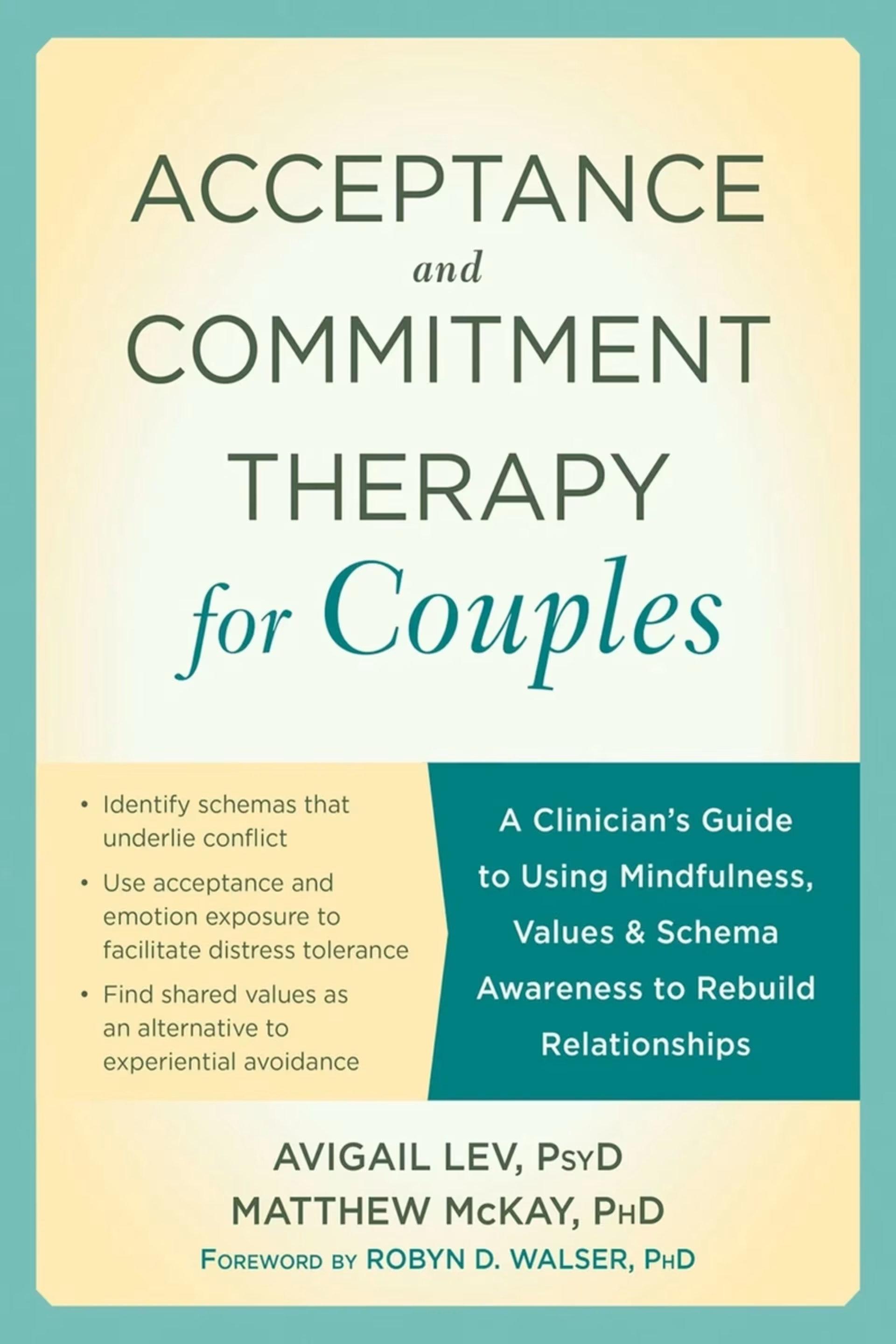
Acceptance and Commitment Therapy for Couples
ACT tools for values, willingness, and stuck patterns — the same framework we use in care for OCD and intrusive thoughts.
BUY ON AMAZON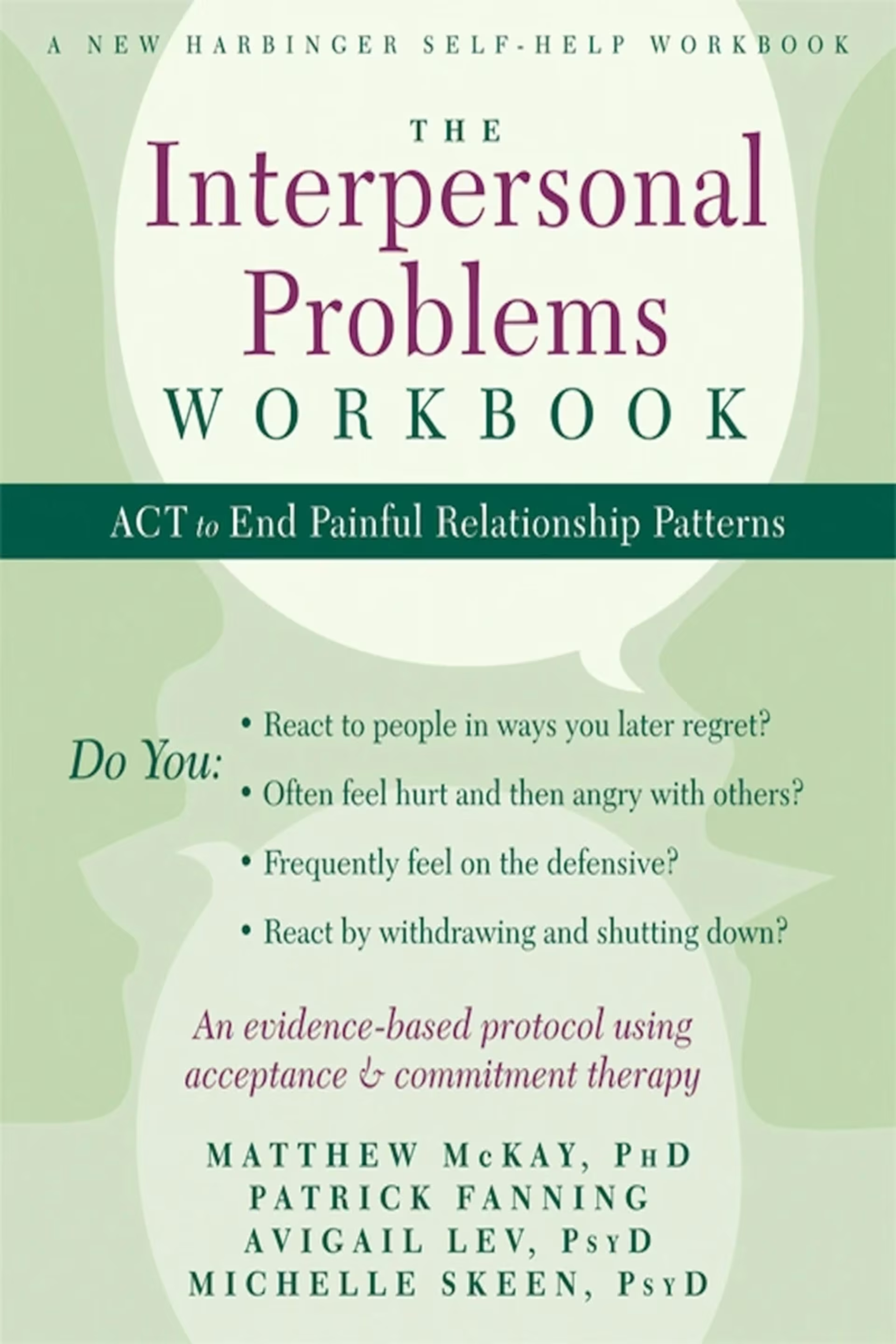
The Interpersonal Problems Workbook
A practical workbook of ACT skills you can use day to day — structured practice that supports lasting change.
BUY ON AMAZON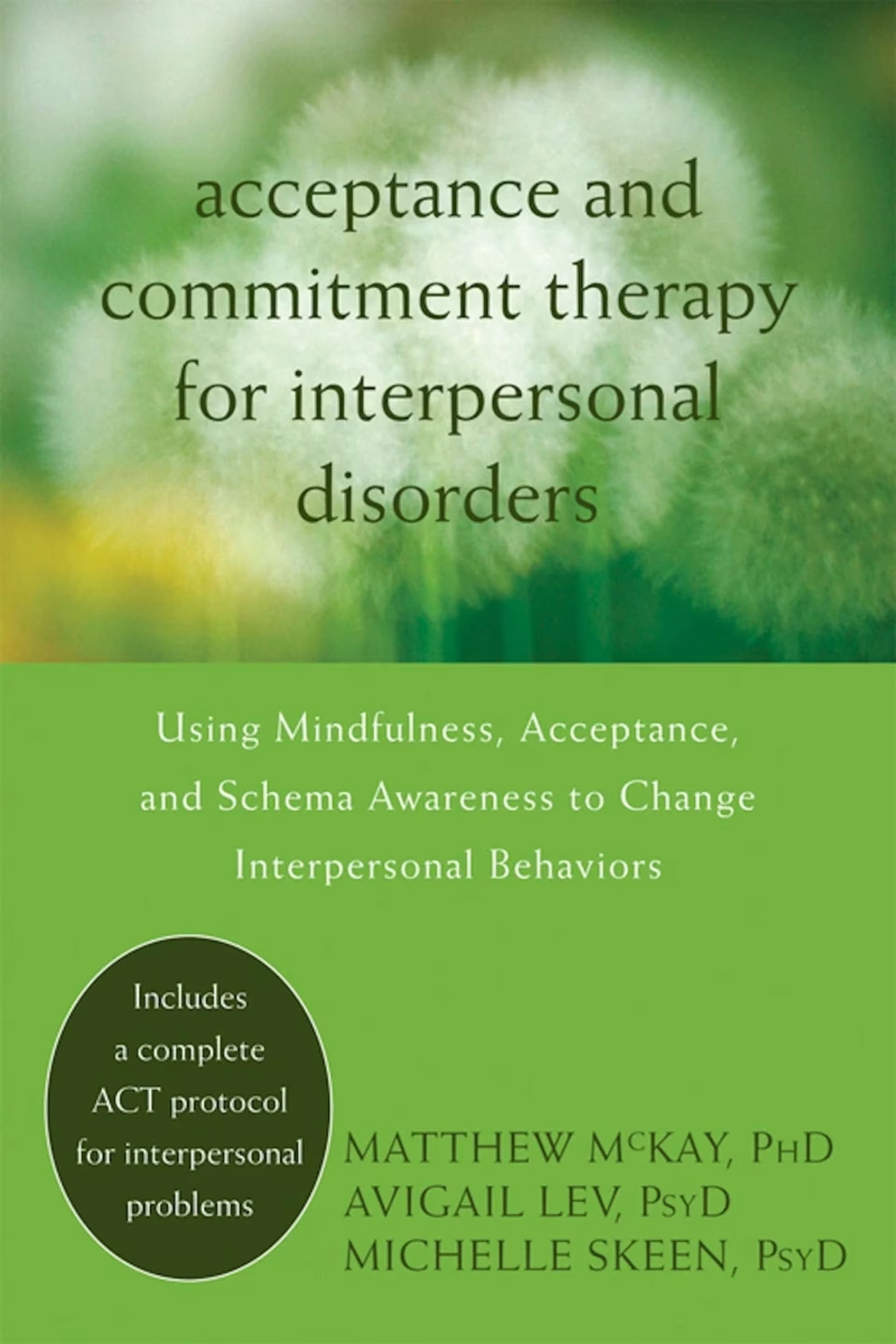
ACT for Interpersonal Problems
Clinical ACT guidance that pairs with the integrative, values-based care we bring into treatment for OCD and intrusive thoughts.
BUY ON AMAZONCommon Questions
Frequently Asked Questions
Answers about ERP, insurance, online sessions, and what specialty OCD care involves. Prefer to talk first? Book a free 20-minute appointment.
What is the most effective treatment for OCD?
The approach with the strongest research support is cognitive behavioral therapy for OCD that includes Exposure and Response Prevention (ERP). At Bay Area CBT Center, therapy for OCD focuses on facing triggers while learning not to perform rituals — so anxiety can fall without the compulsion. That same framework guides how we treat contamination fears, checking, Pure O, and other subtypes in San Francisco and by telehealth statewide.
How do I find OCD therapists in San Francisco who specialize in ERP?
Look for clinicians who specifically train in ERP — not only general talk therapy. Our OCD therapists in San Francisco design exposure hierarchies, coach response prevention, and help families stop accommodating rituals. A free 20-minute consult lets you meet an obsessive compulsive therapist in San Francisco on our team and confirm fit before you begin.
What does cognitive behavioral therapy for OCD look like in session?
Treating OCD with cognitive behavioral therapy usually means mapping your obsession–compulsion cycle, challenging beliefs that fuel urgency and certainty-seeking, and practicing ERP between sessions. You and your clinician build a step-by-step plan — not endless reassurance — so rituals lose their grip over time.
How do you treat obsessional thoughts and Pure O?
Obsessional thoughts treatment targets the mental rituals that keep Pure O going — reviewing, neutralizing, and silent checking — not just the content of the thought. We use ERP and CBT skills so you can notice intrusive thoughts without treating them as commands or truths that require action.
How to treat OCD if I have already tried therapy that did not help?
Many people try supportive counseling first and feel stuck because reassurance can strengthen OCD. Specialty treatments for OCD emphasize ERP and CBT protocols matched to your subtype. If past therapy felt like talking about anxiety without changing rituals, a structured ERP plan is often the missing piece.
Do you offer OCD therapy online as well as in San Francisco?
Yes. You can meet in our downtown San Francisco office or by secure video anywhere in California. Online ERP is often especially useful because you can practice exposures in the places triggers actually occur.
Do you treat all types of OCD?
Yes. We work with contamination, checking, harm themes, sexual or taboo intrusive thoughts, scrupulosity, relationship OCD, Pure O, symmetry and “just right” experiences, health OCD, sensorimotor OCD, postpartum OCD, and related spectrum concerns such as BDD, hoarding, trichotillomania, and skin-picking.
Do you take insurance?
Bay Area CBT Center is an out-of-network provider. We provide monthly superbills you can submit for potential reimbursement. Many clients with PPO plans receive meaningful reimbursement.
Not Sure Where to Start?
Take Our Free OCD Test
If you are wondering whether your intrusive thoughts and rituals fit an OCD pattern, our free OCD test can help you reflect on common signs. It is not a diagnosis — it is a starting point. When you are ready, book a consult and we will talk through what you noticed.

Ready to Start OCD Treatment in San Francisco?
You do not have to keep living inside the loop of doubt and rituals. Book a free consult, meet an OCD therapist who knows ERP, and take a first step toward getting your time back.