
Free self-care activities

Therapist-built · No account · Private to your device

Self-Care Activities

Self-care is not the bath. It is the set of things that reliably move your nervous system, your mood, or your behavior in a direction you chose.

Everything below is free, works in your browser, and was built by the therapists at Bay Area CBT Center — no signup, no email wall, nothing stored on our servers.

Young woman smiling at a sunlit table during a self-care moment

The collections

Self-care ideas you can actually use

Four libraries you can use without paying or signing up. Open a card, peek inside, then go through to the full hub.

Young man smiling while filling out a self-care worksheet18 worksheets

Mental Health Exercises

The deep end. Fillable, printable, yours to keep.

Eighteen worksheets drawn from CBT, schema therapy, ACT, somatic work, and couples therapy — the same ones we hand clients between sessions. Type straight into them, print them, or save a PDF. They save to your own device so you can come back next week.

What's inside

  • Trigger LogSlow down the moment between something happening and you reacting
  • Grounding & Orienting MenuTwelve techniques, rated before and after, to find your two
  • Window of ToleranceMap your own signs of too much and too little
  • Behavioral Activation LogFor when the motivation won't arrive until after you move
  • The Choice PointSort what you did into moves toward and moves away
  • Couples Values TrackerFor anyone stuck on whether to stay or go

…and 12 more, across schema therapy, CBT, ACT, somatic, and couples

Open the exercises

Young woman smiling at an open window during a mindfulness practiceImmersive & audio

Mindfulness Practices

Short practices, immersive experiences, and binaural audio.

Everything that works on your nervous system directly rather than through your thinking. Practices you can run at a desk in three minutes, immersive experiences built on the mechanics EMDR uses in session, and binaural tracks for focus, sleep, and anxiety.

What's inside

  • Immersive EMDR experiencesBilateral stimulation and resourcing you can run at home
  • Binaural beatsFor focus, for sleep, for anxiety — headphones required
  • Urge surfingRide out a craving or an impulse without acting on it
  • Three-minute breathing spaceThe one that fits in a real day
  • Five senses groundingOut loud, which is the part people skip
  • Mindful walkingFor people who can't sit still, which is most people

Short enough to do between meetings. No experience needed.

Explore the practices
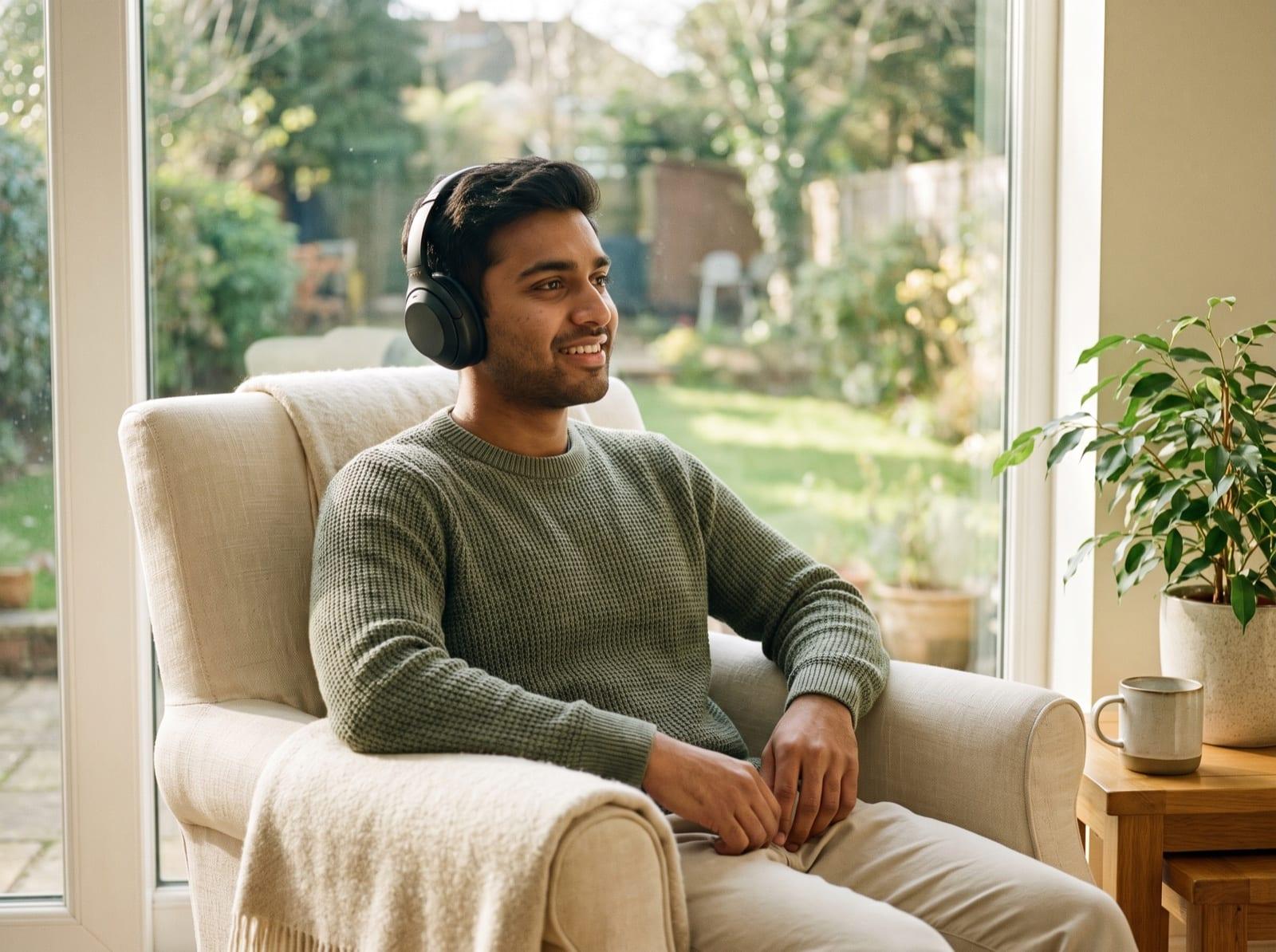
Young man smiling while listening to a guided meditationAudio library

Guided Meditations

Eyes closed. Nothing to read, nothing to fill in.

Recorded practices led by our clinicians, for the days when reading and writing feel like too much. Self-compassion and loving-kindness for the harsh inner voice, body scans for getting back into your body, and longer practices for sleep.

What's inside

  • Self-compassionFor the voice that talks to you worse than you'd talk to anyone
  • Loving-kindnessIncluding the difficult-person version, which is the point
  • Body scanWhere emotions actually live before they reach language
  • For sleepLonger, slower, and designed for you to not finish it
  • Breathing practicesDown-regulating, for when you're wired
  • Short resetsUnder five minutes, for the middle of a workday

Free to stream. No account, no app to install.

Listen to the meditations
Young woman smiling while taking a self-assessment on a laptopSelf-assessments

Tests & Quizzes

Personality tests and mental health quizzes with real results.

Structured self-assessments that tell you something you didn't already know. Attachment and schema quizzes for the patterns underneath your relationships, workplace assessments for the ones that follow you to work, and symptom screeners built on validated measures. Results first — no email required to see them.

What's inside

  • Attachment style quizHow you behave when closeness is at stake
  • Schema quizzesThe eighteen early patterns, and which run you
  • Workplace schemasNine schemas and three coping styles, at work
  • Interpersonal problemsThe shape of what keeps going wrong with people
  • ADHD screenerBuilt on validated measures, not a listicle
  • Mental health screenersSymptom checks worth bringing to a clinician

Every result comes with what to actually do about it.

Take a test or quiz

Why these self-care activities

FreeNo account, no email wall
PrivateNothing leaves your browser
PrintableEvery worksheet saves as a PDF
Evidence-basedCBT, schema therapy, ACT, EMDR

Most self-care lists are interchangeable. Take a bath, light a candle, drink water, say no. None of it is wrong, and almost none of it helps when you actually need help — because the advice was written for a mildly tired person, and you are usually looking it up on a bad day. What follows is the version we'd give a client.

What self-care actually is

A useful definition: self-care is any deliberate action that regulates your body, clarifies what's happening in your mind, or moves your behavior toward something you value. If an activity does none of those three, it may still be pleasant, but it isn't doing the work you're asking it to do.

That is different from activities of daily living — eating, bathing, getting dressed, keeping a household running. Those keep you functioning. The practices on this page are for the days when the basics are already in place and you still don't feel okay, or when functioning itself has started to slip and you need something that works on the nervous system, not only the to-do list.

The definition is unglamorous on purpose, and it rules some things in that don't look like self-care at all. Making the phone call you've been dreading is self-care, because avoidance is expensive and you're the one paying. Going to bed instead of finishing the episode is self-care. So is telling someone you're not okay.

It also rules some things out. Two hours of scrolling is not self-care, even though it's restful, because it doesn't regulate you, it doesn't clarify anything, and it moves you away from what you'd have chosen. The honest test isn't did this feel nice — it's did this leave me better off than before I started.

Why most self-care advice doesn't work

Four reasons, and they're all fixable.

  • It's prescribed at the wrong size. “Exercise” is not an instruction you can follow at your lowest. “Put shoes on and walk to the corner” is. Almost every self-care failure is a sizing failure, not a willpower failure.
  • It ignores which direction you're going. Calming techniques help when you're revved up and make things worse when you're already shut down — deep slow breathing on a numb, flat day usually takes you further under. Half the people who conclude “grounding doesn't work for me” were simply handed the wrong direction.
  • It waits for motivation. In depression the motivation arrives after the action, not before it. Any plan that starts with “when I feel up to it” is a plan that never runs.
  • It's never tested. People adopt whichever technique they've heard of most rather than the one that measurably works on them. Rating something before and after, three or four times, tells you more than any listicle can.

The four kinds that actually change something

Different problems need different tools, and mixing them up is why self-care so often feels like it isn't landing. These four map onto the activities above.

Regulation

Bringing your body back into a range where thinking is possible.

Grounding, orienting, breathing, binaural beats, body-based practices. Use these first — nothing else works while you're outside your window.

See the mindfulness practices

Insight

Finding out what's actually happening, rather than guessing.

Trigger logs, quizzes, schema work. Use these when the same thing keeps happening and you can't see why.

See the exercises

Behavior

Changing what you do, in small enough steps that it happens.

Behavioral activation, behavioral experiments, values work. Use these when you know what's wrong and still aren't moving.

See the exercises

Connection

The one people skip, and the one with the best evidence behind it.

Telling someone the truth about how you are. Most of the above works better with another person in the loop, and some of it barely works without one.

Talk with a therapist

How to practice self-care

Practicing self-care is a five-step loop, not a list of activities: work out which direction you need, pick something the right size, do it before you feel like it, rate it before and after, and keep the two things that measurably worked.

  1. Work out which direction you need first. Too much energy or too little? Revved and braced, or flat and far away? This one question decides everything after it, because the two states need opposite interventions. Calming a shut-down system pushes it further down.
  2. Pick something sized for your worst day. Take whatever you had in mind and halve it, then halve it again. “Go to the gym” becomes “put shoes on and walk to the corner.” A small thing you do beats a large thing you plan.
  3. Do it before you feel like it. This is the step people invert. Motivation follows action rather than preceding it, especially when you're depressed — so schedule it and go at whatever mood level you're actually at.
  4. Rate it, 0 to 10, before and after. Thirty seconds of honesty is what separates this from guessing. It catches the small lifts your memory throws away, and it tells you which techniques work on you rather than which are most talked about.
  5. Keep the two that worked and drop the rest. After four or five rounds the ranking is obvious. Two reliable practices beat twelve you sort of know, and you'll actually remember two on a bad day.

That loop is the whole method. Everything else on this page is a way of running it — the worksheets give you the rating structure, the meditations give you something to run when reading is too much, and the quizzes help with step one when you can't tell what's happening.

Building a self-care routine that survives a bad week

A routine that only runs on good days isn't a routine, it's a hobby. Three rules make the difference.

  1. Two things, not ten. Two you'll actually do beat ten you admire. Write them down and put them somewhere you'll see them — a photo on your phone works better than a note in a folder.
  2. Attach them to something that already happens. After I brush my teeth. When the kettle boils. Before I open my laptop. Habits stick to existing habits far better than they stick to intentions.
  3. Decide the bad-day version in advance. Every practice needs a two-minute version you've already agreed to, so that a hard day downgrades it instead of cancelling it.

What to do depending on how you actually feel

The single most useful sorting question is not what's wrong — it's whether you have too much energy or too little. They need opposite things.

Anxious, wired, can't settle

Too much. You need something that discharges or slows.

  • Physiological sigh — two in-breaths through the nose, one long out through the mouth
  • Walk until it burns off, rather than sitting with it
  • Cold water on the face or wrists
  • Long exhale breathing, out-breath twice as long as the in
Mindfulness practices

Numb, flat, foggy, far away

Too little. You need gentle activation — and calming techniques here will make it worse.

  • Stand up and change rooms
  • Name five things you can see, out loud
  • Something with strong texture or temperature
  • Talk to one person, even briefly
Mental health exercises

Stuck in a loop you've been in before

Neither. You need information, not regulation.

  • Log one instance properly instead of thinking about it in general
  • Find out which early pattern is firing
  • Check the behavior against what you actually value
Mental health exercises

Fine, and want to stay that way

Maintenance, which is the cheapest work there is.

  • A short daily practice you'll keep
  • Something that rebuilds capacity rather than spends it
  • One honest conversation a week
Guided meditations

When self-care isn't the answer

Self-care is real and it has limits, and being clear about the limits is part of doing it well. Some things are not a coping problem.

  • If you've been trying for months and nothing shifts, more effort is unlikely to be the missing piece.
  • If the problem is a relationship, a job, or a living situation, a breathing exercise makes it survivable rather than different. Sometimes survivable is what you need. Sometimes it's what keeps you there.
  • If you're managing something on your own that you'd tell a friend to get help for, that gap is worth noticing.
  • Trauma, in particular, tends to need another nervous system in the room. Self-guided somatic work can help; it isn't a substitute for someone tracking you while you do it.

None of that makes the activities on this page pointless. It means they're a floor, not a ceiling — and a floor is worth having.

From home

Comprehensive, integrative experiences that weave binaural stimulation, EMDR-informed elements, and neuroplasticity-oriented practice into unique sensory exercises you can do anytime.

Attention Focus immersive exercise preview

Attention Focus

$19.99One-time payment

15-minute experience

  • For anyone who struggles with distractibility or scattered thinking
  • Enhance focus & attention
  • Reduce rumination & obsession
  • Cultivate deeper mental resilience
  • Sharpen concentration and sustained focus
  • Binaural stimulation + immersive sensory practice
Start your journey
Mistrust immersive exercise preview

Mistrust

$29.99One-time payment

25-minute experience

  • For anyone grappling with deep mistrust
  • Relearn to trust yourself
  • Break free from protective walls and suspicion
  • Reclaim a sense of safety and connection
  • Ease the weight of anxiety and guardedness
  • EMDR-informed + binaural immersive design
Start your journey
Relationship Ambivalence immersive exercise preview

Relationship Ambivalence

$39.99One-time payment

30-minute experience

  • For anyone stuck in relationship doubt or push-pull patterns
  • Transform ambivalence from home
  • Clarify values beneath indecision
  • Engage body, sound, and attention together
  • Evidence-informed immersive therapy structure
  • Binaural stimulation + neuroplasticity-oriented practice
Start your journey
Ennui immersive exercise preview

Ennui

$39.99One-time payment

30-minute experience

  • For anyone feeling flat, numb, or stuck in ennui
  • Train your brain for awe and vitality
  • Reawaken interest and emotional range
  • Immersive multi-sensory exercise from home
  • Binaural beats + focused attention practice
  • A unique integrative therapy experience
Start your journey

If you want to do this with someone

These exercises came out of the work we do with clients in San Francisco and online across California. If you'd like to talk about doing that work together, a consultation is free and there's no pressure in it.

Common questions

How do you practice self-care?
Five steps. Work out whether you have too much energy or too little, because the two need opposite things. Pick an activity small enough to survive your worst day. Do it before you feel like it, since motivation follows action rather than preceding it. Rate yourself 0 to 10 before and after. Then keep the two techniques that measurably worked and drop the rest.
What are some good self-care activities for mental health?
The ones that regulate your body, clarify what's happening, or move your behavior toward something you value. Practically: grounding and orienting when you're activated, behavioral activation when you're flat, a trigger log when a pattern keeps repeating, and guided meditation when reading and writing feel like too much. Everything on this page is free and works in your browser.
How do I start a self-care routine?
Pick two activities, not ten. Shrink each one until it would survive your worst day, then attach it to something that already happens — after brushing your teeth, when the kettle boils. Expect to drop it; what matters is restarting without turning the lapse into a verdict about yourself.
What's the difference between self-care and self-soothing?
Self-soothing lowers distress in the moment. Self-care may or may not feel good, but it leaves you better off afterwards. Both are legitimate and you need both. The problem starts when soothing is the only tool, because distress keeps returning and nothing underneath it changes.
Why doesn't self-care work for me?
Usually one of four reasons: the activity was sized for a good day, you used a calming technique when you actually needed an activating one (or the reverse), you waited to feel motivated before starting, or you never tested whether that particular technique works on you. All four are fixable, and none of them mean you're doing it wrong.
Are these self-care activities free?
Yes. Every exercise, meditation, mindfulness practice, and quiz linked from this page is free, requires no account, and runs entirely in your browser. Nothing you type is sent to us or stored on our servers.
Do binaural beats actually work?
The evidence is early and mixed. There's reasonable support for effects on anxiety and attention in small studies, and not much beyond that. They're worth trying as a focus or wind-down cue, with headphones, which are required for the effect to exist at all. We'd rather say that plainly than oversell it.
Can self-care replace therapy?
No, and it isn't meant to. These are tools for the time between sessions, or for people who aren't in therapy and want somewhere real to start. If you've been working at something alone for months without movement, that's usually a sign the problem needs another person, not more effort.

A note on scope. Everything here is educational and is not therapy, assessment, or diagnosis, and using it does not create a therapeutic relationship. Nothing you enter is transmitted to Bay Area CBT Center or stored on our servers. If you are in crisis or having thoughts of harming yourself, call or text 988, or go to your nearest emergency room.