Scapegoat: How Blame Gets Stuck on One Person, and How to Break the Pattern

When something goes wrong in a family, a classroom, or a workplace, people often look for someone to blame instead of looking at what actually happened. The person who ends up carrying that blame, whether or not they caused the problem, is the scapegoat. This article covers how scapegoating works, why it lasts, what it does to the person in the role, and how evidence-based therapy can help you step out of it.
Key Takeaways
A scapegoat is a person or group blamed for problems they did not cause, so other people can avoid the real source.
Scapegoating runs on projection, displacement, and splitting. It shows up in families, relationships, workplaces, and toward whole communities.
Being scapegoated in childhood can build lasting beliefs: something is wrong with me, people will turn on me, I do not belong, I have to stay quiet and take the blame.
You can notice the pattern, set boundaries, and get help through CBT, schema therapy, ACT, and EMDR.
A free schema questionnaire can show which of those beliefs your history may have shaped.
What Is a Scapegoat?
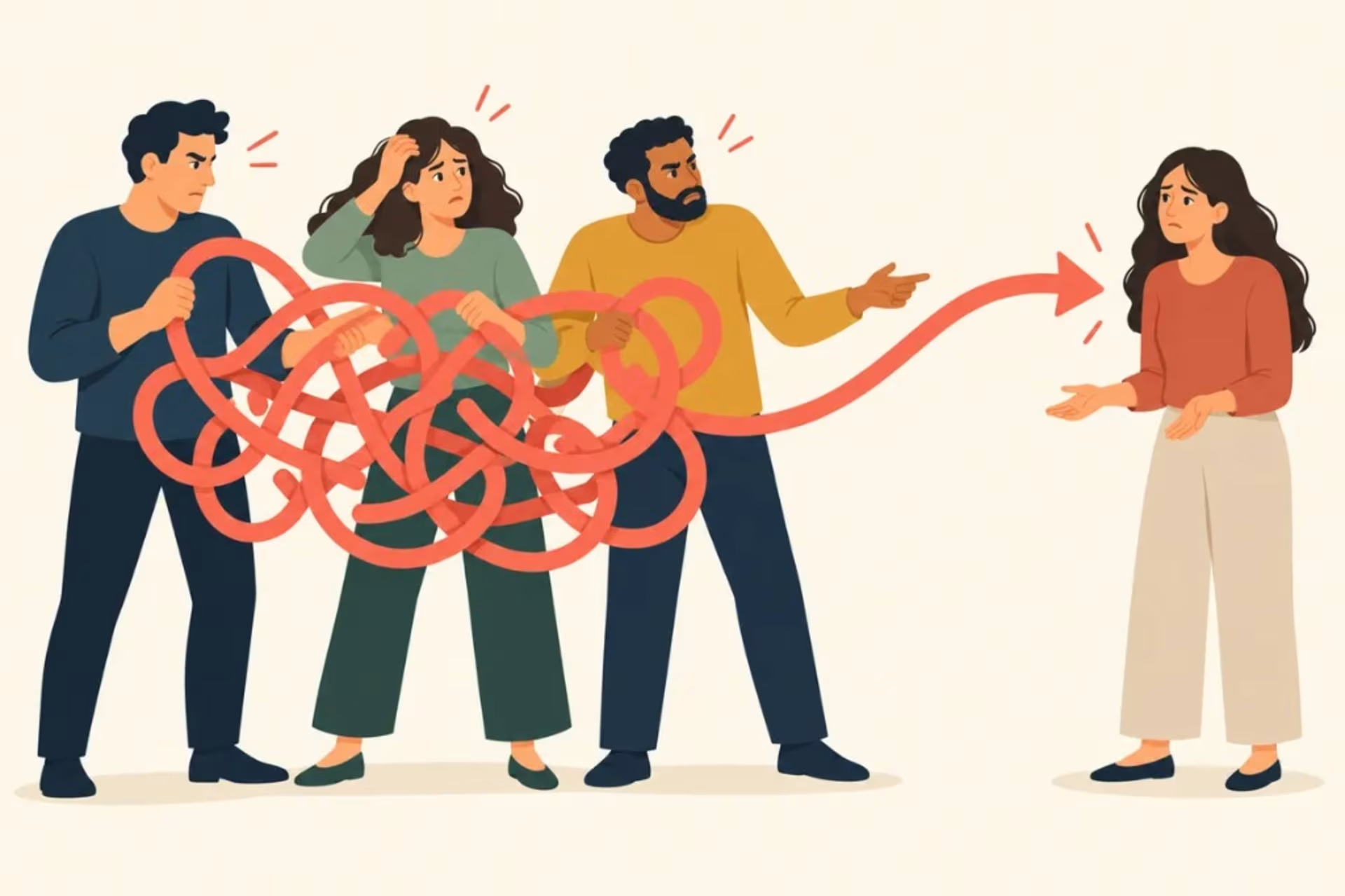
A scapegoat is someone who is unfairly blamed for problems they did not cause, so the person or group doing the blaming can avoid the real problems. "Fall guy" is a rough synonym. The psychology is more specific: scapegoating often lands on someone with less power to push back.
A child gets called the problem whenever her parents fight, even though the fight is between them. A student who transferred mid-year becomes the easy target for exclusion. An employee is blamed for a missed deadline when the team was understaffed. A whole community is blamed for an economic downturn that came from policy.
As a noun, scapegoat is the person or group carrying the blame. As a verb, to scapegoat is the act of pinning responsibility on someone who does not deserve it. It can be interpersonal, inside a family, a couple, a friendship, or a job. It can also be collective, when an out-group is blamed for problems no single group caused.
At Bay Area CBT Center, we often see clients who carried this role from childhood into adult relationships. The rest of this article is about where the pattern comes from, what it costs, and how to heal.
Where the Word Comes From
The word comes from the Book of Leviticus. On the Day of Atonement, two goats were chosen. One was sacrificed. The other, the scapegoat, was sent into the wilderness carrying the community's sins. The goat was a symbol for removing the group's guilt.
The English word appeared around 1530, from the Hebrew ʽazāzēl. It moved from a ritual object to a name for any person forced to carry blame.
Later writers widened the idea. Émile Durkheim argued that societies under stress create cohesion by pushing blame outward. René Girard's mimetic theory describes how rivalry in a group can end with a sacrificial victim. Gordon Allport's scapegoat theory, from 1954, describes how frustration and prejudice get redirected toward minorities.
History has extreme versions. The Holocaust was the scapegoating of Jewish communities for Europe's economic and political crises. After the fall of the Thirty Tyrants in 403 BCE, Socrates was charged with corrupting the youth when Athens wanted someone to punish. During the French Revolution, Marie Antoinette became a symbol of excess while the wider inequality stayed in place. In each case, blame stood in for a harder look at the conflict.
Why People Scapegoat
Scapegoating is often an unconscious defense. Instead of sitting with shame, fear, or helplessness, a person or group puts those feelings on someone else. It is more likely when someone cannot manage strong emotion, and it rises with chronic stress.
Self-righteousness helps it along. "I'm right and they're wrong" can cover insecurity or guilt, so blame happens without a look at one's own part.
Projection: putting your own flaw or fear onto someone else. A parent ashamed of their anger sees the child as the angry one.
Displacement: sending anger away from its real source toward a safer target. A manager furious at leadership takes it out on a junior employee.
Splitting: seeing people as all good or all bad. The scapegoat becomes all bad. The "golden child" becomes all good.
People with narcissistic traits, rigid perfectionism, or a history of harsh criticism often use this, because it protects a fragile self-image. Research on the motives points to two: reducing guilt by putting blame outside oneself, and regaining a sense of control with a simple, false explanation for something overwhelming.
In-Groups, Out-Groups, and Collective Blame
In social psychology, the in-group is "us": people who share a nationality, a religion, a workplace, or an identity. The out-group is "them." That split makes blame easier, because a complex problem can be pinned on a convenient target instead of its causes.
During the 2008 recession, immigrants were blamed for job loss. During COVID-19, Asian communities were blamed for the pandemic, and violence and discrimination rose. Political leaders sometimes use this on purpose, with slogans and stereotypes, to move frustration away from their own failures. The in-group may feel tighter. The real causes stay untouched, and the targeted people pay for it. Education and contact across groups are part of how communities push back.
Scapegoating in Families

In a family, scapegoating often means one child is the problem child. That child or teen is blamed for conflict, money strain, or a parent's stress, no matter what happened. The role is common in families with high stress, addiction, mental illness, or narcissistic or emotionally immature parents. It protects the system from a painful truth.
A daughter is called dramatic whenever she names verbal abuse. A son is blamed for a parent's drinking. A teen is told they are ruining the family when they set a boundary or come out. The family needs someone to punish so the system does not have to change.
The cost is chronic shame, hypervigilance, people-pleasing or rebellion, and withdrawal. The beliefs that form are called schemas:
Defectiveness and shame: "Something is fundamentally wrong with me."
Mistrust and abuse: "People will turn on me if I am vulnerable."
Social isolation: "I do not belong anywhere."
Subjugation: "I have to take the blame and stay quiet."
Those beliefs become the lens for later relationships. They are not a verdict on who the person is. They are what a child learned in order to make sense of being blamed.
Scapegoating in Relationships and at Work

The childhood role often shows up again in adult life. It can feel normal, because familiar dynamics have a pull.
In a romantic relationship, one partner may always be "the problem," blamed for conflict, money, or parenting. A partner who grew up as the scapegoat may accept that blame automatically, which keeps the cycle going. The same pattern sits inside many relationship and communication problems.
At work, an employee is blamed for a failure that belongs to the organization. The target is often someone lower in the hierarchy, newer, or from a marginalized group. Teams with real psychological safety do this less. Leaders who want it to stop have to model accountability instead of looking for a head to roll.
Warning signs include constant criticism with no useful feedback, being left out of the in-group, harsher consequences than peers for the same mistake, and feeling like you are walking on eggshells around a boss or a partner.
What helps depends on the setting: a written record at work, allies, a job change when the culture will not look at itself, and couples work when one partner keeps ending up blamed.
What Being Scapegoated Does Over Time
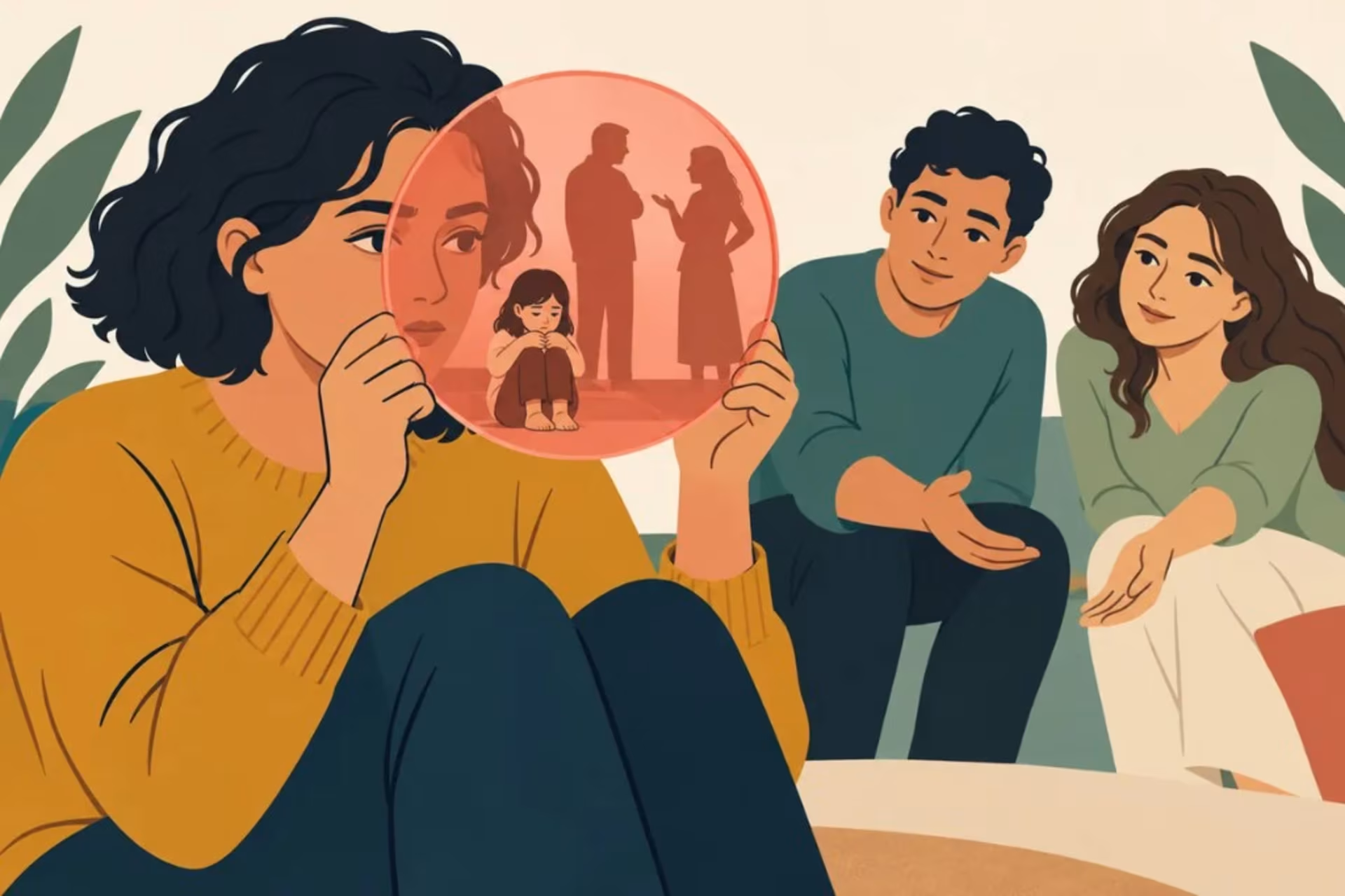
The pain is immediate, and it also accumulates. People describe worthlessness and guilt that last long after the original situation. Anxiety and depression are common. So is isolation, which makes it harder to trust help when it is offered.
Chronic low self-esteem and perfectionism
A harsh inner critic and automatic self-blame
Social anxiety and distrust
Panic and emotional flashbacks
Trauma symptoms such as dissociation or nightmares, which trauma therapy is built to treat
The beliefs create a loop. Expecting rejection leads people toward familiar environments, or into over-apologizing, or into coming in guarded, which can push other people away. Each repeat seems to prove the belief. An adult who grew up as the family scapegoat may keep landing in friend groups where they are left out, and in jobs where they are written up more than peers, even when the work is strong. That is not a personal failing. It is what these beliefs do. They also overlap with insecure attachment and relational trauma.
The body carries it too. Ongoing stress from being scapegoated is linked with sleep problems, headaches, and stomach trouble.
How to Recognize Scapegoating, Including When You Are Doing It

You cannot change a pattern you cannot name.
If you are being scapegoated:
You are blamed more than other people for shared problems.
Your account of what happened is dismissed or rewritten.
Naming other causes brings more hostility.
The story stays simple: it is your fault.
If you might be scapegoating someone: notice "you always" and "they never," the relief of pinning a problem on one person, or a habit of sorting people into heroes and villains.
To stop doing it:
Pause before you assign blame. Ask what part is yours.
Look for shared or structural causes instead of one convenient target.
Imagine the other person's view before you speak.
Replace a global accusation with the specific behavior you actually saw.
Stopping does not mean taking responsibility for everything. It means sharing it realistically, and finding another way to handle anger, frustration, and shame.
How to Stop Being the Scapegoat

If you have been scapegoated, it is not your fault. You can still learn skills that protect you.
"I don't accept being spoken to that way."
"That's not accurate. Let's look at the full picture."
Leave a conversation that is escalating.
Limit contact with people who will not look at their own part.
"I'm willing to talk about what happened if we're both taking responsibility."
When the blame is constant, gets worse when you speak up, or includes abuse or physical danger, safety comes first. Friends, legal help, a shelter, or a therapist who knows this pattern can be part of a plan. Quietly planning to move, change jobs, or start therapy is a valid way out when "standing up" would make things more dangerous.
Healing With Evidence-Based Therapy

Therapy can help you see the role you were given, grieve what it cost, and build beliefs that do not repeat it.
Schema therapy works on the beliefs scapegoating leaves behind, including defectiveness, mistrust, social isolation, and subjugation. The work uses imagery, rescripting, and behavioral experiments so the old story is not the only one available. CBT helps you catch "it must be my fault" and test it against what actually happened. ACT helps you notice painful feelings without becoming them, and act from your values. EMDR can reduce the charge of specific memories of being blamed.
Different formats fit different situations:
Individual therapy for the beliefs and the coping, directly
Family therapy when the goal is to change the system, not leave one person holding the problem
Narcissistic abuse therapy when a parent or partner has been the one assigning the role
Couples therapy when one partner keeps ending up blamed, or the couple is replaying family roles
Group therapy and support groups, where old roles show up with other people and can be tried differently in a safer setting
Mental health retreats for focused, intensive work on the pattern
Getting Help at Bay Area CBT Center
Bay Area CBT Center is an evidence-based practice in California. Care includes CBT, schema therapy, ACT, EMDR, and trauma-informed work for people who have been scapegoated and for people who want to stop scapegoating others.
Individual therapy is available in person in San Francisco and Oakland, and by online therapy across California. Family therapy, couples therapy, narcissistic abuse therapy, groups, and retreats can all take up this pattern.
Free assessments:
Schema Questionnaire, for the beliefs that shape how you relate
Workplace Schemas Quiz, for the same pattern at work
Complex trauma test, for symptoms that ongoing blame can leave behind
Am I being gaslit quiz, when your account of events keeps getting rewritten
Narcissism test, when blame around you seems to protect someone else's self-image
Teens being scapegoated at home or at school can see a therapist through teen therapy. Younger children can start with child therapy focused on emotion and boundaries.
Schedule a free consultation to be matched with a therapist who knows this pattern. You do not have to stay in the role.
Frequently Asked Questions About the Scapegoat Role
Common signs include being blamed whenever parents or siblings fought, being labeled the difficult or dramatic one, getting harsher punishment than siblings for the same behavior, and having your account dismissed as lying or exaggerating. If exclusion followed you from home into school and friendships, the role may have become part of how you expected to be treated.
They overlap. Both can mean unfair aggression toward one person. Scapegoating specifically uses a person or group to carry blame for a wider problem. Bullying can be about power without that story. When bullying's purpose is to make one person the reason everything goes wrong, it is functioning as scapegoating.
Yes. Ethnic and religious groups have been blamed during economic, political, and public health crises. Jewish communities were blamed for the Black Death and targeted in the Holocaust. Asian communities faced blame and violence during COVID-19. Collective scapegoating brings discrimination, violence, and lasting harm.
Start by admitting it to yourself. Take responsibility without collapsing into shame. Apologize when it is safe and fitting. Therapy can help you see the triggers and practice sharing responsibility instead of dumping it. Seeing your own pattern is the way forward, not a life sentence.
Yes. Therapy can help you stop swallowing unfair blame, strengthen boundaries, decide how much contact to keep, grieve what you did not get, and build friendships, relationships, and jobs that do not require you to be the scapegoat. The system does not have to change first. You can.