










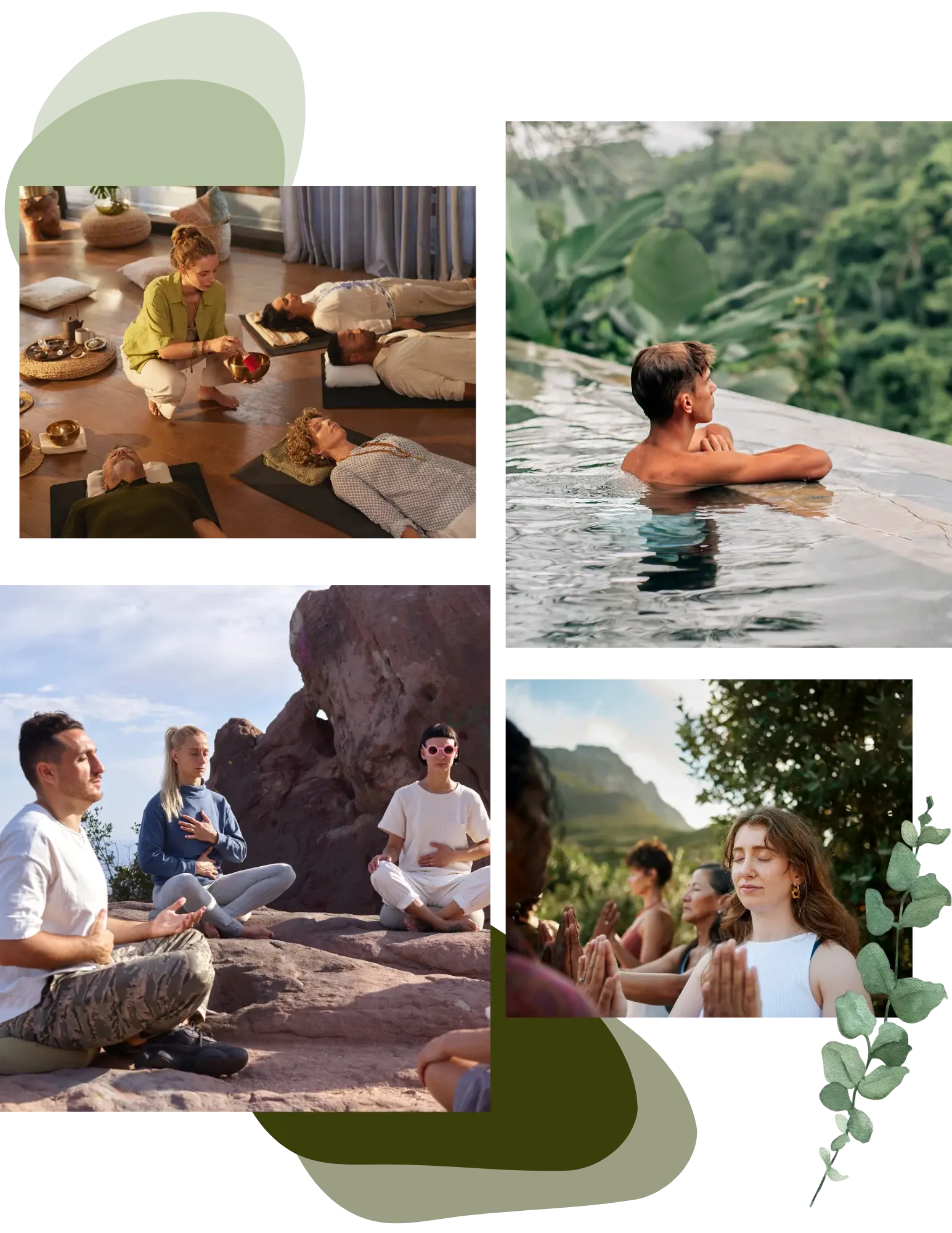
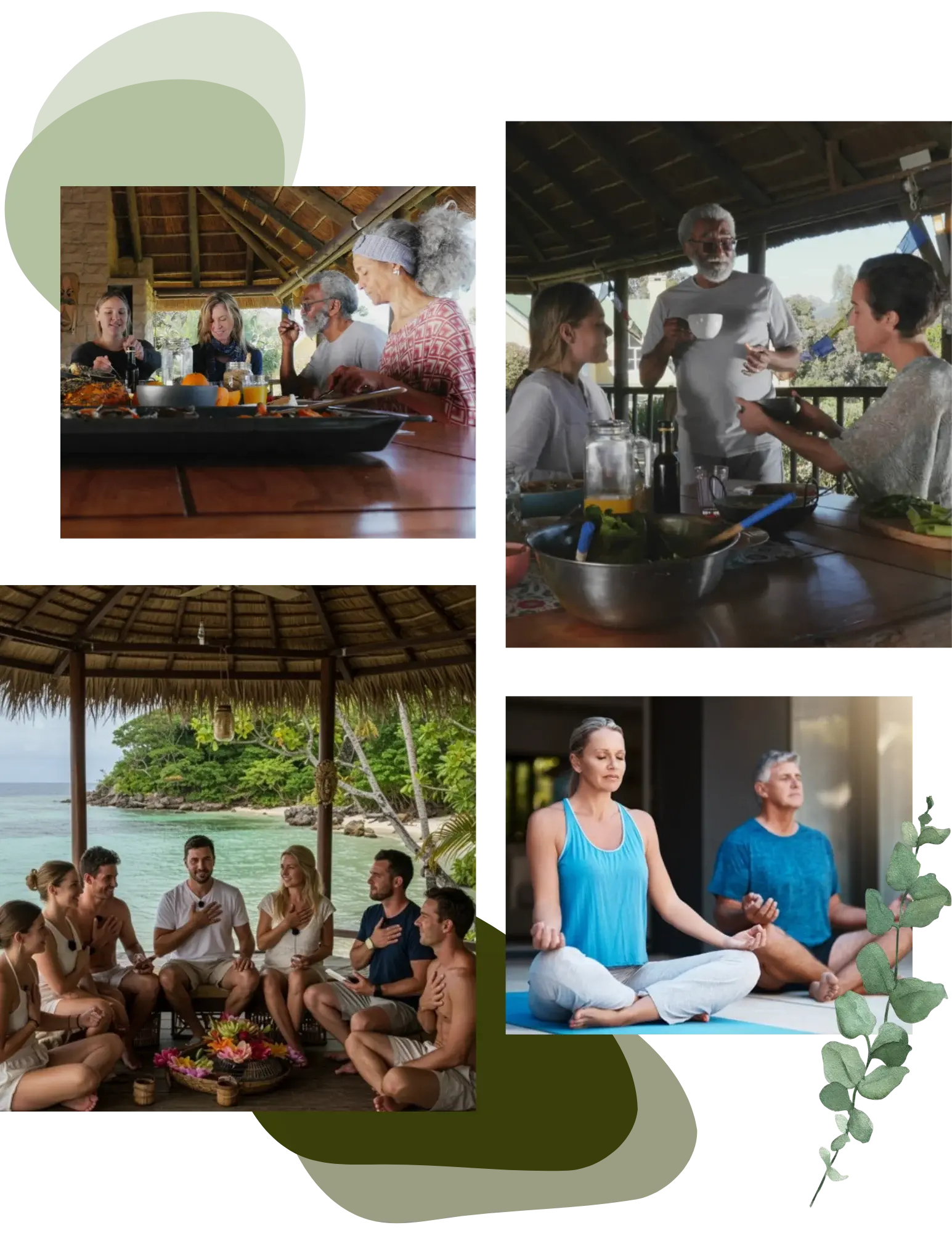
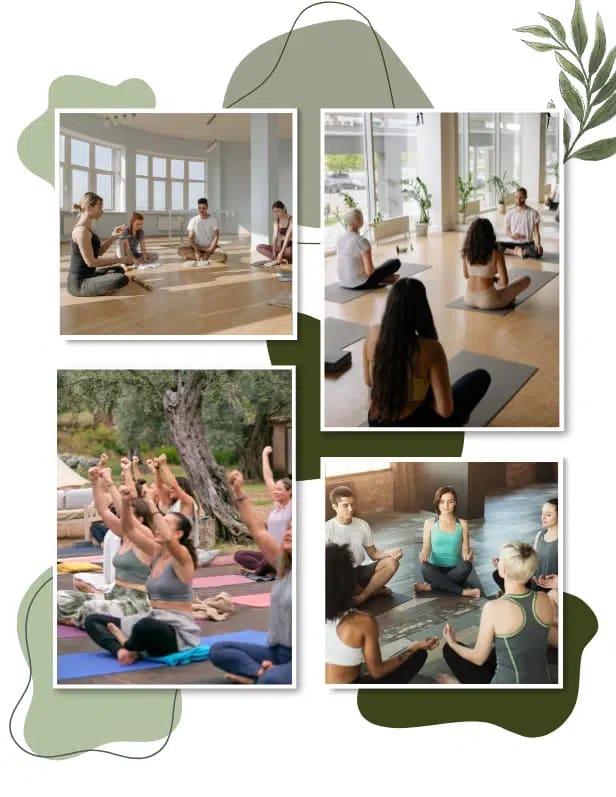
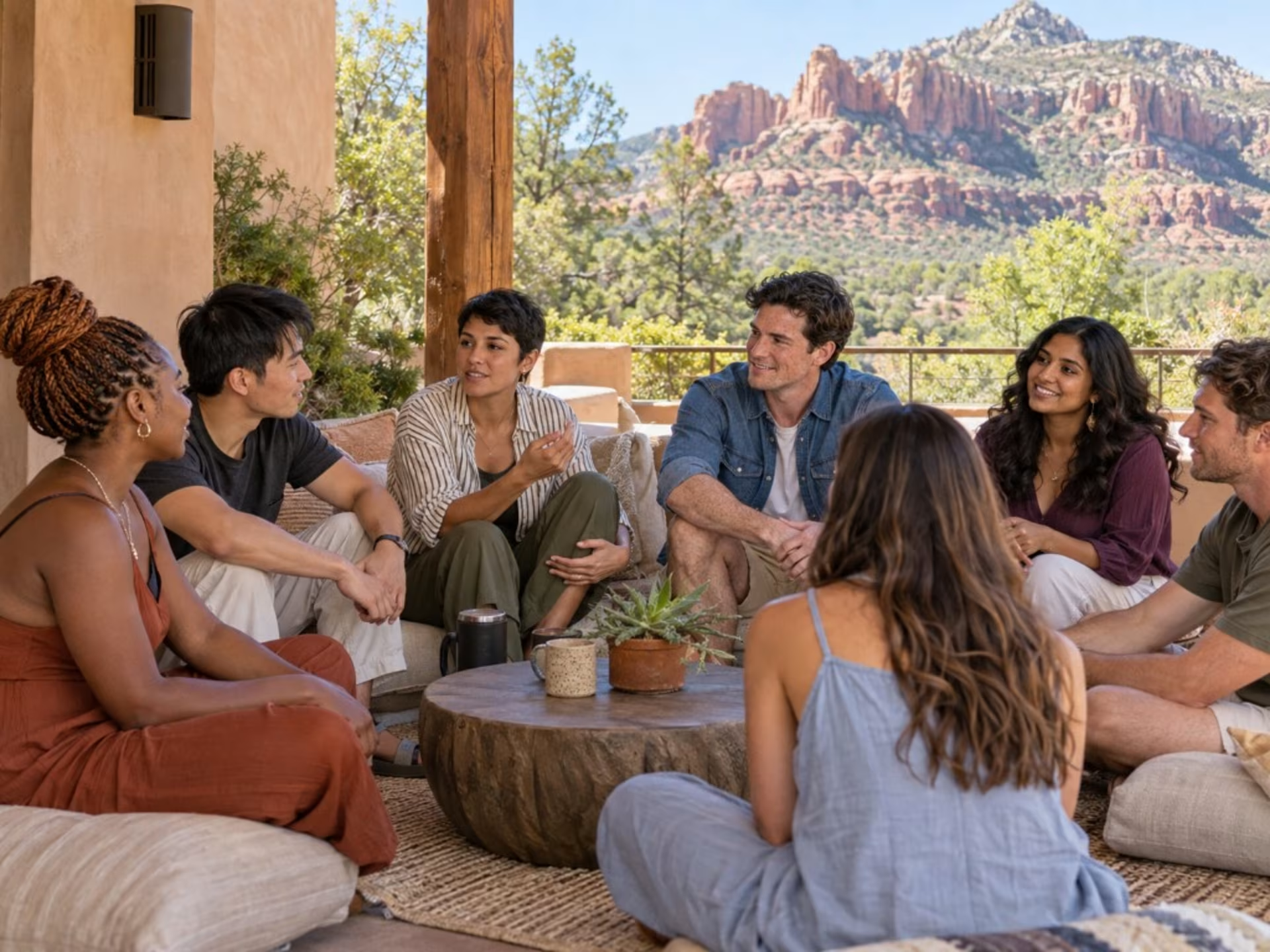


The Short Version
- Our wellness retreat is therapy-led: rest, nature, and movement around real, evidence-based therapy.
- We find the patterns underneath your stress and help you practice something different.
- You can come alone, with a partner, or with a group of any size.
- We build every retreat around you: how long, how intense, where, and who comes.
- After the retreat, you can keep going with therapy or a support group.
What Is a Wellness Retreat?
A wellness retreat is time away from your normal routine to care for yourself, inside and out. Some wellness retreats focus on fitness, some on nutrition, some on meditation, and some on spa time. Most promise rest, rejuvenation, and a chance to restore balance. A wellness retreat helps people disconnect from daily stress and put their well-being first.
A mental wellness retreat goes a step further. It focuses on the thoughts, feelings, and patterns that keep you stressed in the first place. At Bay Area CBT Center, all of our retreats are led by licensed therapists and built around your goals. Guests get real therapy, plus time to rest, move, and be outside.
Think of it as the start of a wellness journey, not a one-time escape. The goal is lasting impact on your well-being, not a good week that fades.
Wellness Spa Retreats vs. a Therapy-Led Wellness Retreat
If you search for wellness retreats, a lot of what comes up is wellness spa retreats: spa resorts with spa treatments, body scrubs, a daily massage, fitness classes, and healthy meals. A wellness spa retreat can feel wonderful. Spa time can help you relax, reduce stress for a few days, and support physical renewal.
What a spa usually can’t do is change the pattern that sent you there. Most spa and wellness retreats don’t include therapy, and the staff at a spa or resort aren’t trained to help with anxiety, burnout, or relationship problems. Here’s the honest difference:
- Spa resorts: built around pampering, spa treatments, and relaxation. Great for rest, not built for change.
- Fitness resorts: built around workouts, hiking, and nutrition. Great for fitness, less focused on the mind.
- Yoga resorts and yoga retreats: built around daily yoga and meditation, usually led by yoga instructors, not therapists.
- A living retreat center: a place with a changing schedule of programs and guest teachers. Quality depends on who is leading that week.
- Our wellness retreats: licensed therapists, a plan built for you, and follow-up after. The setting supports the work.
We don’t include spa treatments or massage. But because every retreat is customized, you can choose a location near a spa and book spa time on your own before or after the work. The spa is the dessert, not the meal.
How We Compare to Canyon Ranch, a Living Retreat Center, and Other Wellness Resorts
Well-known wellness resorts like Canyon Ranch helped make wellness travel popular. Places like Canyon Ranch focus on holistic health, fitness, nutrition, and spa time, and many guests love them. You’ll find wellness resorts in the Blue Ridge Mountains, the Sonoran Desert, the California coast, and around the world, and travel magazines like Condé Nast Traveler rank the best of them every year.
We aren’t a resort, and we don’t run a campus like Canyon Ranch. We’re a mental health center that brings our own therapists to the setting you choose. Resorts sell a place. We offer a process. If you’ve been to wellness resorts before and felt good for a week, our retreats are built for what comes after.
Types of Wellness Retreats
Wellness retreats come in many forms, and it helps to know what you’re looking at before you book:
- Spa retreats focus on pampering, massages, and spa treatments.
- Fitness retreats focus on workouts, hiking, and physical renewal.
- Yoga retreats focus on daily practice, breath, and meditation.
- Nutrition and detox retreats focus on food, cleanses, and habits.
- Mindfulness and meditation retreats focus on silence and awareness.
- Spiritual retreats focus on meaning, faith, or ritual.
- Mental wellness retreats focus on the mind: stress, anxiety, burnout, and relationships.
Our retreats are mental wellness retreats first. They can include pieces of the others, like yoga, mindfulness, good nutrition, or time for fitness, all thoughtfully curated around your goals. Unlike most retreats, ours are retreats centered on therapy, with licensed therapists leading the work.
What to Know Before You Choose a Wellness Retreat
A few facts help when you compare options:
- Wellness retreats can last from a single day up to several weeks, and most wellness retreats last between 3 to 7 days. Many people find 3 to 7 days gives enough time for deeper healing. Ours are as long as you need.
- Wellness retreats vary in emphasis, from relaxation to physical fitness to mindfulness, and many include spiritual, fitness, and detox options.
- Most retreats include yoga and meditation activities, and many offer spa treatments. Activities often include hiking, fitness classes, and spa treatments.
- Retreats typically follow a structured schedule with guided sessions. Structured environments help establish healthier routines, so ask about the daily schedule to understand a retreat’s structure.
- Activities can include mindfulness workshops and personal growth sessions, and expert-led workshops are common.
- Meals at many retreats cut out processed foods and support health goals.
- Digital detoxes are common and help with mental decompression.
- Many retreats offer personalized itineraries based on individual goals.
What Research Says About Wellness Retreats
Attending a retreat can reduce stress and improve mental clarity. Retreats that use practices like meditation help lower stress, and holistic experiences can build lasting emotional resilience. Participants often have deep emotional releases during a retreat. In retreat industry surveys, about 70% of retreat attendees report improved psychological well-being.
A Short History of Wellness Resorts in the United States
Canyon Ranch opened in 1979, built around holistic health. Miraval Arizona opened in 1995 as a wellness destination and joined Hyatt in 2017. The Ranch Malibu has run since 2010 as a wellness boot camp centered on health improvement. The Art of Living Retreat Center spans 380 acres in the Blue Ridge Mountains of North Carolina. These places shaped what people expect from wellness travel. We built something different: retreats centered on therapy.
Wellness Workshops vs. a Customized Retreat
Many retreats are built around workshops: a room of guests, a speaker, and the same exercises for everyone. Workshops can teach useful ideas, and some people love them. But most workshops don’t give you time with a therapist on your own patterns. Our retreats are personal. When you join a group, you’ll share some learning with others, but most of your time is spent on what you need.
Why Our Wellness Retreats Work When Other Retreats Don’t
- Evidence-based therapy at the center: CBT, ACT, Schema Therapy, DBT, and somatic work, led by licensed clinicians. No yoga instructors running therapy groups.
- Deep work on schemas, not surface stress: we work with the patterns that keep you stuck.
- Practical tools you can use the day you get home: for anxiety, communication, boundaries, and emotions.
- Customized intensity: a gentle reset or an intensive week, whatever fits you.
- A plan so changes last: before you leave, you have a clear aftercare plan.
Instead of “relax now, crash later,” think “reset now, change the pattern.”
Mindfulness That Calms Your Nervous System Without Avoiding Pain
Our meditations are exposure-based. Instead of using meditation to escape, you learn to stay with hard feelings: notice where they are in your body, their shape and size, and let them move through you. Using meditation to avoid pain is spiritual bypassing, and it doesn’t last.
That’s how we think about inner peace. It isn’t the absence of hard feelings. It’s being able to feel them without being run by them. There are no negative emotions in our approach. All emotions are information. We use self-compassion phrases you can actually believe, not affirmations that don’t land.
Ancient Wisdom, Mind Body Practice, and Modern Therapy
Many retreats draw on ancient traditions like yoga, meditation, and breath practice. We respect that ancient wisdom and use parts of it, including mindfulness, loving-kindness, and gentle movement. But we pair ancient traditions with modern, evidence-based therapy, so the practices serve a clear goal. Mind body practices help you notice what’s happening inside you. Therapy helps you change what you do next.
Yoga and Wellness Retreats: Where Yoga Fits
Many people look for yoga and wellness retreats because yoga helps them feel grounded. Yoga is part of many of our retreats, from gentle stretching to more active flow. A yoga wellness retreat with us adds therapy to the mat time, so the calm you feel in class carries into the rest of your life. If yoga is your main interest, see our yoga retreat page. A yoga and wellness retreat with us is always optional on the yoga side and never a performance.
Movement doesn’t have to be yoga. Some guests want long walks, swimming, or mountain biking. Movement helps reduce stress, restore energy, and support your physical well-being alongside the emotional work.
Spiritual Wellness Retreats
Some people want their healing journey to include their faith or spiritual practice. Spiritual wellness retreats and spiritual and wellness retreats can help people reconnect with meaning. Our retreats can be secular or include your spiritual life. It’s up to you. What matters is that the work is grounded in evidence and led by licensed therapists.
Holistic Wellness Retreats: Mind, Body, and Spirit
Holistic wellness retreats look at the whole person. So do we. Stress lives in your thoughts, your relationships, and your body. We use somatic work, breath work, sleep, nutrition, and movement to support your physical health, and therapy to support your mind. Good nutrition and sleep help restore energy, and a calm nervous system makes the emotional work easier. That’s what real holistic health looks like: the parts working together.
What Happens During a Retreat Day
Each day is customized, but a day might include:
- Morning mindfulness or meditation
- An individual therapy session
- A skills group on communication, boundaries, or emotions
- A mindful lunch with good nutrition
- A walk, hike, or time in nature
- An afternoon session, like values work or role plays
- Evening reflection or journaling
- Optional yoga or gentle movement
Downtime is built in. This isn’t a boot camp unless you want one. Rest is how your mind and body take in what you’ve worked on. Some retreats include a digital detox, and we help you choose the right level for your work and life.
A Wellness Getaway or Real Change? Luxury Resorts vs. Our Retreats
Many health and wellness retreats are held at luxury resorts. Resorts offer beautiful rooms, a wellness space for yoga, and spa treatments on the menu. Some resorts market a “wellness experience” that is mostly amenities. That can be a lovely wellness getaway, but resorts are designed to make you comfortable, not to help you change.
We choose settings for what they do for the work: privacy, quiet, and nature. Sometimes that’s a small inn, sometimes a cabin, and sometimes a room at one of the quieter resorts. Your journey is what matters, not the thread count.
Where We Hold Wellness Retreats: Choosing Your Wellness Space
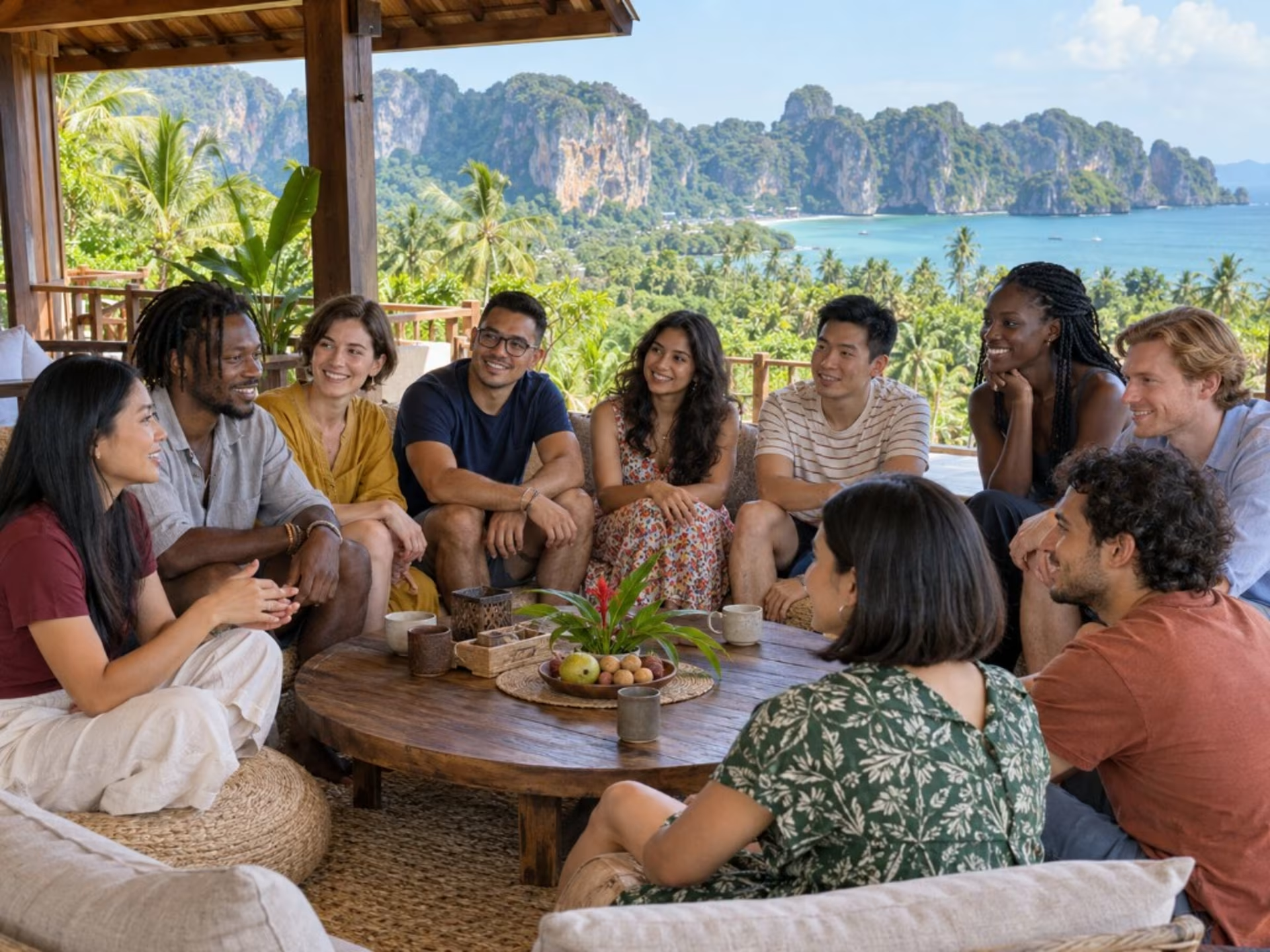
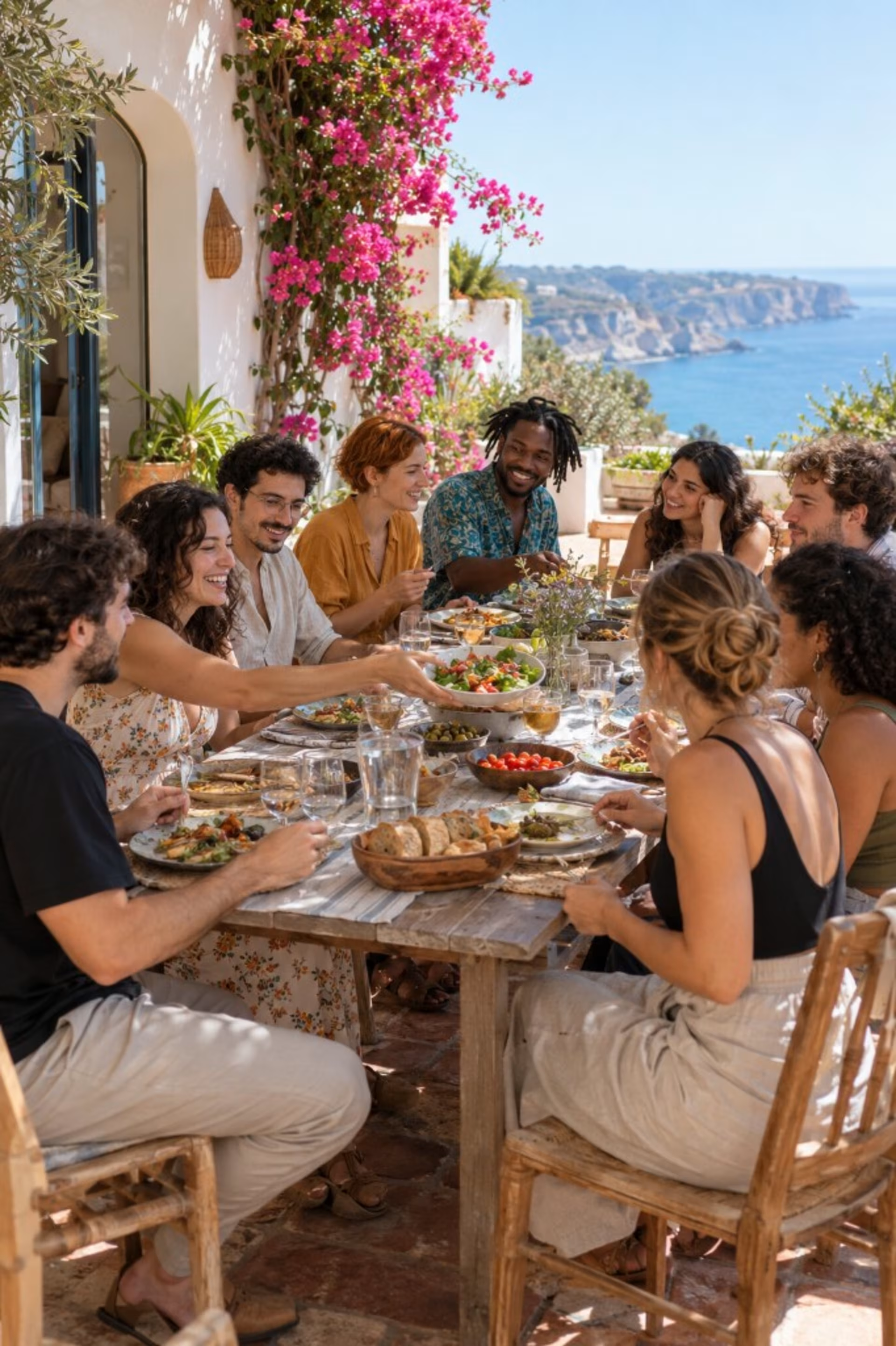
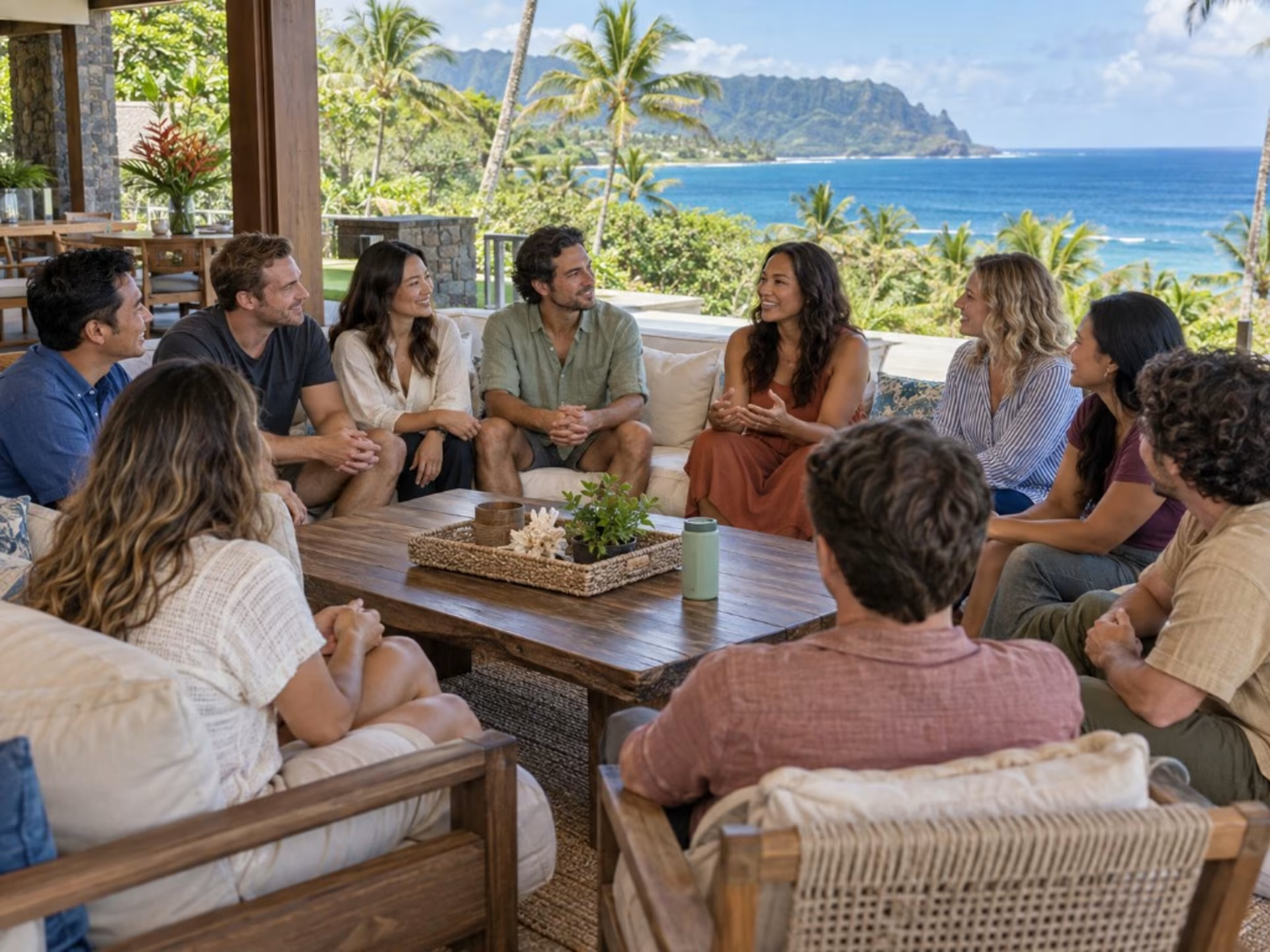
We hold retreats anywhere in the United States or around the world. If you’re looking for health and wellness retreats USA-wide, we can find a place close to home, whether you live in San Diego or New York. We also hold retreats abroad. We look for restorative settings: privacy, nature, quiet space for sessions, and comfortable accommodations.
Accommodations vary by place, from a cabin to a small hotel, and your accommodations are included in the price. Some guests want the ocean, some want mountains, and some want a desert sky. The wellness destination supports the work. It doesn’t replace it. If you’re comparing wellness retreats US and abroad, ask who leads the sessions before you look at the view.
How to Choose the Best Wellness Retreats
Choosing the right retreat starts with defining your personal goals and preferences. Consider your personal wellness goals first, then choose a location that resonates with your own sense of peace. The best wellness retreats have a few things in common, and a nice spa isn’t one of them:
- Licensed therapists lead the work, not coaches or influencers.
- A real assessment first, so the retreat fits your needs.
- A clear plan, not a generic schedule.
- Follow-up after, so the changes last.
- Clear pricing, so you know what’s included.
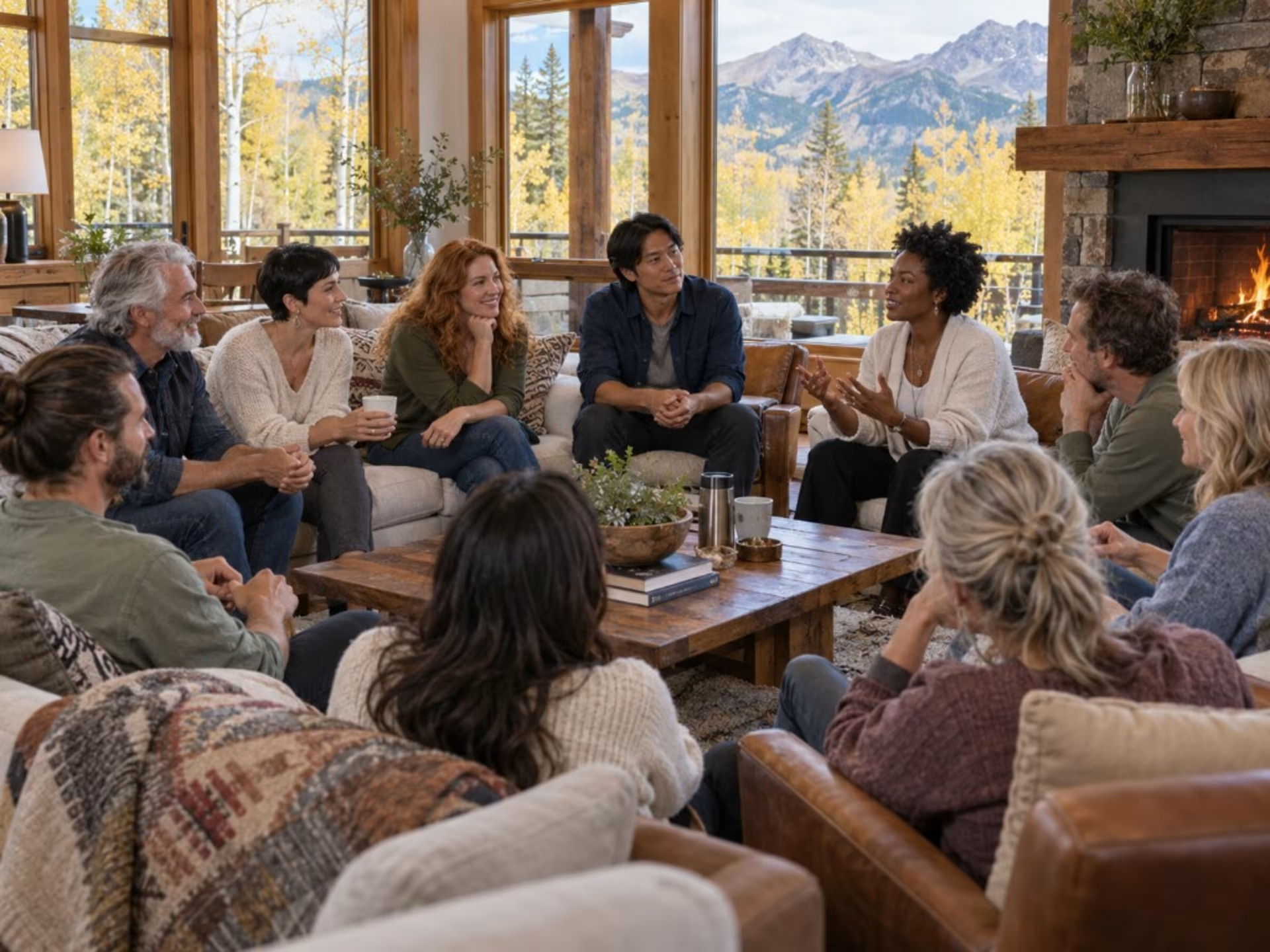
Many of the best wellness retreats also have a supportive environment where you can be honest without being pushed. That’s what we build, in a setting that feels safe and an intimate setting for group work.
Who Our Retreats Are For
Our retreats are for adults who want to work seriously on their well-being and their daily life. People come for:
- Burnout and exhaustion that weekends don’t fix
- Anxiety, depression, trauma, or self-criticism
- Big life changes like a breakup, a loss, or a career change
- Relationship patterns that keep repeating
- A complete reset after a hard stretch
Solo travelers, couples, friends, and colleagues are all welcome. Every guest walks a unique path, and we build the retreat around yours.
A retreat isn’t the right fit if you need 24-hour medical care, are in crisis, or need medical detox. In those cases, we’ll help you find a higher level of care.
How to Restore Balance and Well-Being After Burnout
Burnout is one of the most common reasons people look for wellness retreats. When you’re burned out, a weekend off doesn’t restore balance. You rest, then go right back to the same schedule, the same people-pleasing, the same pressure. Our retreats help you find the balance you’ve lost by looking at why you keep overextending in the first place.
Your wellbeing depends on more than sleep and exercise. Emotional wellbeing, relationship wellbeing, and physical wellbeing all feed each other. At our retreats, we work on all three, so the balance you find lasts in daily life. Many guests say it’s the first time they’ve felt real peace in years, and a sense of wellbeing that didn’t disappear when they got home.
Personal Growth and Deeper Connection
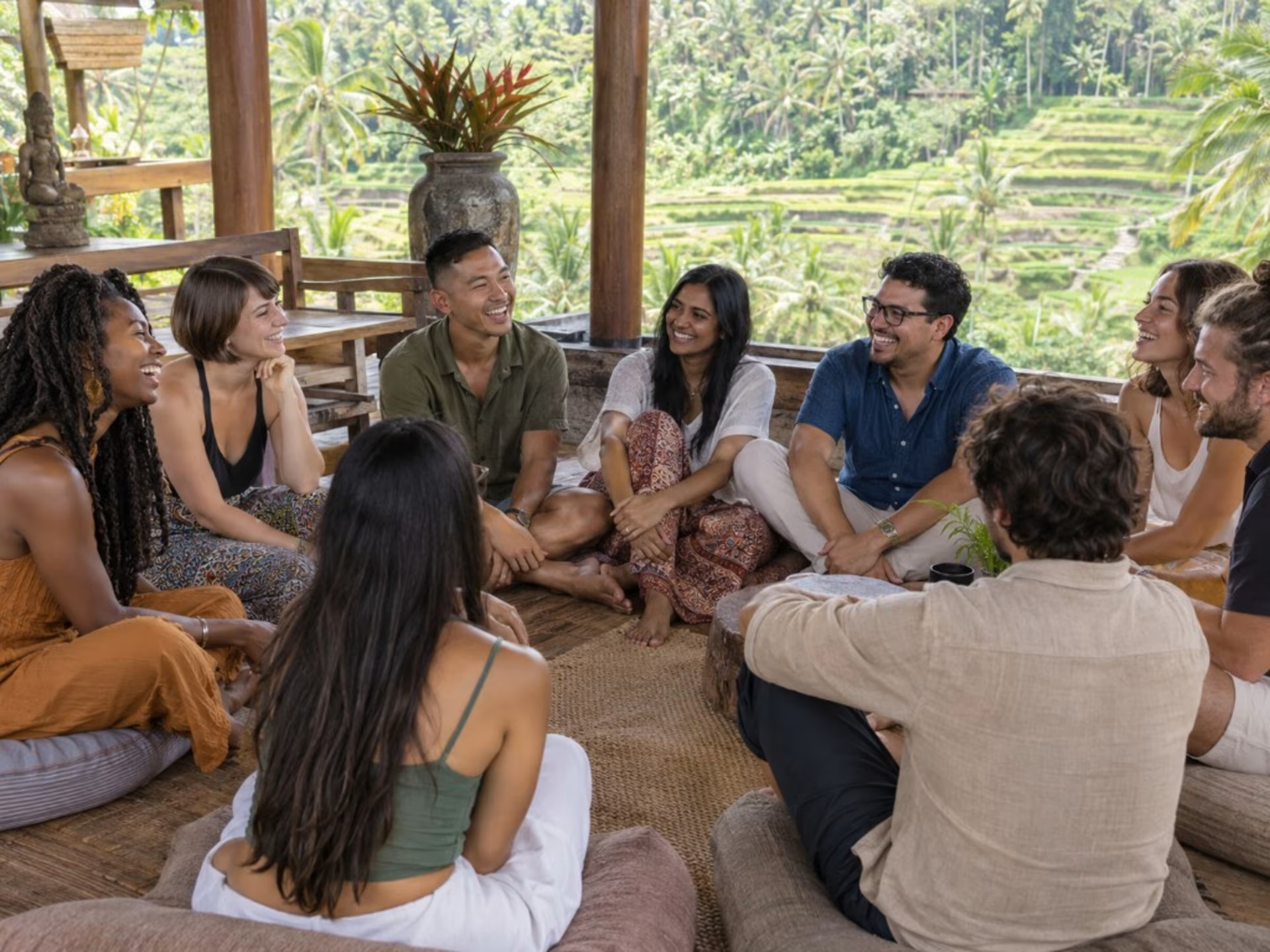
People don’t get well only by working on themselves alone. They get well in relationships. That’s why our retreats include work on communication, boundaries, and asking for what you need. Whether you come alone or with others, you practice deeper connection with the people in your life. For many guests, that’s where the biggest personal growth happens.
Group retreats add something special: you see others struggle and change, and you realize you’re not the only one. That shared journey is often where the most healing happens.
Your Healing Journey After the Retreat
A retreat is one step on your wellness journey, and every journey looks different. Retreats give you a strong start. Well-being grows from what you do in daily life after the retreats end. Before you leave, we help you turn the valuable insights from the week into a plan: routines, people to reach out to, warning signs, and what to do on hard days. You can keep going with individual therapy, couples therapy, or a support group with the other participants. Many guests say the retreat was a turning point in their journey toward personal growth and personal transformation.
The journey doesn’t end at checkout. You can keep up your mindfulness practice at home, and we help you build it into your routine. The goal is lasting impact: more mental clarity, calmer days, and better relationships. Taking care of your own well-being becomes part of everyday life, not something you save for vacation.
Therapy and Medical Care
Therapy doesn’t replace medical treatment. If you take medication, that stays with your prescriber, and we can help you explore other treatments you might need alongside the retreat. Your body matters to the work, so we ask about sleep, health, and energy when we plan.
The Bottom Line
If you’re burned out, anxious, or stuck, and spa weekends haven’t changed anything, try retreats built around real therapy. We find what’s underneath your stress, help you practice something different, and give you a plan to keep going. It’s rest with a purpose, and the start of a journey toward real balance and peace.
Pack comfortable clothes, a journal, and a reusable water bottle for outdoor days. We’ll take care of the rest.