Maladaptive Daydreaming: When a Fantasy World Starts to Take Over Real Life

Most people drift into a daydream now and then. But what happens when those daydreams become so vivid, so consuming, and so hard to stop that they start interfering with your job, your relationships, and your sleep? That experience is called maladaptive daydreaming, and for the people who live with it, the line between a rich inner world and a life put on hold can feel painfully thin.
This guide covers what maladaptive daydreaming actually looks like, how it differs from normal daydreaming, who it affects, what tools exist to assess it, and what you can do to regain control without giving up your creativity.
Key Takeaways
Maladaptive daydreaming is a pattern of excessive, immersive daydreaming that feels compulsive, often lasting hours a day and disrupting work, school, sleep, and relationships.
Healthy daydreaming becomes maladaptive when you lose voluntary control, spend hours at a time in elaborate fantasies, and experience significant distress or trouble functioning as a result.
Core maladaptive daydreaming symptoms include vivid fantasy worlds, strong emotional attachment to imagined characters, music and repetitive movements used as triggers, and guilt about time spent daydreaming.
Maladaptive daydreaming is not yet an official diagnosis in the Diagnostic and Statistical Manual. Tools such as the Maladaptive Daydreaming Scale help people and clinicians assess severity.
Evidence-based therapies, especially CBT, mindfulness-based approaches, trauma-focused work, and OCD-informed strategies, can reduce compulsive daydreaming. Bay Area CBT Center offers these treatments across California, online and in person.
What Is Maladaptive Daydreaming?
Maladaptive daydreaming is a proposed psychiatric pattern of excessive daydreaming that disrupts daily life. The fantasies are extremely vivid, story-like, and hard to control. People often use these detailed daydreams to escape stress, loneliness, or difficult emotions. Over time, the habit can worsen mental well-being and work or school functioning rather than supporting it.
The term was coined by Eli Somer in 2002, who defined it as "extensive fantasy activity that replaces human interaction and/or interferes with academic, interpersonal, or vocational functioning." His qualitative study of trauma patients described elaborate fantasies that went far beyond ordinary mind wandering.
Typical features include detailed plots, recurring characters, alternate versions of the self, imagined relationships, and ongoing series-like narratives that can stretch across months or years. Research has grown from 2010 to 2024, but maladaptive daydreaming is not officially recognized in the DSM-5 or the ICD-11.
One critical distinction: people experiencing maladaptive daydreaming usually know their fantasies are not real. There is no loss of reality testing, which separates this pattern from psychotic disorders. The inner world feels compelling, and the person can still tell the difference between imagination and real life.
Healthy Daydreaming vs Maladaptive Daydreaming

Regular daydreaming is a universal human experience and is typically harmless. Everyone's mind drifts during a long commute, a dull meeting, or a quiet afternoon. Healthy daydreaming is often linked to creativity, problem-solving, and emotional processing. It tends to be brief, voluntary, and easy to set aside when something in the room needs your attention.
Maladaptive daydreaming differs across several clear dimensions:
| Dimension | Normal daydreaming | Maladaptive daydreaming |
|---|---|---|
| Frequency | Occasional and brief | Hours a day, often two to six or more |
| Control | Voluntary and easy to stop | Compulsive and hard to interrupt |
| Content | Loosely structured and fleeting | Scripted, immersive fantasies with plot arcs |
| Emotional charge | Mild and pleasant | Intensely emotional: joy, grief, or shame |
| Impact on daily life | Refreshing or neutral | Exhausting and disruptive |
Both mind wandering and maladaptive daydreaming involve drifting attention, but maladaptive daydreaming is far more immersive, emotionally charged, and narrative-driven. A commuter briefly imagining weekend plans is engaging in healthy daydreaming. Someone who loses multiple work hours a day in a fantasy world, misses deadlines, and feels unable to stop is dealing with something different.
Daydreaming can become maladaptive when it replaces real-life activities and relationships. Enjoying imagination, including creative writing, world-building, and role-playing games, is not inherently a problem unless it begins to cause distress or get in the way of daily life.
Core Maladaptive Daydreaming Symptoms

If you are wondering whether your daydreaming has crossed into problematic territory, these are the hallmark maladaptive daydreaming symptoms to watch for.
Time and compulsion:
Spending hours in vivid fantasies, often two to six or more hours a day
Difficulty stopping even when you want to
Feeling pulled back into the fantasy world after an interruption
An urge to daydream that feels compulsive and difficult to control
Emotional and experiential signs:
Strong emotional involvement in imagined scenarios, including grief, anger, or joy about events that happen only inside your head
Feeling closer to imaginary characters than to real people
Vivid fantasies with detailed characters and intricate plots that can last for hours
Behavioral markers:
Physical movements such as pacing, rocking, or fidgeting while daydreaming
Mouthing words, making facial expressions, or listening to specific music to enter or deepen the fantasy
Triggers that often include music and boredom
Withdrawing behind closed doors to daydream undisturbed
Functional and emotional impact:
Guilt and shame about time that feels wasted
Irritability when interrupted
Chronic procrastination and falling behind at work or school
Disrupted sleep and sleep deprivation
People with maladaptive daydreaming do not usually lose track of what is real. Instead, reality can feel dull, flat, or painful compared with the fantasy world, which is what makes the cycle so hard to break.
The Fantasy World: What the Inner Universe Often Looks Like

Many people who daydream this way maintain rich, persistent inner universes, sometimes called paracosms, over years or even decades. These are not vague daydreams. They are elaborate fantasies with complex timelines, fictional cultures, multi-generational story arcs, and recurring characters who feel as familiar as actual people.
Common features include:
Multiple ongoing plotlines, such as an idealized career, a heroic adventure, and an alternate romantic relationship
Emotional attachment to imaginary friends, partners, or better versions of the self who offer acceptance, power, or admiration that feels missing in real life
Returning to the same scene again and again, refining dialogue or outcomes
Triggers for entering the fantasy world often include certain songs or playlists, fanfiction, movies, or repetitive movements such as pacing in a familiar room. Emotional escape is a common reason people engage in maladaptive daydreaming. The inner world offers temporary relief from loneliness, boredom, or pain.
This kind of imagination is not inherently bad. Many writers and artists describe similar inner worlds. It becomes a problem when it consistently replaces real-life engagement and sits alongside anxiety, depression, or obsessive-compulsive distress.
Who Is Most Likely to Experience Maladaptive Daydreaming?
About 2.5% of the general population may experience maladaptive daydreaming, according to early prevalence research. Rates appear higher among young adults and college students, though exact numbers remain uncertain because this is not yet an official diagnosis.
It appears more common among people with existing mental health conditions, particularly ADHD, anxiety disorders, depression, OCD, and trauma-related conditions. About 20% of adults with ADHD experience maladaptive daydreaming, which is why the overlap between ADHD and excessive fantasy matters.
Developmental factors matter. Onset often occurs in late childhood or adolescence, and many adults report that their elaborate inner worlds began around middle school. Childhood trauma raises the risk. A Hungarian study found that people with maladaptive daydreaming reported significantly more childhood trauma, including emotional, physical, and sexual abuse, neglect, and witnessing violence.
Loneliness can trigger episodes, especially among young adults navigating social isolation or family conflict. Some autistic people develop rich inner worlds tied to intense absorption and difficulty shifting attention.
If this sounds like you, try not to blame yourself. The pattern often started as an understandable way to get through difficult circumstances, even if it now feels out of control.
How Maladaptive Daydreaming Interacts With Other Mental Health Conditions
Maladaptive daydreaming rarely occurs in isolation. It often overlaps with other mental health conditions and can both soothe and worsen symptoms over time. About 75% of people with this pattern meet criteria for more than one mental health condition, so a full assessment matters.
Anxiety and depression: Daydreams can offer temporary relief from anxiety or low mood. When avoidance takes over, real problems stay unaddressed, which can fuel hopelessness and isolation. Maladaptive daydreaming is linked to anxiety and depression in research on how CBT interrupts that cycle.
Obsessive-compulsive disorder: Some people use excessive daydreaming as a compulsion to escape intrusive thoughts, creating a cycle in which obsessions and daydreaming drive each other. The pattern can overlap with obsessive-compulsive disorder symptoms, which is why OCD-informed treatment can help.
ADHD: Difficulty staying with uninteresting tasks, and a brain that seeks stimulation, can make slipping into immersive fantasies especially tempting. Maladaptive daydreaming may co-occur with ADHD in about 20% of cases, and the attention problems overlap with ADHD inattention.
Dissociation: For some people, daydreaming feels like a mild dissociative state, a partial detachment from the present moment, especially after overwhelming emotions or reminders of trauma. High absorption can sit between childhood trauma and this daydreaming pattern.
Compulsive daydreaming may be part coping strategy, part habit, and part symptom of something else going on. Care works better when it addresses the whole person, not only the daydreaming.
How Clinicians Assess Maladaptive Daydreaming
Because this is not an official diagnosis, there is no single universally accepted test in the way there are structured tools for depression or PTSD. Clinicians and researchers have still developed reliable instruments.
The primary tool is the Maladaptive Daydreaming Scale, a research-based self-report questionnaire. The 16-item version measures:
Time spent daydreaming
Control versus compulsion
Emotional intensity during fantasies
Interference with daily life and finishing tasks
Distress about the daydreaming pattern
Scores above about 40 on a 0 to 100 scale suggest probable clinical-level maladaptive daydreaming in U.S. samples, though cutoffs vary by culture and version.
Mental health providers at evidence-based practices typically combine a clinical interview, a review of mental health history, and screening for ADHD, OCD, trauma, and mood disorders with a tool such as the Maladaptive Daydreaming Scale. No single score tells the whole story.
Online quizzes labeled as a maladaptive daydreaming test can be a useful starting point. They are not a substitute for a professional evaluation. If you recognize yourself here, bring up your daydreaming patterns with a mental health professional. Many people never mention this experience unless they are asked directly.
Everyday Impact: When Excessive Daydreaming Starts to Cost You
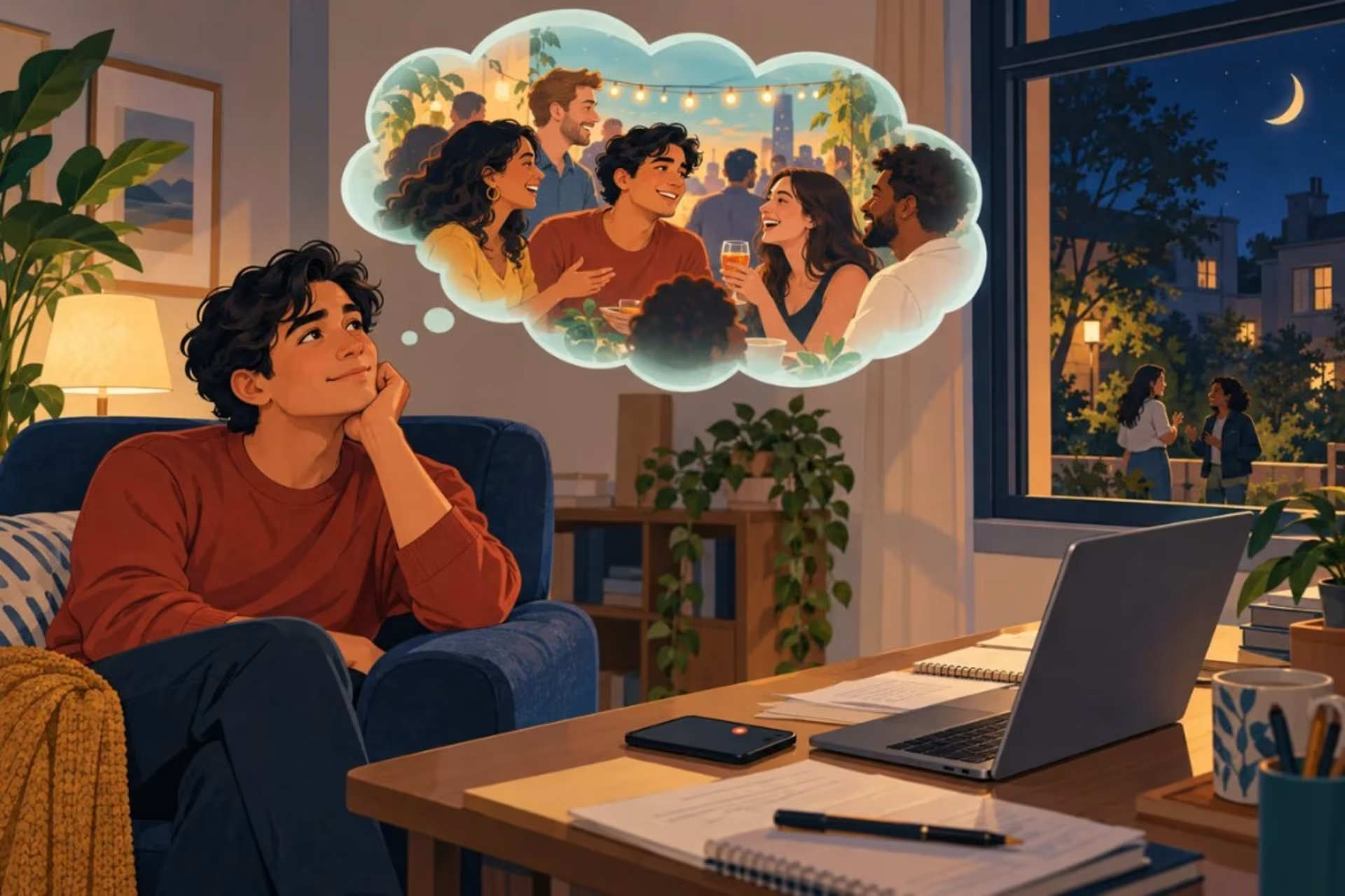
Excessive daydreaming can erode functioning gradually over months and years. It can cause trouble at school and at work: missed deadlines, declining grades, stalled careers, and financial stress. Social withdrawal is common when the inner world takes priority over other people.
Concrete examples include:
Repeatedly staying up past 2 a.m. lost in fantasy, then struggling through the next day exhausted
Being late to meetings because of "just a few more minutes" of daydreaming
Turning down invitations to preserve uninterrupted daydream time
Spending hours in a fantasy world instead of completing tasks that matter
Responsibilities and daily tasks can slide. Physical health can suffer too: headaches, eye strain, disrupted sleep, and persistent brain fog from constant mental immersion.
The emotional toll runs deep. Shame, secrecy, fear of being "crazy," and grief about lost years are common. Many people feel they are living a double life split between fantasy and reality. The cycle can reinforce anxiety, depression, and low self-esteem, especially when the fantasy self is highly competent and admired while the real self feels inadequate.
These patterns are signals that support is needed. They are not evidence of weakness or failure.
How to Begin Regaining Control

The goal is not to eliminate imagination. It is to reduce compulsive, life-disrupting daydreaming while preserving creativity.
1. Build awareness. Track when, where, and why episodes happen for a week. Note triggers, the emotion beforehand, how long it lasts, and what it costs. Naming the triggers can shorten episodes.
2. Try contained daydreaming. Set a timer for 15 to 30 minutes of intentional, permitted daydreaming, then gently redirect at other times. The point is structure, not a fight to suppress every image.
3. Practice grounding and mindfulness. Mindfulness-based therapy skills can interrupt an episode. Feel your feet on the floor, name five things you see, or follow your breath for ten cycles when you notice the urge to slip into a fantasy.
4. Adjust your environment. Pause certain playlists, avoid pacing in the rooms where episodes usually start, add structured activities, or work in a public space so long episodes are harder to fall into.
5. Address underlying needs. Build real-life connections, find creative outlets, and develop sources of meaning so daily life has more to offer than escape. When the real world is more engaging, the pull toward fantasy often weakens.
Evidence-Based Treatment Options, Including CBT

There is no single standard protocol written only for maladaptive daydreaming, and randomized trials are still limited. Several evidence-based therapies used in clinical practice adapt well.
Cognitive behavioral therapy (CBT): CBT techniques help identify thoughts that glorify constant escape, challenge beliefs such as "real life will never be as good," and gradually change avoidance. In one published case, a 27-year-old man treated with CBT and fluvoxamine showed meaningful improvement in routine and work functioning within weeks.
Exposure and response prevention (ERP): When excessive daydreaming works like a compulsion, ERP therapy means practicing staying with uncomfortable thoughts or feelings without escaping into an elaborate fantasy.
Trauma-focused therapies: When the pattern developed as a response to abuse, neglect, or chronic stress, approaches such as EMDR or trauma-informed CBT can address the pain underneath the urge to leave the present. Processing that history can reduce how often the fantasy is needed.
Medication: Medication for ADHD may reduce daydreaming by making attention easier to hold. SSRIs may help when anxiety or OCD is also present. Medication usually treats the co-occurring condition rather than the daydreaming by itself.
At Bay Area CBT Center, care is matched to the person, with online and in-person sessions across California, shared goals, and treatment that can sit alongside care for anxiety, depression, ADHD, or trauma. The plan can honor creativity while reducing the impairment. With targeted help, people can stop the daydreaming from running their lives.
When to Seek Professional Help
Consider reaching out to a mental health professional if you are:
Regularly spending several hours a day in elaborate daydreams
Missing important responsibilities because of compulsive daydreaming
Feeling unable to stop despite wanting to
Noticing worsening mental health, physical effects, or deepening isolation
An initial session typically covers the history of your daydreaming, including age of onset, typical content, and current impact, along with sleep, substance use, trauma history, and other symptoms. A skilled clinician will not judge the fantasies. They will want to understand what the daydreaming does for you and how you feel about it.
At Bay Area CBT Center, therapists collaborate on a practical plan that might include education about the pattern, the Maladaptive Daydreaming Scale, behavioral experiments, and skills for staying in the present. Support is available by secure telehealth anywhere in California through online therapy, as well as in person in the Bay Area. You can request an appointment when you are ready.
It is normal to feel ambivalent. Many people feel deeply attached to their inner world and desperate for change at the same time. Therapy can hold both sides while moving toward a healthier balance.
Keeping Creativity While Reducing Daydreaming

Treatment does not ask you to erase imagination. The aim is voluntary control, and a way to use the inner world in real life. Writing, drawing, music, and other creative projects can carry a fantasy into something you finish and share, instead of something that replaces the day.
Frequently Asked Questions About Maladaptive Daydreaming
As of 2026, maladaptive daydreaming is not listed as a distinct disorder in the DSM-5 or the ICD-11. Clinicians cannot formally diagnose it the way they diagnose depression or bipolar disorder. Many still recognize it as a meaningful pattern and treat the related issues, including anxiety, trauma, ADHD, and obsessive-compulsive disorder, while working directly on the daydreaming. Research using the Maladaptive Daydreaming Scale is ongoing.
For some people it eases as stress changes or life becomes more engaging. For many it stays in place without intentional changes, especially when it is the main way of coping with difficult emotions. Tracking episodes, setting limits, and working with a therapist tend to help more than waiting. Earlier support generally leads to stronger results.
Most people with maladaptive daydreaming do not hallucinate and do not believe their fantasies are real. They can tell imagination from reality, which is different from a psychotic disorder. If you are unsure whether your experiences are daydreams or hallucinations, get a prompt evaluation from a mental health professional.
Yes. The goal is not to erase imagination. It is to bring it under voluntary control and channel it into real-world activities. Outlets include writing fiction based on your fantasy world, drawing characters, and composing music. Many people protect their creativity while sharply reducing the distress that comes with excessive daydreaming.
Bay Area CBT Center offers evidence-based therapy for anxiety, OCD, trauma, depression, ADHD, and related concerns that often sit alongside maladaptive daydreaming. Clients anywhere in California can use online therapy, and people near San Francisco can choose in-person sessions. An initial consultation is a place to talk through your daydreaming patterns, history, and goals, and to be matched with a therapist who uses CBT, mindfulness, and related approaches.