Introvert Personality: Myths, Science, and How to Thrive

An introvert is someone who gains energy from solitude and from a quieter room, not from a crowd. If social events leave you spent, or you have started asking why a full calendar costs so much, the introvert label may finally fit. This article is the most basic definition, the myths that turn a normal trait into shame, and how an introvert can thrive without pretending to be outgoing. The wider picture, beyond this one style, is personality traits.
No personality type is the healthy one. Introverts and extroverts are two ways of handling stimulation, and introverts and extroverts both get misread when nobody names the difference. Knowing which one you are tells you what to protect.
Key Takeaways
An introvert gains energy from time alone or with a few people. Around one-third to one-half of U.S. adults are introverts, so this personality type is ordinary.
Introvert myths, including "antisocial," "rude," and "broken," are wrong. Quiet in an introvert is often attention, not dislike.
There are different types of introversion. Many people also carry some extrovert traits and land in the middle of the spectrum.
An introvert can have social anxiety or depression. The trait itself is not the illness.
At Bay Area CBT Center, clinicians work with an introvert on anxiety, depression, and relationships while leaving the introverted nature, and the innate qualities that come with it, intact.
What Is an Introvert?
At its most basic definition, an introvert restores energy through solitude and calm settings rather than through group activity. Introverts typically prefer depth over breadth: one real conversation instead of an hour of networking. Introverts tend to focus inward. They spend time in their own minds, sorting thoughts and feelings, before they talk. That focused communication style is why an introvert often listens first.
For example, an introvert might choose a quiet evening with one friend over a loud Friday in San Francisco. That choice is about energy, not about disliking people. The concept of a pure introvert or a pure extrovert is largely a myth. Most people fall on a spectrum. The terms introvert and extrovert describe tendencies. Some researchers use "ambivert" for the middle. Extroverts tend to seek more outside stimulation. An introvert prefers the opposite.
If the energy comes back from people, company, and a busier room, that pattern is an extrovert personality. How the two styles sit next to each other, including the ambivert stretch between them, is what we mean by introvert vs extrovert.
Word History: Where Introvert Came From
The word introvert comes from Latin: intro-, within, and vertere, to turn. A turning inward. Nearby language, including introspective, shares that root. Swiss psychiatrist Carl Jung brought introversion and extroversion into psychology in the early 1900s. He used the pair to describe how a person directs and restores energy. The meaning Jung gave the word was descriptive. Jung did not mean that an introvert was defective. That judgment came later, from a society that rewards constant visibility, and from a second society of school and work that still treats outgoing as the default good personality.
The meaning people were handed later, that stillness equals a flaw, is the part that does harm. Knowing the word history helps separate the trait from "lazy" or "wrong." An introvert is not a failed extrovert. A life with meaning does not require a louder personality type, and the meaning of a good week is often recovery, not visibility.
Introvert Myths vs. Reality

Many clients arrive carrying introvert myths from school, work, or family. Those beliefs can fuel self-criticism for years.
"Introverts don't like people." A common misconception. Many introverts value deep friendships and meaningful connections. They prefer a small set of people over a wide, shallow network. Introverts can enjoy socializing, and many introverts enjoy socializing most in a smaller room.
"Introverts are always shy." Introversion is not shyness and not social anxiety. An introvert can be socially skilled. Shy people fear judgment. An introvert may simply want less stimulation. An introvert is often mislabeled as shy or antisocial.
"An introvert can't lead." Introverts tend to listen before they act, which supports careful decisions. Research in organizational psychology has found that an introvert can lead through reflection, consistency, and focus. Listening is not the absence of leadership.
"An introvert is cold or rude." Rooms that reward outgoing behavior make a reserved response look unfriendly. Cognitive behavioral therapy can challenge "something is wrong with me because I am quiet" and replace it with a more accurate line.
How an Introvert Spends a Day

Picture a morning: an introverted engineer logs into back-to-back meetings, sits through a brainstorm, and answers messages until noon. By lunch they feel like they have been running. After a long day of talking and group work, they close the laptop, take a solo walk, and skip the happy hour. That is not antisocial. It is how introverts function best. Introverts function this way because the day already filled the tank.
An introvert often feels drained after social interaction and needs time alone to reset. Social situations with large groups, loud music, or rapid talk are especially taxing. Large groups are the setting many introverts leave first. An introvert may also feel an "introvert hangover" afterward: fatigue, irritability, fog, or an urge to cancel tomorrow. That is not weakness. Stimulating environments push past the point where an introvert still feels like themselves, and stimulating environments of that kind show up at work as often as at parties.
Social situations that are one-to-one usually cost less. Social situations that are unstructured and loud cost more. Enjoying people and needing recovery are both normal for an introvert whose nervous system is built for depth rather than volume. An introvert loses energy from prolonged contact and does not have to fear it.
Different Types of Introverts

Researchers describe more than one pattern, and most people show more than one. The STAR model, from Grimes, Cheek, and Norem, outlines four:
Social. Prefers solitude or a few people over a crowd. A monthly game night with two friends is enough.
Thinking. A rich inner world. Thinking introverts often daydream, and they enjoy journaling, reading, and time in their own minds.
Anxious. Self-conscious with unfamiliar people. Anxious introverts over-prepare for a meeting and replay it later. Anxious introverts are the overlap with shyness, not the whole trait.
Restrained. Slow to warm up. A restrained introvert may spend months at a new job before speaking freely.
These are lenses, not diagnoses. Naming the mix helps an introvert and a therapist set boundaries that fit the temperament rather than a cartoon.
Introverts, Dopamine, and the Brain
Scientific research offers a clue to why an introvert and an extrovert respond differently to the same room. Dopamine is tied to reward and motivation. An introvert is often sensitive to high stimulation because smaller amounts of input already register. One study using PET imaging, published in NeuroImage, found that dopamine receptor availability in the striatum correlates with extraversion, which fits a different profile for an introvert.
An introvert also tends to sit at a higher baseline of brain arousal than an extrovert. The reticular activating system helps set alertness. In an introvert it is easier to trip, so less outside input is needed before the day feels full. An extrovert often needs more input to feel switched on, which is why a busy restaurant or a group brainstorm can restore them. The same science is why an introvert may leave a noisy bar, wear headphones at a desk, or choose a walk in Golden Gate Park over a festival.
Close Friends, Social Interaction, Social Time, and Alone Time

Many introverts want connection and still protect solitude. That is how an introvert manages energy. An introvert usually keeps close friends rather than a wide acquaintance list, and finds meaningful friendships more nourishing than small talk. Introverts prefer deep, one-to-one talk. They often struggle with that surface exchange, not because they are bored of the person, but because it does not feed them. Small talk at a mixer can empty an introvert who was glad to see one friend.
An introvert may plan social time with care, coffee with one person or a book club of five, and then need unstructured time afterward. They spend Sunday refilling. They spend the first hour of a day off with no meeting. They spend one evening a week with no plan. Friends from years ago often understand this faster than a new office does. A partner sometimes assumes the introvert is upset when they simply need quiet. Introverts prefer solitude as a refill. Shy people fear social situations. That difference matters for couples therapy when the two people refill in opposite ways.
Lines that help:
"I love you, and I need an hour to decompress after work."
"Can we set a time to leave the party so I know the end?"
"I like your family. Can we keep the next morning quiet?"

Spending time alone is a plan, not a disappearance. Spending time alone after a gathering is how many introverts come back to the people they actually like. An introvert who enjoys spending time in a book, a walk, or a quiet kitchen is using solitary activities on purpose. Solitary activities of that kind are health care for the trait, not avoidance, unless the quiet stops feeling like rest.
Introverts Who Speak Up
An introvert can speak in public, teach, or perform when they are prepared, the topic matters, and recovery is already on the calendar. Stage presence is not extroversion. Some introverts find a prepared talk easier than small talk. Introverts share a capacity for deep focus that often shows up as a well-built presentation. Script the points, rehearse alone, and leave the next hour empty on both sides of the event. The belief that a real introvert can never speak in front of people is another myth. In one sense the skill is preparation. In the practical sense, the recovery is the rest of the skill.
Am I an Introvert, Shy, or Depressed?

People ask some version of this in session: am I an introvert, or is something wrong? The split is whether the experience feels like a preference or a problem.
Introversion is a personality type: less stimulation, and spending time alone to recharge. An introvert loses energy from a long stretch of people and does not necessarily fear them. Introversion is about energy, not fear of judgment. An introvert often skips a plan to conserve energy, not because of dread.
Shyness is discomfort about being evaluated. Some introverts are also shy. Not all are. Shy people want to connect and feel held back by worry. Shyness can sit on top of an introvert temperament or on an extrovert one.
Depression is persistent low mood, loss of interest in solitary activities that used to restore you, sleep or appetite changes, and hopelessness. When alone time felt restful and then felt empty, depression treatment may be part of the picture. If you are thinking about suicide, call or text 988.
An introvert can also have social anxiety or depression. Social anxiety disorder affects about 3 to 13 percent of adults over a lifetime, according to a review in the literature, which is far fewer people than the share who are introverts. An evaluation can separate the trait from the condition. Anxiety therapy treats the fear. It does not ask an introvert to become outgoing.
Thriving as an Introvert in an Extroverted World

The goal is not to fix an introvert. It is to build a life that respects the nervous system. An introvert often does best in a calmer room, and arranging work and home around that is a strength.
Put downtime on the calendar after big social events. An introvert who felt spent by Wednesday felt misread when someone called that laziness. Treat recovery as non-negotiable.
Block a focus hour. Ask for an agenda ahead of a meeting, and use writing when talking all day is the tax.
Keep a supportive circle instead of chasing a large network.
Challenge "too quiet" and "boring" with the same CBT tools used for other harsh thoughts.
Introverts typically prefer a quieter setup, and approaches like CBT, DBT, mindfulness-based therapy, and acceptance and commitment therapy can ease anxiety or people-pleasing while the introverted nature stays. Schema therapy fits when an old rule, such as "I am only acceptable if I perform," is louder than the trait. Many introverts describe relief when they stop fighting the introverted nature they already have.
Small Group Support for an Introvert

Clinicians here work with introverted adults and with a teen or a child who was told to speak up more and carried that pressure forward. A child who learns that quiet is a flaw often becomes an adult who apologizes for needing recovery. We see that story in California, online and in person.
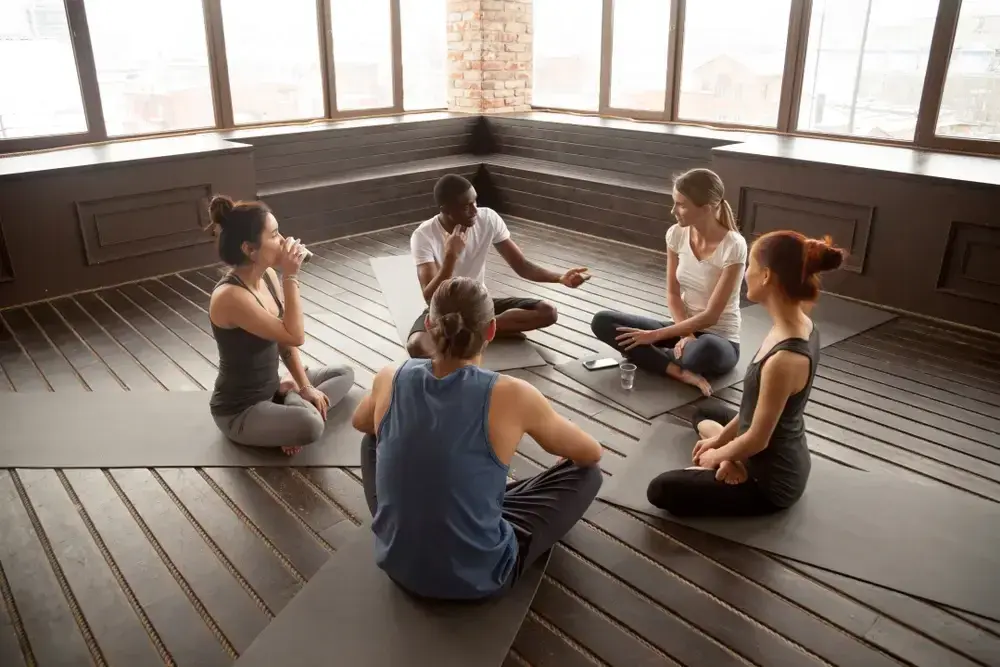
Care can be slower individual therapy, room to reflect, writing between appointments, and respect for alone time as a healthy tool. That includes CBT for social anxiety, trauma care when it is needed, couples work when partners refill differently, and support groups kept to a small group. A T-group is one option when you want other people and still want the room to stay small. A small group is often the format an introvert can actually use. Executive coaching is available when leadership, presentations, or networking have to fit the style rather than erase it.
You can start in San Francisco, Oakland, Los Angeles, San Diego, or Roseville, or with online therapy in California. Book a free consultation and say whether the hour should focus on anxiety, mood, a relationship, or work that keeps punishing stillness.
The aim is not to turn an introvert into an extrovert. It is to help you build a connected life as the introvert you already are, in daily life and in the work life that keeps asking for more talking. If you are interested in the pattern, and interested in care that will not argue with it, you can explore the pattern further. You can explore it in one conversation before you decide on a longer plan. Introversion is common, introversion is not a mood disorder, and introversion does not cancel the need for people. Introversion simply changes the dose, and introversion is worth naming so the week can match it. Your mental health is a separate question from the trait, and mental health care can sit beside it. The meaning of recovery is that the next conversation is possible. The outside world will still ask an introvert to stay longer. A world that prizes constant talking is the one they are navigating, and friends who know them stop taking the early exit personally. Many introverts felt rude for leaving early. They felt better once the leaving had a reason, because the day felt full before the evening started, the room felt loud, and they felt more like themselves once they were home. Talking through the week, and talking with one person about the cost, is often enough to see the pattern.
Frequently Asked Questions About Introverts
Yes. Many introverts enjoy a talk, a class, or a performance when they are prepared, the subject matters to them, and they have recovery afterward. Being able to hold a room is not the same as wanting a mixer. Some introverts would rather address a group they prepared for than chat with strangers at a mixer. Rehearse alone, keep the next block of the day clear, and drop the rule that a real introvert hates being seen.
Use an I statement. I feel overloaded after a long gathering, and I need quiet so I can come back as myself. Frame the hour as what lets you show up later, not as rejection. A predictable window, such as a solo morning or a nightly wind-down, tells people what to expect.
Core introversion is relatively stable, and the amount of contact that feels right still shifts with college, early career, parenting, and retirement. After burnout, illness, or trauma, tolerance for people can drop for a while. Check, every so often, which plans leave you restored and which leave you depleted, and adjust the week.
Therapy does not try to change temperament. It can reduce anxiety, shame, and the beliefs that make ordinary quiet feel like a defect. CBT and related care help you set a boundary, speak when it matters, and choose social time that matches your values. At Bay Area CBT Center the aim is a life that fits, not a different personality.
Look for a change in the trait, not the trait itself. Alone time no longer restores you. Fear, not fatigue, is why you skip almost everything. Work or school is slipping. Loneliness or hopelessness stays. Those signs can be social anxiety, depression, or a trauma response, and they deserve care aimed at the condition. If you live in California, you can contact Bay Area CBT Center about individual therapy, couples counseling, or a support group.