Demisexual Meaning: When Sexual Attraction Follows a Bond

You can like someone, trust them, and still feel no sexual pull until the relationship has a real history. That pattern has a name. Demisexual means sexual attraction shows up only after a strong emotional bond with that specific person. It is a sexual orientation on the asexual spectrum. It is not low desire, a trauma response, or a high bar for looks.
Key Takeaways
Demisexual meaning: sexual attraction arrives after emotional closeness, not from a photo, a stranger, or a first impression.
Demisexuality describes when attraction forms. It does not decide who you are attracted to. A demisexual person can also be straight, gay, bi, pan, or queer.
Sex drive and attraction are different. Someone can want sex and still feel that want only with a person they already know well.
The word grew out of ace-community conversations in 2006. It is a description of experience, not a diagnosis and not a problem to fix.
If shame, dating anxiety, or a mismatch with a partner is wearing you down, affirming therapy can help you sort identity from distress.
What Demisexual Means
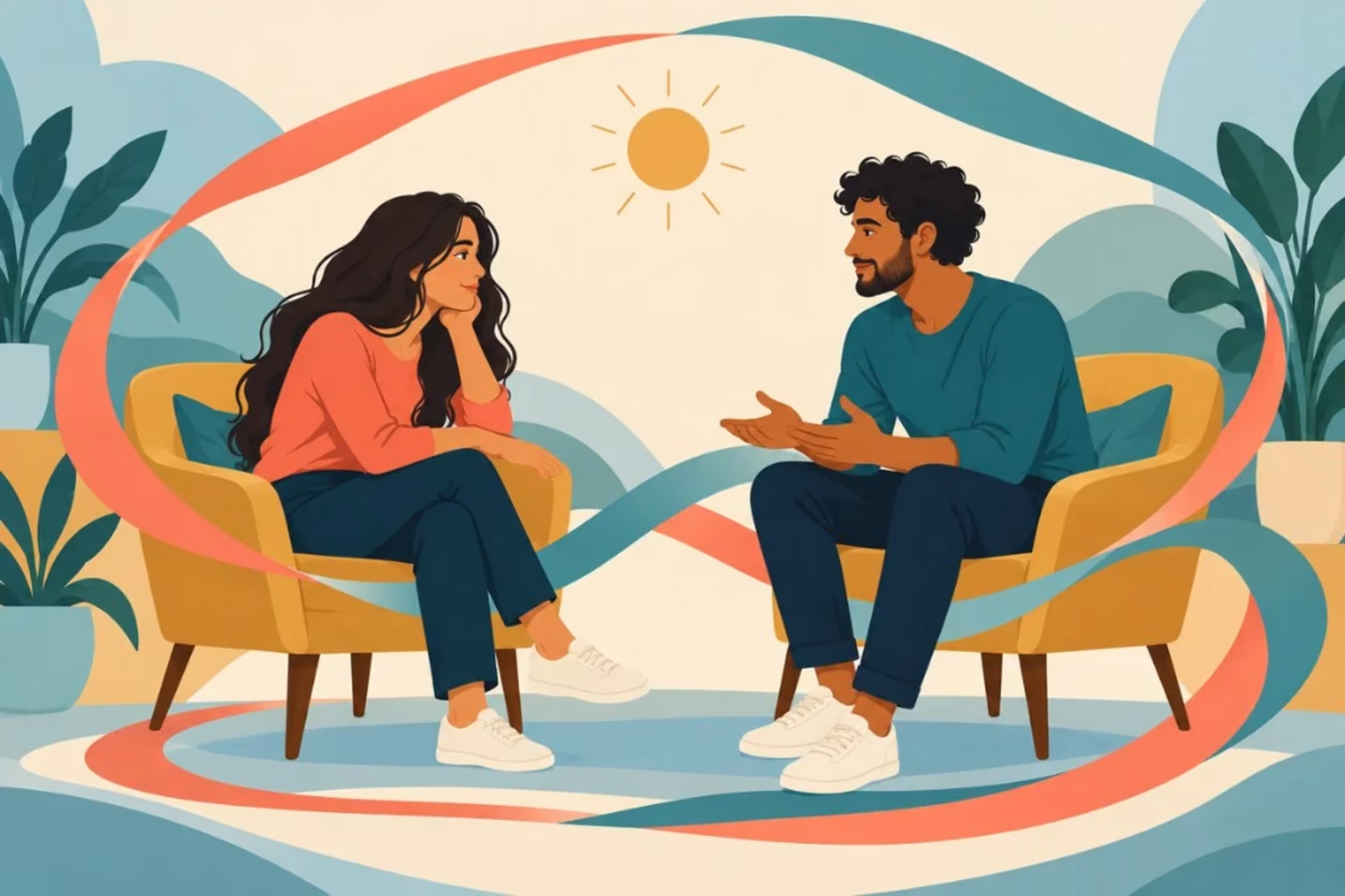
A demisexual person does not feel sexually attracted to someone until a strong emotional connection is already there. A striking stranger, a dating-app photo, or a celebrity does not create that pull. Getting to know someone's values, humor, and inner life can.
The word was coined in 2006 on the Asexual Visibility and Education Network forums. It spread through the 2010s, and the Oxford English Dictionary added it in 2022. Demisexuality sits on the asexual spectrum, between people who rarely or never feel sexual attraction and people who feel it readily, including toward strangers. It can sit alongside any other orientation.
Two ordinary scenes show the difference. In one, you notice someone across a room and the interest is physical first. In the other, you meet the same person, feel neutral, and months of real conversation later notice that you are sexually attracted to them. Neither story is the default. They are two ways attraction can work.
Primary Attraction and Secondary Attraction
Researchers on the ace spectrum separate two kinds of pull. Primary attraction is the quick, appearance-based response. Secondary attraction grows through knowing someone: personality, reliability, the feeling of being understood.
Most demisexual people rarely feel the first kind. Trust, consistency, and vulnerability come first. Surface chat does not do it. The timeline is personal. For some people it is weeks of honest conversation. For others it is months or years of friendship. Emotional intimacy is the condition, not a preference you can talk yourself out of.
Solo desire can still be present. Fantasy or masturbation does not require a partner. What is missing, until the bond exists, is sexual attraction aimed at a particular person.
Where It Sits on the Asexual Spectrum
Asexual. Little or no sexual attraction, including with people you love and trust.
Graysexual. Sexual attraction that is rare, weak, or hard to predict.
Demisexual. Sexual attraction that appears only after a strong emotional bond.
An asexual person typically does not develop sexual attraction even after deep closeness. A demisexual person can, once that closeness is real. Some people move along this spectrum over a lifetime. A label is a tool for understanding, not a contract. You can use the word, drop it, or describe the pattern without a label at all.
What It Is Not
Three mix-ups come up constantly.
Low libido. Libido is how often you want sex. Demisexuality is when and with whom attraction appears. A demisexual person can have an ordinary or high sex drive and still feel sexual desire only with one or two people they are close to. Wanting sex, feeling attracted to someone, and choosing to have sex are three different things.
Anxiety or trauma. Fear, shame, or a history of harm can make sex feel unsafe, and that avoidance can look like "I need to know someone first." Demisexuality is the absence of attraction until a bond exists, not a fear you are working around. Both can be true for the same person. Trauma therapy looks at the wound. It does not try to change an orientation. EMDR is one way to process experiences that complicate how close you can get.
"You are just picky." Being selective means you have standards for looks, status, or lifestyle. Demisexual people often feel no sexual attraction to anyone, including people others call attractive, until an emotional bond forms. That is how attraction works for them, not a ranking system.
If you cannot tell identity from stress, depression, or an old injury, that is a useful therapy question. Cognitive behavioral therapy helps separate "something is wrong with me" from a description of how you actually feel attraction. DBT helps when dating, rejection, or shame spikes and you need a way back to steady ground.
Signs That May Fit

Only you can name your orientation. These patterns show up often enough to be worth a look:
You rarely or never feel sexual attraction to strangers, even when friends point out that someone is attractive.
Crushes based on a face or a photo do not make sense to you.
You can see that someone is good-looking and still feel nothing sexual.
Deep conversation, trust, and emotional safety come before any physical interest.
Personality and steadiness matter more than appearance.
Hookups hold no appeal. Sex can still be wanted and enjoyed once you are bonded.
You have felt out of step because your experience does not match what peers describe.
A list is a starting point, not a test you pass or fail.
Dating When Apps Reward a Fast Spark

Most apps are built for a quick read of a photo. For a demisexual person, that can feel empty. You are being asked to want someone you do not know yet.
Use the message thread to learn how someone thinks before you meet. Values and ordinary stories tell you more than banter.
Meet through a class, a volunteer shift, a book group, or a friend. Friendship has time to become something else.
Say how you connect, even if you are not ready for the word demisexual. "I do better once I actually know someone" is enough.
Drop the rule that chemistry has to arrive by the second date. Your timeline is allowed to be slower.
None of this means you owe anyone a long friendship before you decide you are not interested. No spark of any kind, including warmth, curiosity, or respect, is still a no.
If You Are Dating Someone Who Is Demisexual

A slower sexual timeline is not a verdict on you. Ask what helps them feel close, and do not treat the absence of early attraction as rejection. The conditions are usually ordinary: consistency, honesty, and time.
Put energy into the emotional relationship. That is where attraction has a chance to form. It is not guaranteed.
Do not take the pace personally.
Check before you escalate touch.
Skip jokes about being uptight or being told to relax. Those comments say their experience is a flaw.
One partner may feel physical attraction on the first evening. The other may feel warmth for months and sexual attraction only after vulnerable conversations. Nonsexual closeness, like sitting together or holding hands, can be the bridge. Couples therapy is a place to negotiate that difference without either person being the problem. Sex therapy helps when the question is desire, pacing, or how the two of you talk about sex, not when the goal is to make someone allosexual.
Shame, Anxiety, and What Therapy Is For
Demisexuality does not cause distress by itself. The distress usually comes from the gap between your experience and what dating culture expects. People describe feeling broken, behind, or unsure they belong anywhere on the ace spectrum.
Schema therapy looks at old stories of defectiveness or emotional deprivation that turn a normal pattern into shame. Mindfulness-based therapy helps you notice what you actually feel, instead of what you think you are supposed to feel. LGBTQ therapy at our practice is affirming care for sexual orientation and identity questions, including people who are unsure which word fits.
Therapy does not assign you a label and does not try to change an orientation. The useful question is whether the pattern is consistent with demisexuality, whether anxiety, depression, or trauma is tangled up with it, or whether both are true. From there the work is communication, self-respect, and relationships that fit how you actually connect.
Language, Community, and Boundaries

A specific word helps some people stop blaming themselves and find others with the same pattern. Other people would rather describe the experience and skip the label. Both are fine. The demisexual flag borrows black, gray, white, and purple from the asexual pride flag. It marks a place in that community, not a requirement to join one.
Support groups are one way to practice talking about this with people who can answer. Local LGBTQ centers and ace-community spaces do similar work outside therapy.
Early in dating, plain language beats a speech:
"I tend to feel sexual attraction only after I feel emotionally close, so I move slower physically."
"Closeness matters before sex is meaningful to me. I want to build that first."
"An emotional bond is required for attraction for me. It does not promise that attraction will show up."
Notice when attraction has appeared in your own history and what changed emotionally just before it did. Saying no to a rushed sexual timeline is not immaturity. When one person is demisexual and the other is not, name the difference and keep checking in. If the tension stays stuck, couples work gives the conversation a structure.
Where to Get Care

Bay Area CBT Center is a California practice. In-person care is through San Francisco therapy and Oakland therapy. Los Angeles therapy is online, with therapists matched to you. Online therapy across California covers the rest of the state. We work with people on their own and with couples, across orientations, on anxiety, shame, trauma, and relationships.
You do not need to be sure of the word before you come in. If you want a place to sort this out, schedule a free consultation.
Frequently Asked Questions About Demisexual Meaning
Demisexual describes a person who feels sexual attraction only after a strong emotional bond with someone. Enjoying the idea of sex, or wanting a relationship, is separate from that. Without the bond, sexual attraction to that person does not appear.
No. Low libido is about how often you want sex. Being picky is about standards. Demisexuality is about when attraction forms. A demisexual person can have a typical sex drive and still feel sexual attraction only toward someone they already know and trust.
They sit on the same spectrum and they are not the same. An asexual person feels little or no sexual attraction even with people they love. A demisexual person can feel sexual attraction once emotional intimacy is real. Graysexual is another nearby description, for attraction that is rare or unpredictable. You do not have to pick a word immediately.
Yes. Demisexuality describes when attraction shows up, not whether sex can be pleasurable. Many demisexual people enjoy sex with a partner they are bonded to. An experience that does not match a stereotype does not cancel the identity.
Consider it if you feel ashamed for not matching hookup culture, if you and a partner are stuck on pacing, if trauma is tangled up with closeness, or if you want help telling identity from anxiety or depression. Care is available in San Francisco, Oakland, Los Angeles online, and across California by video. The work is not to change your orientation.