Anger Management Classes: How They Work, What They Cover, and How to Get Real Help

Anger is not the problem. What you do with it is. If anger keeps damaging a relationship, a job, or your health, anger management classes can help you see what is driving it and give you another move. This guide covers what anger management classes actually involve, what to look for in a course, and how to start.
Bay Area CBT Center runs live, therapist-led anger management classes online for adults in California. We do not teach you to count to ten and walk away. We look at what the anger is protecting.
Key Takeaways
Anger management classes teach practical skills for managing anger, and our anger management classes are online groups led by licensed therapists. People comparing anger management classes should ask who leads the hour. Anger management classes that are only a video will not interrupt you. A course can also hand you tools for frustration and stress the same week you start.
Our anger management courses go past surface tips. We look at underlying causes: past trauma, core beliefs, and needs that are not being met. The point is not to delete anger. It is to say what you need without an attack.
Classes are live, not a recording. The group is small. Facilitators use CBT, DBT, ACT, schema therapy, somatic work, and mindfulness.
Some people take an anger management class because of court requirements or employer requirements. Many come for a relationship, work stress, or trouble managing emotions.
You can apply through our customized group application.
What Is an Anger Management Class?
An anger management class is a structured program that teaches emotional regulation, communication skills, and conflict resolution so anger does less damage. The goal is not to stop feeling angry. You can manage emotions without pretending they are gone. It is to catch anger earlier, which is the practical skills piece, and choose a response. Managing anger starts there.
A course is not one thing. A one-time workshop runs an hour to three hours and stays at basic tips. A short online course often runs four to twelve hours at your own pace, and it may end in an instant certificate. An ongoing therapy group runs eight to sixteen weeks of weekly classes, with practice, schema work, and trauma work when that is the story. Anger management courses typically take four to twelve hours when they are a short course, and course length can run from one hour to a much longer program. Many free online anger management courses take two or three hours. Those shorter options can be a start. They are a different course from a therapist-led group.
Anger management programs focus on how you think in the moment and how you talk. Anger management courses cover emotional regulation and conflict resolution. Our option is a live online class for adults across California, not a self paced course you click through alone.
Who Anger Management Classes Are For

People come for frequent fights at home, rage on the drive, a partner who says the anger feels scary, trouble at work, or a referral from a legal representative. A course may be required by a court or an employer. Many participants enroll because they are tired of how anger is running their life. Family members are often the ones who name it first. Family members and coworkers may have already said the anger scares them.
Signs a class could help:
You slam doors, break things, or say something cutting and regret it.
You shut down or go silent in a conflict.
You go from calm to furious in seconds.
Someone at home or at work has said your anger scares them.
The build is usually small: irritation, then a tight jaw, then a faster heartbeat, then a blowup. Nearly 8 percent of adolescents have anger issues that show up this way, according to Harvard Health, and many adults are still dealing with that pattern. People with trauma, emotional neglect, chronic stress, anxiety, ADHD, or substance use often find anger tangled with a bigger regulation problem. The emotional reactivity questionnaire is one way to see the pattern before you pick a course.
Our classes are for adults, and for an older teen only when a clinician agrees it fits. We can coordinate with an employer or an employee assistance program when the anger is showing up at work. If there has been recent serious violence, or substance use is acute, you may need a higher level of care first. If you are in immediate danger, or you are thinking about suicide, call or text 988.
How Anger Management Classes Work

These are live groups, not modules you watch whenever you want.
Format. Weekly sessions of about 75 to 90 minutes, a small group of roughly six to ten people, on secure video.
Facilitators. Licensed therapists trained in CBT, DBT, ACT, schema therapy, somatic work, and mindfulness. They treat anger in the room. They do not hand you a slideshow.
What the hours cover. How anger works in the body, warning signs, emotional regulation, communication, conflict resolution, and practice between sessions.
You practice the hard conversation in the room: feedback at work, a boundary with a partner, a repair after you already blew it. Someone coaches you while it is happening. That is the part a self paced course cannot do. Attending anger management classes also builds self-awareness, and the communication work draws on emotional intelligence rather than a script you memorize and forget.
Distance learning is how the group reaches people who cannot drive to an office. Distance learning here still means a live therapist and other people on the screen. Distance learning is not the same as a recording. Research on therapist-led online anger management groups has found outcomes comparable to in-person groups, including satisfaction and follow-through on practice.
If you want a seat, start with the customized group application.
Emotional Regulation, Conflict Resolution, and the Skills a Course Covers
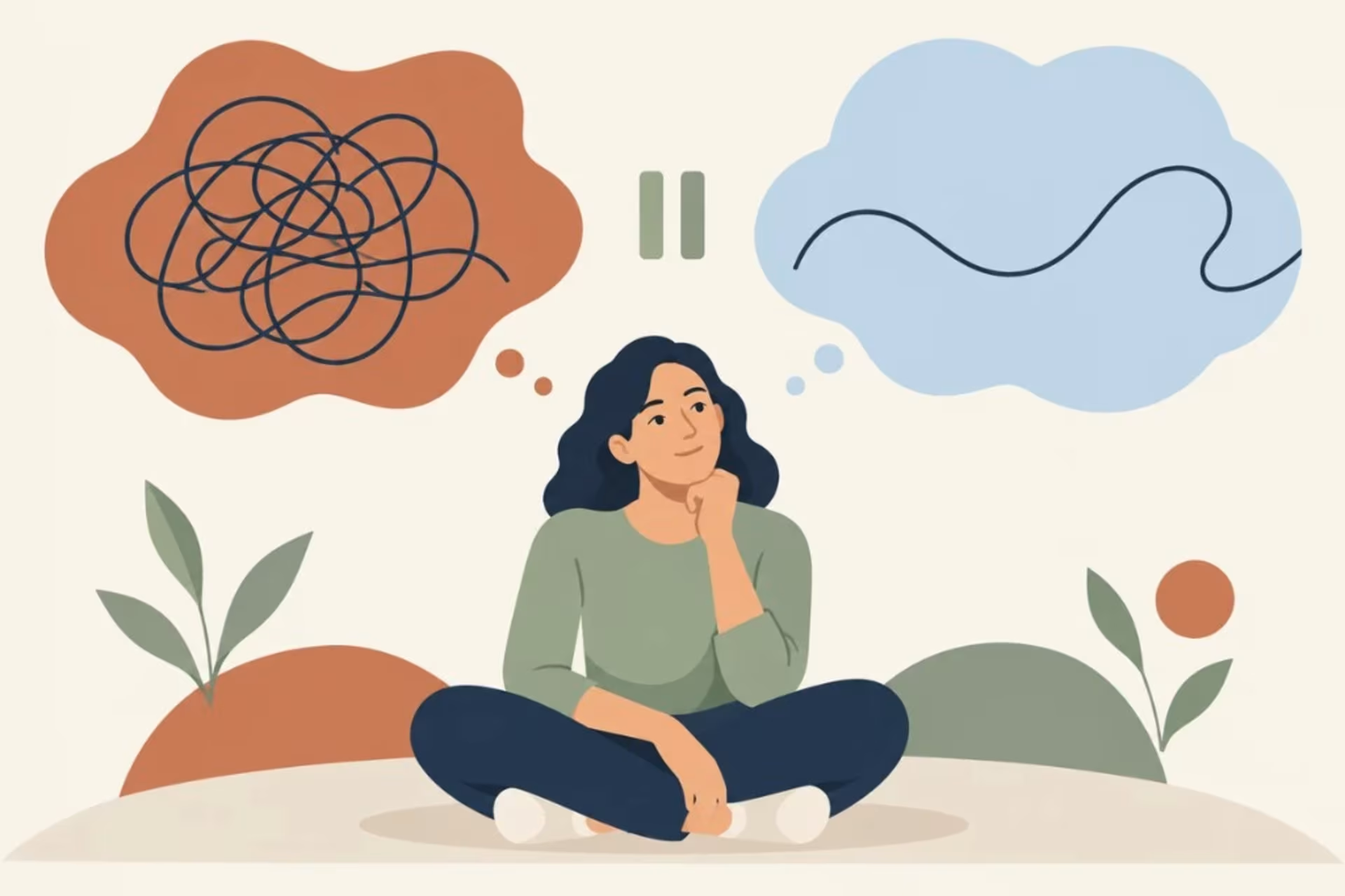
Most evidence-based anger management courses touch the same skills. A therapist-led course goes further than course material in a self paced online program. Course content in our groups includes the pieces below. Course content is practiced, not only explained.
The nervous system. Fight or flight can make anger feel like it takes the wheel. Anger management classes teach you to notice a clenched jaw or racing thoughts before the outburst. Recognizing the cue is how you manage anger earlier. You cannot control anger you have not noticed yet. You can control anger once you can feel it coming, at least enough to pause.
Emotional regulation. A longer exhale, grounding, and ways to settle the nervous system slow the body before you speak. Anger management courses often spend real time here because emotional regulation changes both home and work. Developing emotional regulation is not a mood trick. It is the skill that lets the rest of the course land.
Thinking. Cognitive reframing looks at the hot thought, often "they are disrespecting me," and at distortions like all-or-nothing thinking or mind reading. Cognitive behavioral therapy techniques are the tools for that step. The course also teaches you to name triggers so the same fight is less of a surprise.
Conflict resolution. Assertive talk replaces the attack. "I" statements say the need without a verdict on the other person. Nonviolent communication and active listening are part of conflict resolution, and so is problem solving that is not about winning. Conflict resolution in a group means you try the sentence out loud and hear how it lands.
DBT tools. Distress tolerance, checking the facts, and a pause between the urge and the action. Mindfulness here is noticing the wave without obeying it.
Schemas. Beliefs such as "people will control me" or "my needs do not matter" pour fuel on anger. An anger log between sessions shows the trigger and the belief. Schema therapy is how we work with that layer, alongside CBT, acceptance and commitment therapy, and mindfulness-based therapy.
What Is Underneath the Anger
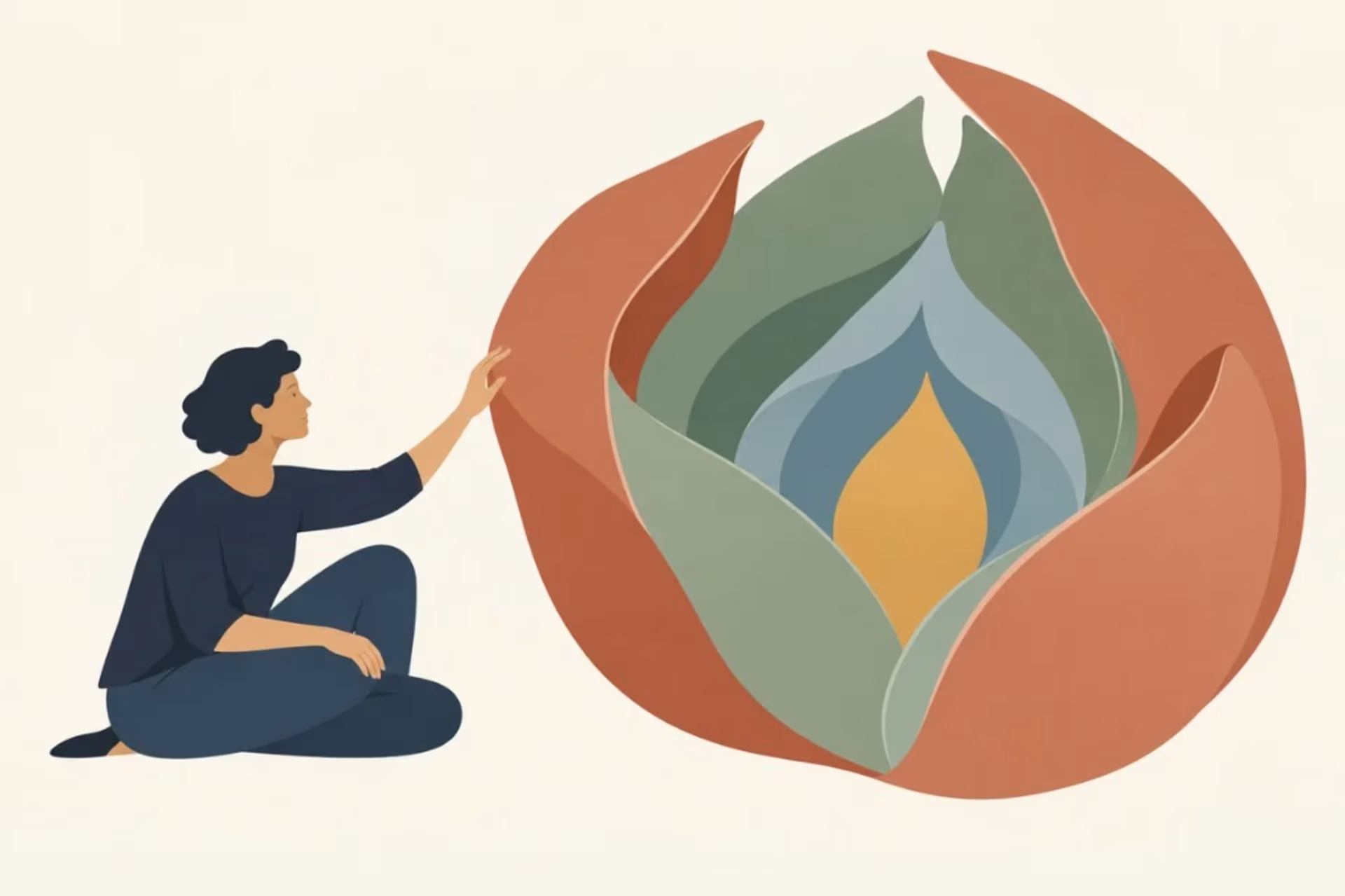
Lasting change means seeing what anger is protecting, not only stuffing it down. Anger often sits on something that feels worse to say.
Shame, the sense that you are not enough.
Fear of being controlled, or of losing a say.
Hurt from feeling rejected, abandoned, or unimportant.
Grief or helplessness that feels too exposed to admit.
Harsh criticism, a chaotic home, emotional neglect, or trauma can train someone to lead with anger because it worked once. In the group, the work is to spot that in real time, name the softer feeling, and ask for the need without an attack. A comparison of schema therapy and CBT in people affected by trauma found more durable change in anger and emotional regulation when the deeper layer was treated, especially at follow-up. That is the difference between a therapist-led group and a generic online course that only teaches a coping tip.

At home, the same skill is a sentence instead of a slammed door. Relationships get the first benefit, and relationships at work get the next. Couples therapy can sit beside the class when the anger is mostly inside one relationship. A rage retreat is a longer stretch of this work when a weekly hour is not enough and the anger is scaring you or the people you love. It does not replace the class. It is another dose of the same question: what is the anger protecting?
What You Will Actually Practice
These are tools from the groups, and you can start the simple ones before the first session.
In the moment. Breathe in for four and out for six. Ground through what you can see, hear, and feel. Step away with a plan to come back, instead of storming out.
A planned pause. A 20 to 30 minute reset in a fight, with a promise to return. Move or stretch so the adrenaline has somewhere to go. Write the thought down so you can see it is a thought.
Waiting. For a non-urgent issue, the 24-hour rule means you do not send the message yet. Chronic anger and chronic stress are hard on the body, including the heart, and long-running anger is tied to a higher risk of a heart attack. Regulating anger is also a way of managing stress, not a personality transplant. Managing stress at work and managing stress at home use the same pause.
A script. "When this happens, I feel this, and I need this." After an outburst, repair means naming what you did and what the other person felt, without a speech about why you were right.
In class. You replay a recent argument. You rehearse a boundary you have been avoiding, including the version you would have on a lunch break when you only have twenty minutes. A lunch break is often when the angry email gets sent. A lunch break is also long enough to practice the sentence you wish you had used. The therapist and the group tell you what they heard.
You try this in real life situations between sessions and bring back what happened. Many participants say that report-back is what makes the new habit stick in daily life. Many participants also say the first weeks feel awkward, and that the awkwardness fades once the group has heard the real story.
Distance Learning, Course Length, and Court Requirements
Anger management class length is all over the map. A self paced course can be finished in a few hours. A therapy program runs eight to sixteen weeks or longer. Some programs are described as one hour, and some as a year of weekly contact. Research suggests that programs of eight or more sessions produce stronger, more lasting results.
Our anger management program asks for a minimum of about eight to twelve sessions so you practice the skills instead of only hearing them. This program is a therapy program, not a packet. That course length is the point. A shorter course can introduce an idea. It rarely changes a ten-year pattern. Personal growth in a group is slower and more honest than personal growth from a video you can skip.
Some people are sent by a court, a probation officer, or an attorney. We can document participation, dates, and a progress summary when that is clinically appropriate. A probation officer may want dates. A second conversation with that office should happen before you enroll, not after. A legal representative can tell you what the court will accept. We say this twice because it gets missed: ask the legal representative what documentation counts.
Court ordered anger management is not a product we stamp. Court requirements differ. Court requirements may reject an online course. Court requirements may want a set number of hours. We do not offer guaranteed acceptance, and we do not imply guaranteed acceptance by calling something a certificate. We are a therapy practice, not a certificate mill. Check with your court, your probation officer, or your employer before you pay for any course, including ours.
Online Anger Management Courses and a Therapist-Led Group
A self paced course and a therapist-led group solve different problems.
Pace. An online course lets you go at your own pace, on your own schedule. Our weekly classes meet at a set time. Your own schedule still matters. We match the group to it. Own pace is useful when you want information. Own pace is a weak fit when you need someone to interrupt you in the moment.
Cost. A low cost online course can start around twenty-five dollars and run up to a few hundred. Low cost community classes exist too. Our groups are paid therapy with a licensed clinician. We do not offer a lowest price guarantee, and we do not hide the fee. There are no hidden fees dressed up as a free course. We can provide a superbill for out-of-network reimbursement. Ask us the fee on the intake call. We will not invent a number here.
Depth. A short course is often mental health education: useful, and shallow. Our course works on schemas, trauma, and underlying causes. Underlying causes are why the same fight keeps returning after the tips wear off.
Feedback. A quiz can grade itself. A person telling you what they just heard cannot be replaced by that. A recording is the wrong fit if what you need is a live interruption. The online class we run is live.
A certificate. A self paced course often issues an instant certificate, sometimes a free certificate, and another free certificate if you retake the quiz, when the course is successfully completed. Successful completion of a video course is not the same as change. We can document attendance. We do not sell a mass-market certificate, and we do not treat a certificate as proof the anger is finished.
Free anger management classes through a community center can teach a few techniques and help with managing stress. Online anger management courses are easy to find. They are a reasonable first course if the anger is mild and you are curious. If you have already tried to handle it alone and it keeps coming back, or the anger sits next to trauma, anxiety, ADHD, bipolar disorder, anger problems, or a personality pattern, an online anger management class with a therapist is the deeper course. An online anger management class also lets an employer see that a licensed person is in the room. Employers sometimes want that for a role where anger has already had a consequence.
An online anger management class at this practice can be paired with individual therapy when the group is not enough on its own. A certified anger management specialist can help you sort group, individual work, or both.
A Certified Anger Management Specialist and the Anger Management Specialist CAMS Credential
The National Anger Management Association describes national standards for practitioners, including an anger management specialist CAMS credential and the CAMS I level. Those national standards are about the clinician's certificate, not about your court paperwork. Anger management certification of that kind is separate from finishing a therapy group. Anger management certification does not, by itself, tell a court what to accept.
Certificate Acceptance and a Certificate of Completion
People search for an anger management class certificate because a court, a board, or an employer asked for paper. An anger management class certificate from a three-hour course may not be what they meant. An anger management class certificate should be checked before you start, not framed on the wall and hoped over. We can write a certificate of completion when attendance is real and a letter is appropriate. A certificate of completion states that you participated. A certificate of completion does not promise that every court will treat it as enough.
Certificate acceptance is local. Certificate acceptance depends on the judge, the probation officer, the licensing board, or the employer. We do not offer guaranteed acceptance under another name. Social workers and other licensed professionals should ask their own board. Social workers are also sometimes the people who refer a client into a group, and they need the same clear answer: ask what will be accepted before the first session.
What gets accepted is a question for the person who required the course. What gets accepted online is not universal. What gets accepted in one county can be refused in the next. If a form must be accepted by a date, say that on the application so we do not waste the week. Nothing is accepted as finished until the person who required it says so.
How to Enroll

Apply. The customized group application asks where you are in California, what times work, and what you want from anger management classes.
A short call. Intake looks at fit: an anger management class, individual therapy, or both, plus any court or employer requirements.
A match. We place you in a group, then confirm the start, the time, the course length, the fee, and the video setup.

The same skills show up at work. Professional relationships take damage when anger leaks into email and meetings. Professional relationships also repair when you can say the need without a threat. Executive coaching is a separate option when the issue is leadership and conflict, not only a group class. Dealing with a high-pressure team is part of why some people come. Dealing with it in public, in front of people you manage, is harder than dealing with it on a commute. You are dealing with a pattern, not a single bad day.
Online groups are for adults anywhere in California. You can also be seen in San Francisco, Oakland, Los Angeles, San Diego, or Roseville when individual work belongs in an office, and with online therapy in California when the group is the main plan. Support groups cover other topics if anger is not the center of the problem. Book a free consultation if you want to talk before you apply.
If you are unsure you qualify, apply anyway. You can manage the repair after a bad night, and you can manage the next hard conversation, if the course gives you practice. Mental health care is allowed to start before you have the right label. Mental health is not a bonus for people who already manage anger well. Mental health includes this class. Your mental health is also why individual therapy may sit next to the group. Mental health history, including anxiety or trauma, belongs on the application so we match you honestly. Mental health treatment works better when the course fits the actual problem. Mental health is the frame. The course is one piece of it. A course you finish and never practice will not change the next fight, or the rest of your life. A course you practice in front of other people has a chance. Home life and work life both show the result. Real life is the test, not the worksheet. The process is slow. The process includes practice between sessions. The process is the group, not a file you download.
Frequently Asked Questions About Anger Management Classes
Many anger management courses are classes in name only. They are education, not treatment. Our anger management classes are therapy groups led by licensed clinicians. Group members are therapy clients. We may also suggest individual therapy when trauma, depression, or another condition needs its own hour. The course is the group. The rest of mental health care can sit beside it.
We can document attendance or write a letter about your participation in an anger management class when that is appropriate. Certificate acceptance still depends on your court, probation officer, licensing board, or employer. There is no universal guarantee. Confirm before you enroll whether a therapist-led group will meet the requirement. If a board must see a certificate of completion, ask them what the certificate of completion has to include.
Yes. The skills often help with anxiety, PTSD, ADHD, bipolar disorder, or a personality pattern, because those conditions often include fast reactions. Our therapists use CBT, DBT, EMDR, schema therapy, and somatic therapy, so anger work can sit next to the other treatment. If the history is complicated, the intake call is where we sort the mix.
Shame and fear of being judged are common in the first sessions. The group has rules for safety. If you get activated, we use grounding in the moment and may follow up individually. The goal is not a perfect hour. It is a different pattern over time, including your personal well being outside the session.
Yes. We offer workshops and coaching for teams and leaders on anger, conflict resolution, communication, and stress in high-pressure work. That can be online for a California team, and it can sit next to executive coaching. Contact us with the timeline and what the team needs.