Nature vs Nurture: How Your Environment Talks to Your Genes

The nature vs nurture debate used to ask a simple question: are we shaped more by our genes or by the lives we grow up in? For a long time that question was treated as a contest. Newer science tells a different story. Nature and nurture work on each other. Genes set a range. The environment, including care, stress, culture, and relationships, changes how those genes are read, and over many generations it also changes which genetic variations spread.
At Bay Area CBT Center we use that picture in therapy. Genes are not destiny, and the environment is not everything. Because experience can change gene expression and learned patterns, a different environment now, including therapy and steadier relationships, can shift responses that once felt fixed.
Key Takeaways
Nature vs nurture is no longer a winner-take-all argument. Genetic and environmental factors interact across a life.
To define nurture: it is the care, stress, culture, relationships, and conditions around a person, from infancy through adulthood. Nature is the biological starting point, including DNA and temperament.
A large twin-study review found average heritability across traits of about 49 percent. That leaves a great deal of room for experience.
Within a lifetime, the environment can change gene expression without changing the DNA sequence. Across generations, the environment influences which variations get passed on. Those are different timelines.
Early experiences shape core beliefs, called schemas. Those patterns can feel like "just who I am." They were learned in a context, and they can change. A free schema questionnaire is one way to start looking at them.
What Nature vs Nurture Means Now
Nature means biological and inherited factors: the DNA sequence, temperament, heritable risk for some mental health conditions, and traits such as eye color or a tendency toward higher stress reactivity. Nurture means what is not written into that sequence: parenting, attachment, culture, peers, school, trauma, money and safety, and the historical moment a person grows up in.
The useful idea is gene-environment interaction. A biologically sensitive child and a less reactive sibling can live in the same house and come away with different lessons. The same stress does not land the same way on every nervous system. That is why nature vs nurture psychology matters for anxiety, depression, trauma, relationships, and child development. Neither genes nor environment alone decides the outcome, and later support can change how a tendency is expressed.
We hold that view with adults and teens in California. It lowers shame. You did not pick your genes or your first household. You can still change the environment you are in now, and the skills you practice in it.
A Short History of the Debate
The argument is old. Plato leaned toward knowledge that is already in us. Aristotle leaned toward experience. In 1690, John Locke argued for a blank slate: we are born without innate ideas, and knowledge comes from experience. That was an early, strong case for nurture.
Francis Galton coined "nature versus nurture" in the 1870s and stressed heredity. His work also fed eugenics, which treated human worth as something to be bred and caused grave harm. The pendulum later swung toward behaviorism. John B. Watson claimed he could take a healthy infant and, with enough control of the environment, train that child toward almost any path. Twin studies in the 20th century made the either-or harder to defend. Identical twins are more alike than fraternal twins on many traits, and they are still not copies of each other, including when they grow up apart.
The live question is no longer who wins. It is how genetic and environmental contributions combine.
How Researchers Separate the Two
They never fully separate, because the two are always acting together. The estimates come from designs that compare people who share different amounts of genes and homes.
Twin studies compare identical twins, who share essentially all of their DNA, with fraternal twins, who share about half. If identical twins are more similar on a trait, researchers infer a genetic contribution. A review of twin research covering 17,804 traits and nearly 14.6 million twin pairs found an average heritability of about 49 percent. Adoption studies add another angle: adopted children can be compared with biological parents and with the parents who raised them.
Heritability is a group statistic. It describes how much genetic differences account for variation in a population. It does not say that half of any one person's life was fixed at birth. Environment can still change the path a great deal. Identical twins raised in different homes show both similarities and real differences, which is the point.
Nature: Genes, Temperament, and Mental Health Risk

In psychology, nature includes genetic influences on temperament, energy, sensitivity, and vulnerability to some illnesses. A few physical traits are strongly genetic, such as eye color. Height is a reminder that even a "biological" trait depends on nutrition and health.
For personality, twin research often lands in a range of about 40 to 50 percent genetic influence, in line with that broader average near 49 percent. Intelligence also shows substantial heritability, often estimated around half or higher in adult samples, and it still moves with schooling, health, and opportunity. A genetic tilt toward anxiety sensitivity does not guarantee an anxiety disorder. A tilt toward extroversion does not guarantee social ease.
For bipolar disorder, schizophrenia, and major depression, genetic influence is real and not a verdict. Whether symptoms emerge depends on stress, trauma, support, and access to care. We do not treat a family history as the whole story. We look at how biology and this person's actual life interact.
Nurture Across a Life

Nurture is the environment that is not encoded as a DNA sequence. It starts early and it does not stop at childhood.
Care that is emotionally attuned helps a child learn to settle and name feelings.
Chronic criticism or emotional neglect can mark self-worth and trust.
Bullying, neighborhood violence, or an unstable home changes what the world seems to require.
Parenting style shows up in children's behavior and emotional outcomes.
Work, romantic relationships, friendships, neighborhood safety, and access to treatment keep shaping adults. Social skill, coping, and a sense of security still shift when the surroundings change. In therapy we try to offer a steady, validating room on purpose. For someone whose early environment was chaotic or dismissive, that room is not a small thing. It is a new sample of nurture, repeated often enough that a different pattern can take hold.
Epigenetics: Expression Changes Within a Lifetime
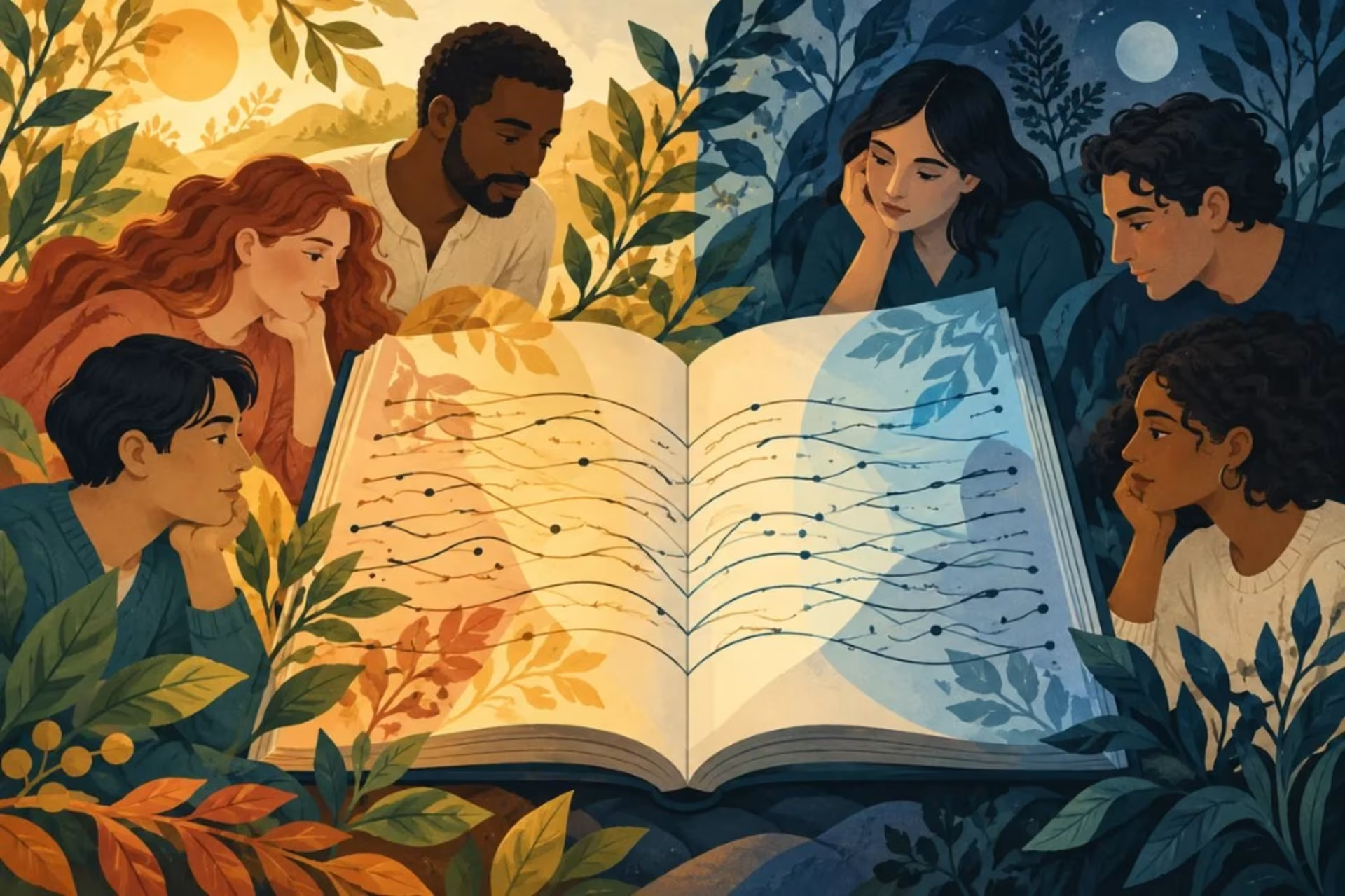
Epigenetics is how experience can change gene expression without changing the DNA letters. DNA is the script. Chemical tags, including methyl groups, help decide which lines get read. Stress, nutrition, trauma, and early care can add or remove tags, so some genes are read more loudly or more quietly. The sequence stays the same. The settings change.
Two findings made this concrete.
The Dutch Hunger Winter. In the winter of 1944–45, a famine in the Netherlands exposed pregnant women to severe caloric restriction. About 60 years later, people who had been exposed before birth showed different methylation of a growth-related gene, IGF2, compared with siblings who were not exposed (Heijmans and colleagues, 2008). The famine left a chemical signature that was still measurable in late life.
Michael Meaney's rat studies. Rat mothers differ in how much they lick, groom, and nurse their pups. Pups of highly nurturing mothers grew into calmer adults, with a different pattern of expression at a stress-hormone receptor gene. Pups of less attentive mothers were more stress-reactive. When pups were switched to another mother at birth, they took on the stress pattern of the mother who raised them, not the mother who gave birth to them (Weaver and colleagues, 2004). Care, not just inheritance, set the pattern.
A human postmortem study found a similar methylation pattern at that stress-receptor gene in people who had been abused in childhood. Whether epigenetic marks are reliably passed to grandchildren in humans is still debated. The evidence is clearer in animals, and we should not claim that trauma is definitely handed down as a genetic inheritance in people. What we can say is that early adversity can leave lasting marks on stress biology inside one lifetime, and that some of those marks look changeable. Animal studies of richer, more supportive environments have reversed stress-related epigenetic changes. In people, the practical version is already useful: the environment you build now, including therapy, relationships, sleep, and how you handle stress, still changes symptoms and patterns, even while the molecular details are still being mapped.
A Second Timeline: Change Across Generations
Epigenetic change happens inside one life. Evolutionary change happens across many generations, through natural selection. Both involve the environment and biology. They are not the same process.
The peppered moth is the classic example. Most moths were light-colored and hard to see on pale bark. A dark variant, tied to a genetic change dated to around 1819, was easier for birds to spot on those trees. When industrial soot darkened bark in English cities, the dark form spread because light moths were easier prey. In Manchester it went from a rare record in the mid-1800s to roughly 98 percent of the population by 1895, on the order of 50 generations. After clean-air laws in the 1950s, the light form returned and became common again. The soot did not rewrite any one moth's DNA. It changed which variation survived, and that variation spread.
In humans, lactose tolerance in adulthood spread within roughly the last 5,000 to 10,000 years in populations that kept dairy animals. Culture and environment fed back into which genes the population carried. Across generations, nurture influences which parts of nature persist. Nature and nurture are not opposites. They keep shaping each other.
Nature vs Nurture Examples in Daily Life

Siblings in one home. Two children can share genes and a roof and still differ in temperament, interests, and coping. A teacher who connects with one of them, or a friend group that fits the other, is part of what behavioral genetics calls the non-shared environment.
School. A student with strong potential to learn can flourish in a steady, well-resourced school and struggle in a chaotic, under-resourced one. Educational attainment is both nature and nurture.
Music. Perfect pitch appears to need both a genetic contribution and musical training. Neither one alone is enough. That is a clean case of genes and environment having to cooperate.
Mental health. Someone with anxiety in the family may stay relatively steady in a supportive setting. Another person with similar genetic risk may develop panic after chronic stress or trauma. Same kind of risk, different environment, different outcome.
Relationships. Early attachment and temperament together shape adult trust and conflict style. Those patterns can feel permanent. They are not.
Nature, Nurture, and Mental Health
Most mental health conditions come from both, not from a single cause. Family history raises the odds of depression, anxiety, bipolar disorder, and some other conditions. It does not require them. Loss, trauma, chronic criticism, isolation, and discrimination often decide whether symptoms show up. A sensitivity to anxiety may never become a clinical problem in a stable setting where someone learns workable coping skills.
Early neglect, abuse, or a chaotic family can contribute to complex trauma and to long-running changes in stress response, emotion regulation, and beliefs about self and others. Those changes are biological and psychological at the same time. A complex trauma test is one low-pressure way to notice whether that history is still organizing daily reactions.
Supportive relationships, therapy, medication when it is appropriate, and ordinary lifestyle changes can buffer genetic risk. Treatment works in part because nurture shapes biology, not only the other way around. We offer care for anxiety, depression, trauma and PTSD, and bipolar disorder, with the biological vulnerability and the life around it kept in the same conversation.
From Nature vs Nurture to Schemas
Schemas are deep patterns of belief about yourself, other people, and the world. They grow where temperament meets early relationships. In schema therapy, we treat them as adaptations that made sense in an earlier environment and may not fit the life you are in now.
Abandonment: the expectation that close people will leave.
Defectiveness or shame: the belief that something is fundamentally wrong with you.
Failure: the conviction that you will fall short no matter what you do.
Emotional deprivation: the sense that your emotional needs will not be met.
These often feel inborn. A sensitive child with inconsistent caregivers can develop an abandonment schema because of how temperament and care interacted, not because of genes alone or parenting alone. Schema therapy, cognitive behavioral therapy, acceptance and commitment therapy, and somatic work help people name the pattern and try a new response. The free Schema Questionnaire is a place to see which relational patterns may still be active.
How Therapy Uses Nurture

Therapy is a new environment: consistent, specific, and corrective. Repeated new experiences can reshape emotional habits and the brain systems that handle threat and emotion regulation. That is nurture with a job to do.
Cognitive behavioral therapy works on thoughts and behaviors that were protective once and now keep anxiety, depression, or relationship problems going.
Acceptance and commitment therapy and mindfulness change the relationship to difficult thoughts and feelings, including a tendency to ruminate or worry.
Somatic therapy and trauma-focused work such as EMDR can settle stress systems that early experience and biological sensitivity shaped together. Research on EMDR and neuroplasticity fits a broader finding: psychotherapy is associated with measurable changes in brain activity tied to emotion regulation and threat detection.
We also offer individual therapy, family therapy, support groups, and mental health retreats when a more intensive environment would help.
Nature vs Nurture in Child Development

Temperament is a biological starting point. Some infants are easy to settle. Some are more reactive. Some are slow to warm. How adults respond to that temperament matters as much as the starting point. Responsive, structured care can reduce the impact of genetic risk. High stress, neglect, or abuse can magnify it.
Attachment patterns come from repeated caregiver-child interactions, and they interact with how sensitive a child is. Insecure attachment and relational trauma can echo for decades. They can also be worked with directly. We offer child therapy and teen therapy so families can build an environment that works with a child's temperament instead of against it.
What This Means for Choice

If so much was set before you could choose it, do you still have agency? Knowing the influences is not the same as erasing responsibility. It reduces shame. You did not choose your genes or your early environment. You can choose what you practice now, which relationships you invest in, and whether you ask for help.
Some traits have strong biological roots, including temperament and sexual orientation. Therapy does not try to change who you are. It helps you build a life, and a set of responses, around the person you already are. Many people arrive feeling doomed by family history or childhood adversity. Evidence-based therapy is one way the nurture side of the equation gets rewritten on purpose.
Turning the Science into Care
If nature and nurture interact, then the environment you create now is one of the strongest levers you have. We offer therapy in San Francisco, therapy in Oakland, and online therapy across California, using CBT, ACT, DBT, schema therapy, EMDR, somatic therapy, and mindfulness, fitted to one person's biology and history.
If anxiety, low mood, relationship struggles, traumatic memories, or self-defeating patterns have been hard to change alone, schedule a free consultation and we can talk about fit.
Frequently Asked Questions About Nature vs Nurture
<p>Many personality traits show moderate heritability, often in the range of about 40 to 50 percent, with the rest tied to environment and to experiences that are unique to you. A genetic contribution sets a range, not a fixed point. Therapy and new experiences can change how an anxious or outgoing tendency shows up day to day.</p>
<p>Family history raises risk. It is not a sentence. Many people with depression or anxiety in the family never develop a clinical disorder, especially when relationships are steady and coping skills and treatment are available. CBT and acceptance and commitment therapy can reduce symptoms even when genetic risk is high.</p>
<p>Research has found that effective psychotherapy is associated with changes in brain activity and connectivity, especially in regions involved in emotion regulation and threat detection. Therapy is a structured learning environment. Repeated new experiences make healthier responses more available. That fits what we know about neuroplasticity, without requiring a claim that every chemical mark on DNA has been mapped.</p>
<p>Severe or chronic trauma can influence gene expression and stress systems. That is epigenetics. It does not rewrite the DNA sequence. Research in humans is still evolving on which changes are fully reversible, and on whether they pass to later generations. That part is clearer in animals than in people. Healing relationships and trauma-focused therapy can calm the nervous system and reduce symptoms now, even without a complete molecular map.</p>
<p>Consider reaching out if anxiety, low mood, relationship struggles, traumatic memories, or self-defeating patterns keep returning and are hard to change on your own. A schema questionnaire or a complex trauma test can be a low-pressure starting point. A free consultation is the next step if you want to talk about therapy in San Francisco, Oakland, or online across California.</p>