Decoding the Neurobiology of Trauma: Brain’s Response to Psychological Stress

Understanding the neurobiology of trauma is crucial as it shapes our response to life’s most distressing events. This article explains how different brain areas, such as the amygdala and hippocampus, work in unison during a traumatic event, leading to physical and psychological changes that can persist long after. Learn the why behind these reactions and the potential for recovery as we delve into the brain’s remarkable, albeit sometimes troubling, resilience to trauma.
Trauma also reshapes the body-to-brain signaling that runs through the vagus nerve. Our guide to the vagus nerve and mental health explains why people with PTSD show measurably lower heart rate variability, and what helps.
Key Takeaways
-
Traumatic stress triggers a complex response in the brain involving key regions such as the amygdala, hippocampus, and prefrontal cortex, which orchestrates immediate survival reactions and can have lasting effects on memory, emotional regulation, and cognitive functions.
-
Childhood trauma can have profound and long-term impacts on a person’s neurological development and mental health, with changes in brain structure and function leading to increased risk for psychiatric disorders. Factors such as resilience and social support play crucial roles in moderating these effects.
-
Research is advancing the understanding of how genetics and epigenetics interact with trauma, which is critical for developing personalized treatments. These approaches are exploring stress-protective factors, molecular biology, and innovative therapies to improve outcomes for trauma survivors.
The Brain’s Response to Trauma: Key Regions and Systems

Trauma is an unwelcome intruder, one that the brain confronts with a complex network of defenses and adaptations. Key players in this drama include the amygdala, hippocampus, and prefrontal cortex—brain regions involved in a symphony of responses that mobilize the body and psyche to face immediate threats. The autonomic nervous system and the HPA axis, the body’s stress response system, also jump into action, prioritizing survival over all else. In this process, various brain areas work together to ensure the most effective response to the trauma.
In the midst of trauma, the brain’s usual hierarchy is upended as survival-based responses take the helm, sometimes shutting down complex cognitive functions in a dramatic display of prioritization.
Amygdala
Acting as the alarm system, the amygdala is the bastion of emotion within the brain, particularly when it comes to fear processing. It captures the emotional significance of traumatic events, encoding the intensity and impulse of emotions that accompany memories of fear and danger. Not only does it trigger immediate survival responses, such as freezing or immobility, but it also holds the visual images that can haunt us long after the traumatic experience has passed.
Hippocampus
Close to the amygdala lies the hippocampus, a key player in the formation and retrieval of memories. It is the brain’s scribe, meticulously encoding new experiences and contextual information. Yet, when trauma strikes, its function can be compromised, leading to a scattered and fragmented processing of traumatic memories.
The hippocampus bears the brunt of traumatic stress, which can manifest as reduced volumes and is intricately linked to impairments in memory and an inability to regulate stress—a hallmark of PTSD.
Prefrontal Cortex
At the forefront of our cognitive empire stands the prefrontal cortex, the overseer of our higher-order cognitive processes and emotional regulation. It grants us the power to analyze, decide, and moderate our behavior in socially acceptable ways. However, in the heat of a traumatic encounter, the brain responsible for fear circuitry can usurp its dominion, resulting in a primal fight, flight, or freeze response.
This interruption can lead to persistent difficulties in attention, problem-solving, and emotional regulation, contributing to the prolonged effects of trauma on mental health.
Early Life Trauma and Its Lasting Effects

Trauma’s shadow can stretch far into one’s life, particularly when it takes root early. Early life trauma can carve enduring patterns into the developing brain, altering its architecture and the course of one’s life trajectory. Prolonged activation of stress hormones during childhood can prune neural connections, potentially stunting learning and reasoning capabilities.
Adolescence, a critical period of growth, can see the embedding of pathological behaviors as markers set down by neuronal and immune responses to trauma.
Childhood Adversity
The scars of childhood adversity can shape our futures in profound ways. From cardiovascular to brain health, the ripple effects of early trauma exposure are both broad and deep. The groundbreaking Adverse Childhood Experiences (ACE) study casts a stark light on this reality, demonstrating that the accumulation of childhood adversities correlates strongly with an uptick in health issues later in life.
These early traumatic experiences can also sow the seeds for emotional and behavioral problems such as aggression, risk-taking, and difficulties with relationships—a chain of consequences that can persist and proliferate over time.
Neurodevelopmental Impact
The neurodevelopmental impact of early life trauma is not to be underestimated. Structural changes in the brain, particularly in the hippocampus, can result from such trauma, affecting both memory and the ability to manage stress. The repercussions extend to the HPA axis, the body’s stress thermostat, which may become dysregulated, altering cortisol responses and setting the stage for future stress reactivity challenges.
Experiencing trauma during formative years can also disrupt gene expression, increasing the risk for psychiatric disorders like PTSD.
Resilience Factors
Not all those who encounter early life trauma will tread the same path, thanks to the power of resilience. Stable and nurturing care during childhood can foster resilience, serving as a bulwark against the potentially debilitating effects of trauma.
The development of resilience is a dynamic process, influenced by traits such as optimism and cognitive flexibility, and is not simply the absence of PTSD symptoms. Social support networks and adaptive coping strategies, such as mindfulness, can act as critical buffers, bolstering individuals against PTSD and nurturing a resilient response to life’s adversities.
The Interplay between Genetics and Trauma
The intricate dance between genetics and trauma is a fascinating aspect of the neurobiology of trauma. Genetic predispositions can either amplify or mute our stress response, influencing how resilient we are when confronting early life trauma.
As we progress through adolescence, the interplay of genes and environment sculpts our behavioral and biological responses to trauma, with long-term consequences that can shape our very identity.
Genetic Risk Factors
Our genetic makeup can be a double-edged sword in the aftermath of trauma. Genetic risk factors, accounting for a substantial percentage of PTSD heritability, may predispose some individuals to trauma-related disorders. Polymorphisms in genes linked to neurotransmitter systems, such as serotonin and dopamine, along with genes like BDNF and the stress-related FKBP5 gene, have all been associated with PTSD risk.
These gene-environment interactions, such as the one between the CNR1 gene and childhood physical abuse, underscore the complex nature of PTSD risk and its potential predictability.
Epigenetic Modifications
Beyond genetics, the trauma narrative extends into the realm of epigenetics. Traumatic experiences can leave an epigenetic imprint, modifying how genes are expressed without altering the underlying DNA sequence. DNA methylation and histone modification are two such mechanisms that can lead to lasting changes in gene expression, especially when trauma occurs during critical developmental periods.
These epigenetic alterations can have wide-ranging effects, impacting mental health and increasing vulnerability to disorders such as PTSD.
Personalized Treatment Approaches
The knowledge of genetics and epigenetics in the context of trauma holds the key to unlocking personalized treatments for trauma-related disorders. Genetic variations, particularly those affecting the stress response, can guide the customization of treatment strategies for individuals with PTSD.
Innovative tools and computational approaches are being utilized to identify gene-specific drug candidates and optimize treatments, paving the way for a more tailored approach to managing PTSD.
How NeuroImmerse Revolutionizes Trauma Recovery
Trauma fundamentally alters the brain and body, leaving lasting effects on memory, emotions, and self-perception. A traumatic experience triggers a brain response rooted in survival, often leading to patterns of dissociation, depression, and anxiety. NeuroImmerse offers a groundbreaking approach to addressing these challenges by leveraging the brain’s natural capacity for healing through functional neuroplasticity.
Through immersive, evidence-based exercises, NeuroImmerse provides focused exposure therapy in a safe and regulated environment. This exposure allows the brain and body to process unresolved traumatic experiences, enabling the brain responsible for survival mechanisms to rewire and restore consistent emotional regulation. By working within the window of tolerance, NeuroImmerse exercises reduce the overwhelming brain response that often occurs during traditional therapeutic methods, making recovery not just a possibility but an achievable goal for humans navigating trauma.
Bridging the Brain-Body Connection with NeuroImmerse
Trauma doesn’t just affect the brain; it disrupts the entire body’s nervous system, creating a loop of heightened stress responses, dissociation, and emotional dysregulation. NeuroImmerse exercises are designed to rebuild this critical brain-body connection, offering consistent and focused communication between neural pathways. By integrating insights from neuroscience and psychology, NeuroImmerse promotes self-awareness, helping individuals reconnect with their sense of self while fostering emotional resilience.
The exercises target differences in how trauma manifests in brains and bodies, offering tailored approaches that prioritize safety and regulation. By creating a state where processing traumatic experiences can occur without overwhelming the nervous system, NeuroImmerse enhances focus, improves memory, and supports the healing of deep-seated emotional wounds. With consistent use, participants gain insight into their emotional patterns, allowing for meaningful change and a renewed sense of self. NeuroImmerse isn’t just a tool for recovery—it’s a revolution in trauma therapy.
Physical Injury and Trauma: Shared Neurobiological Features
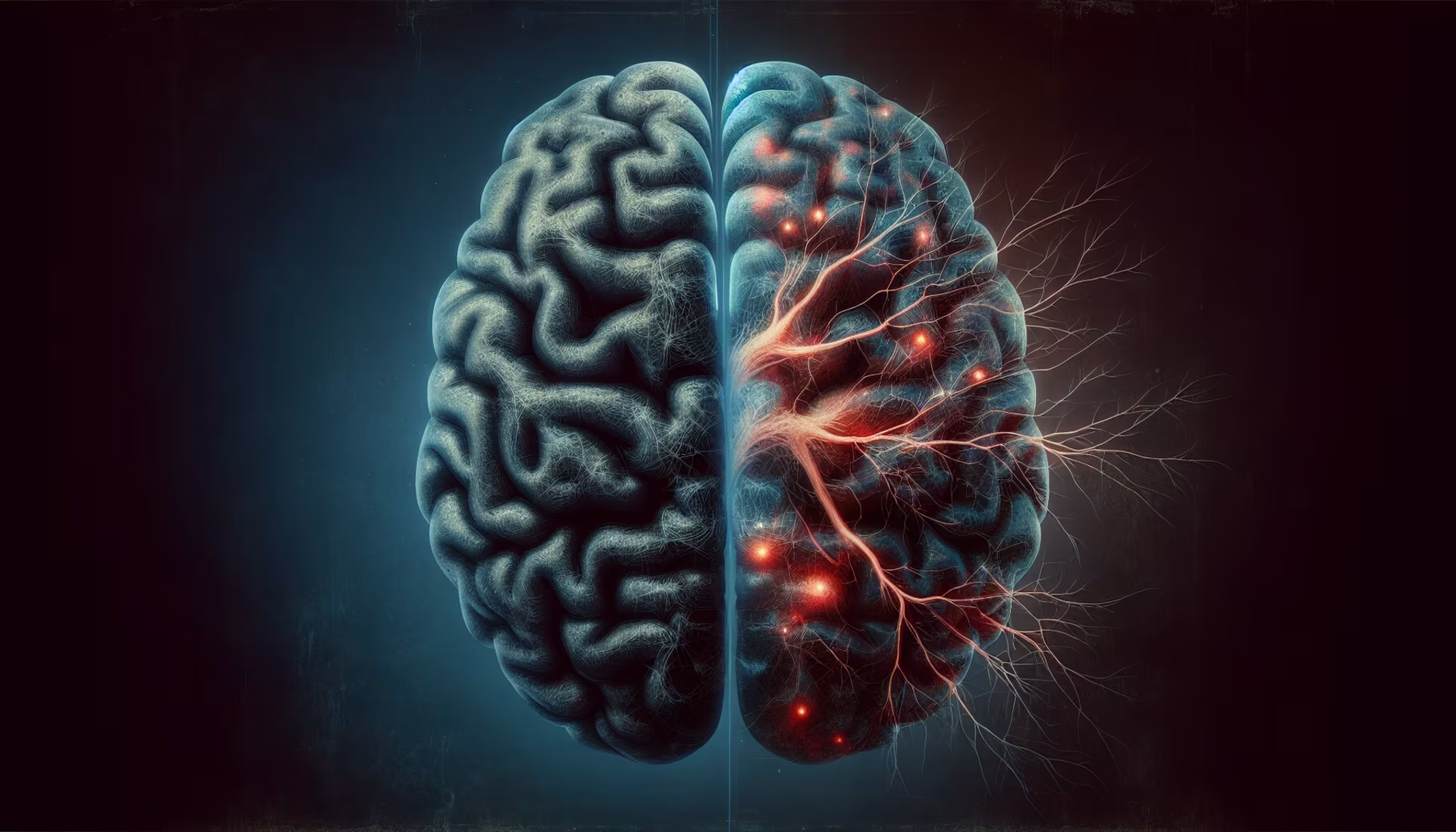
The aftermath of trauma, whether psychological or from a physical injury, leaves a common signature in the brain. Neuroinflammation is a shared response, with glial cells becoming activated and contributing to a systemic inflammatory state following both types of trauma.
Alterations in neurotransmitter systems, such as serotonin and glutamate, further exemplify the shared neurobiological response to both physical brain injury and psychological trauma, leading to changes in brain structure and function.
Brain Circuitry Alterations
The brain circuitry changes observed in PTSD and traumatic brain injury (TBI) underscore the shared pathophysiology between these conditions. Both can result in permanent alterations to neurotransmission, affecting cognitive and behavioral functions, and highlighting the need for a deeper understanding of the brain’s recovery processes.
Novel neuroimaging technologies are shedding light on these structural and functional brain changes, offering insights that could revolutionize treatment approaches.
Endocrine and Immune System Dysregulation
Trauma can leave a lasting mark on the body’s endocrine and immune systems. PTSD, in particular, is characterized by dysregulation of the HPA axis, leading to altered cortisol levels and affecting both endocrine and immune functions.
The complex interplay between systemic and neuroinflammation plays a role in the development of trauma-related disorders, with varied implications for the susceptibility to PTSD.
Treatment Implications
Understanding the commonalities between PTSD and TBI can inform the development of targeted treatments. Since trauma can disrupt the functioning of the prefrontal cortex, crucial for rational thinking and emotional regulation, certain treatments such as talk therapy may be less effective for individuals whose prefrontal cortex is ‘offline’ due to trauma.
Recent Advances in Trauma Research: Novel Findings and Future Directions

The field of trauma research is constantly evolving, with recent advances offering new hope and possibilities for treating trauma-related disorders. These novel findings and future directions are a response to the limitations of current therapeutic approaches, aiming to enhance efficacy and reduce dropout rates from treatment programs.
Personalized and effective therapies are on the horizon, with research identifying individual factors that predict treatment response or nonresponse.
Stress-Protective Factors
Explorations into stress-protective factors are uncovering mechanisms that may shield against the debilitating effects of trauma. Research suggests that parental stress can lead to epigenetic changes in offspring, potentially offering a protective buffer against the transmission of stress effects across generations.
Molecular Biology and Gene Expression
The molecular landscape of trauma is a frontier rich with potential for therapeutic intervention. Discoveries of new molecular targets, like the glucocorticoid receptor, are opening new avenues for medication development aimed at modulating the biological pathways involved in the stress response.
Advances in understanding neurotransmitter changes post-TBI are informing interventions that could improve recovery outcomes and reduce the risk of chronic symptoms.
Innovative Treatment Approaches
Innovative treatment approaches are being explored to enhance the outcomes for trauma survivors. Non-pharmacological interventions like rTMS, exercise, and cognitive training are being researched for their potential to improve PTSD treatment outcomes.
Medication-enhanced psychotherapy, such as with MDMA, D-cycloserine, and oxytocin, is another novel approach under investigation, offering the promise of augmented response to trauma therapies.
Summary
Our exploration into the neurobiology of trauma has traversed the complex terrain of the brain’s response to psychological stress. We’ve uncovered the roles of key brain regions, the lasting effects of early life trauma, the genetic and epigenetic factors at play, and the shared neurobiological features of physical injury and trauma. The advances in trauma research offer a beacon of hope, illuminating innovative treatments and strategies that could reshape the landscape of trauma therapy. As we continue to decode the enigma of trauma’s impact on the brain, there’s an optimism that the future holds personalized, effective treatments that not only address the symptoms but also foster resilience and healing.
Wondering if complex trauma is impacting your daily life and what to do about it? Take our childhood trauma test to find out.
Bay Area CBT Center services include therapy and mental health quizzes if you want a starting point.