Team Building Activities That Actually Change How Your Team Works

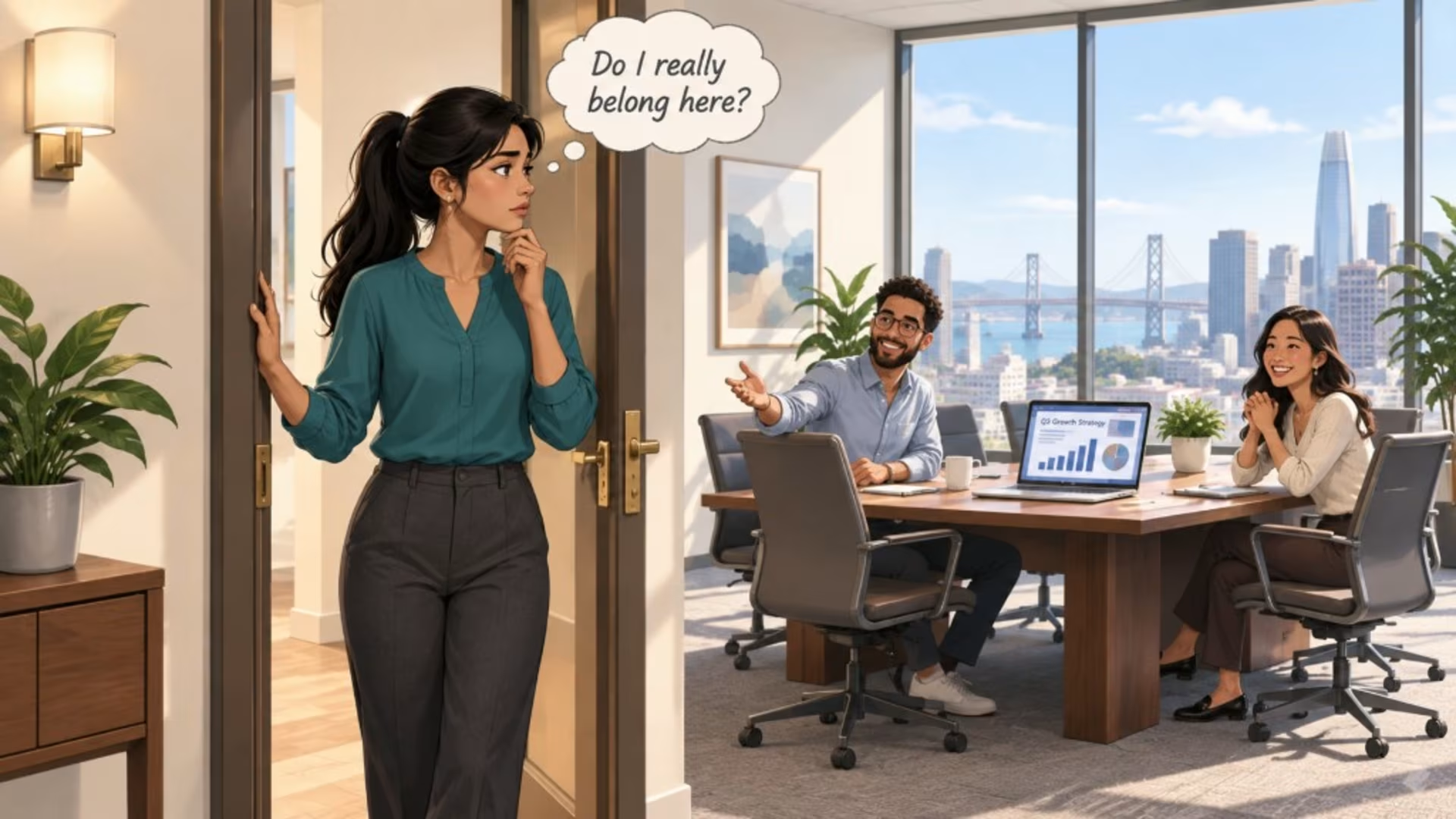
Most team building activities are fun for an afternoon and change nothing by Monday. Your team does not struggle because people do not know each other's hobbies. It struggles because of avoided conversations, unspoken resentments, defensiveness, and old patterns people carry from the rest of their lives into every meeting, email, and project.
These team building activities can shift how teams communicate, handle conflict, and support each other under real pressure. Whether you have a few minutes in a meeting or a full offsite, every activity here is meant to surface patterns and practice new behavior with the specific people you work with.
Key Takeaways
The best team building activities do not just create fun moments. They surface real communication patterns, conflict styles, and unspoken tension so the team can change how it works on Monday morning.
Bay Area CBT Center uses CBT, ACT, and schema therapy so that a puzzle, a shared meal, or improv becomes practice in feedback, boundaries, and values.
Both in person and virtual fun team building activities, including board games, a jigsaw puzzle challenge, and a cooking class, can ease work stress when they are paired with a real debrief.
Leaders can put short games into a regular team meeting to build psychological safety, not just fill the calendar.
You can book a free consultation to design team building and organizational coaching that match how your team actually works.
Why Team Building Activities Matter More Than Happy Photos
Picture this: the company books an escape room, everyone scrambles through puzzles for an hour, then heads to happy hour. People laugh, post a few photos, and by Tuesday the same person is still dominating meetings. Nobody mentions the offsite again until someone schedules the next one.
That is not a failure of fun. It is a failure of design.
Teams do not fall apart because people lack shared interests. They fall apart because of avoided conversations, people-pleasing, defensiveness, burnout, and old relational patterns that team members do not name. Team building activities improve communication and trust among team members only when they are built to show what is already happening.
Gallup's 2024 Q12 meta-analysis compared teams in the top and bottom quartiles of engagement. The more engaged teams showed 23% higher profitability and 78% lower absenteeism. That is a finding about engagement, not proof that a scavenger hunt cuts absences. Psychological safety, the shared belief that a team is safe for interpersonal risk-taking, is what lets team members tell the truth in the room. Trust comes from practicing honesty and feedback with the people you actually work with.
Another scavenger hunt will not fix a cultural problem. Team building activities that show how people operate under pressure can.
Our Evidence-Based Approach to Fun Team Building
At Bay Area CBT Center, we use the same methods we use in therapy, including CBT, Acceptance and Commitment Therapy, and schema-informed work, on how people behave at work. That shapes our organizational coaching, executive coaching, corporate training, and life coaching.
Schemas at work. Patterns such as perfectionism, mistrust, and self-sacrifice show up in meetings, emails, and light office games. One team member takes over a puzzle because they cannot tolerate a crooked piece. Another stays silent because speaking up used to get punished. These are schemas, and they are already running the room. A workplace schemas quiz is a plain way for a person, or a whole leadership group, to see the pattern they bring in.
CBT reframing. When a team falls behind on a timer, thoughts like "we are incompetent" or "someone will get blamed" show up fast. CBT helps the group notice the thought and test it.
ACT and values. We help teams name what they actually value, not what the poster says, and then watch how their behavior matches those values under pressure.
Each of these team building activities is paired with a structured debrief: what happened, what patterns showed up, and what new behavior the team wants to practice next week. A 2013 meta-analysis by Tannenbaum and Cerasoli pooled 46 samples and 2,136 people. Structured debriefs improved performance by about 25% compared with a control group. The average debrief in those studies lasted about 18 minutes.
We offer in person workshops in the Bay Area and virtual sessions for distributed teams across California. If the real need is a longer reset, a therapist-led corporate retreat is a different format from an afternoon of games.
Quick Team Building Activities You Can Do in a Meeting
You do not need a full day or a big budget to promote teamwork. These fit into 10 to 20 minutes of a staff meeting and can strengthen communication without requiring intense self-disclosure.
Team size changes the exercise. A team size of 4 to 6 fits a puzzle. A team size of 8 to 15 can count out loud together. A larger team size needs to split, because a team size past about 15 hides the quiet people. Match the team size to the goal, and split the team size again if two conversations start at once.
Count to 20
Time: 5 to 8 minutes | Team size: 4 to 15
The group tries to count to 20, one number at a time, with no assigned order. If two people speak at once, restart at 1. No hand signals.
Debrief (3 minutes): Who jumped in? Who held back? Did someone start directing, or did the group learn to read silence? Connect it to how speaking turns work in the next team meeting. This is one of the team building games that costs nothing and still shows the pattern.
Rapid Jigsaw Puzzle Challenge
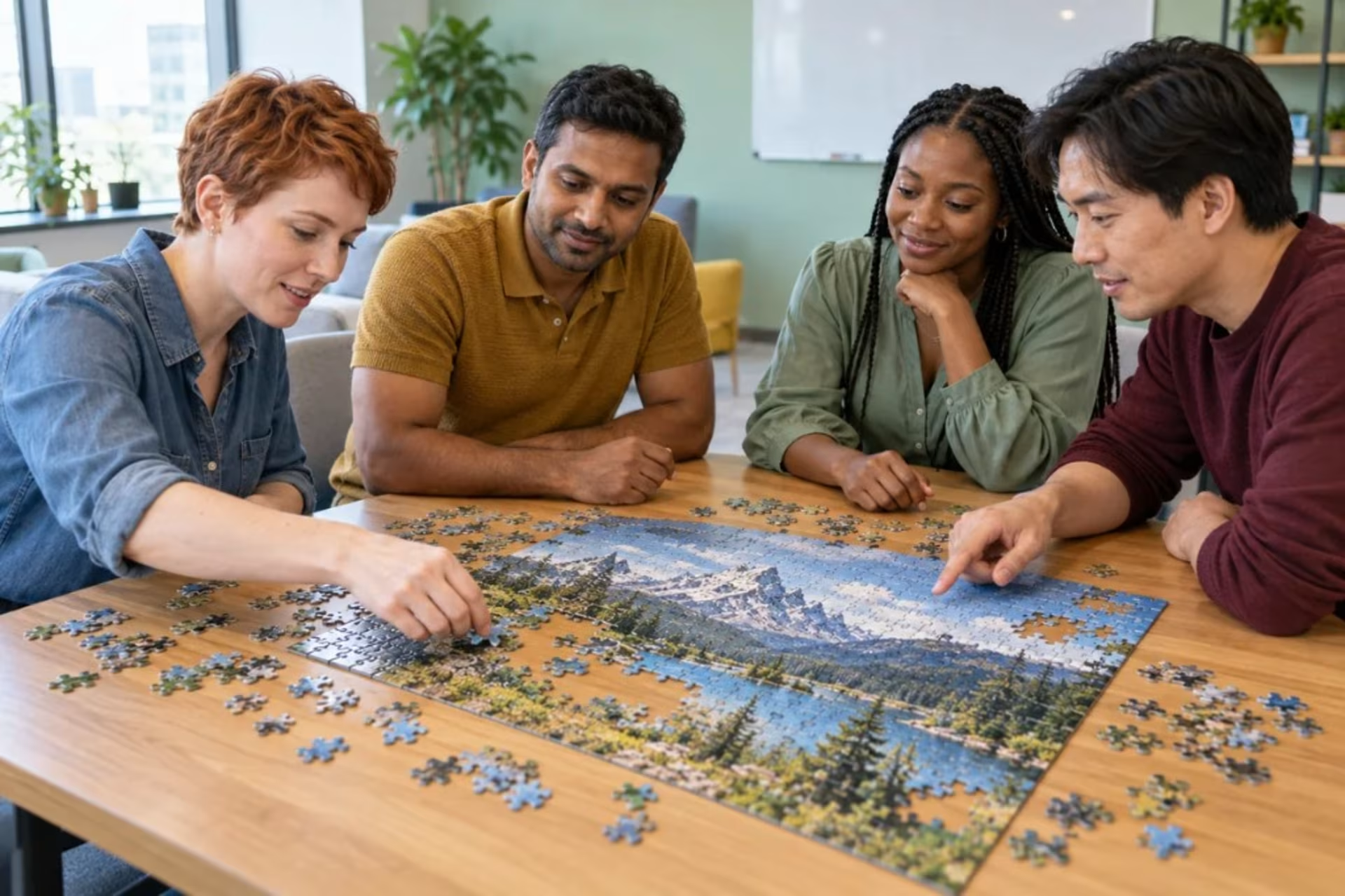
Time: 10 to 15 minutes | Team size: 4 to 8 per puzzle, and it works with multiple teams
Give small teams identical puzzles and a time limit of 10 minutes. A few pieces from each puzzle have been swapped. Teams have to negotiate with other team members to get the missing pieces.
Debrief (5 minutes): How did people handle needing something from another group? Did anyone hoard pieces? This mirrors cross functional teams sharing resources. Critical thinking shows up when someone asks which assumption the group just made.
Micro Escape-Room Logic Puzzle
Time: 10 to 12 minutes | Team size: 3 to 6 per group
Print a one-page logic puzzle and have small groups solve puzzles under a time limit. A second pass in small groups often shows a different leader. It is enough to show who takes charge, who asks a clarifying question, and who withdraws when the clock is visible.
Debrief (5 minutes): What did you notice about how the group organized itself? This suits anxious or quieter teams because the focus is a shared task, not a confession.
Use these before a high-stakes launch, after a reorg, or when onboarding several new team members. These team building ideas are starting points. More team building ideas help only when the debrief is kept.
Fun Team Building Activities for the Workday (In Person)
These take 60 to 120 minutes and belong in paid work hours, not as unpaid overtime dressed up as culture.
Office Trivia (Company Edition)
Build a trivia game around company history, milestones, and industry knowledge. Mix in items a newer employee can answer, so the game is not a clique. Friendly competition keeps the energy up. Small teams of 3 to 5 work well. It is a fun way to mark company tenure without turning the afternoon into a ranking.
Cooperative Board Games
Games such as Pandemic or The Crew ask the entire team to win together or lose together. Board games that require cooperation show who talks through a plan, who defers, and who gets sharp when the plan changes. They are cheap, repeatable, and they encourage creative thinking, including a little extra creative thinking, without a vendor.
The Human Knot
Standing in a circle, group members reach across and hold hands with two different people, then untangle without letting go. The human knot asks for problem solving and communication skills. It is physical, a little silly, and it shows how a group handles unclear instructions and a round of problem solving.
Accessibility: Always offer a version for people who do not want physical touch. Ropes or ribbons keep the same tangle without body contact. Including everyone is part of the design, not an extra.
In the first ten minutes, watch team members rather than the score. Some team members fill every silence. Some team members wait for an invitation. Some team members laugh when the task gets hard. Some team members keep the marker. Asking team members what they noticed beats asking team members whether it was fun. The team members who usually go last often have the clearest read, and team members who went first may not have heard them.
Facilitators can pause and name what they see: "we rush," "we joke instead of disagreeing," "nobody delegated." Then the group tries a different approach in the next round. The best team building games in this set are short enough to repeat next month and compare.
Offsite Team Building: Escape Rooms and a Cooking Class
A half-day or full-day offsite, whether escape rooms, a ropes course, a cooking class, or an improv class, can be useful. It is still entertainment until you design the debrief.
Escape Rooms as a Look at the Team
Escape rooms put problem solving skills under a clock. They show who dominates, who defers, who hoards information, and how the group handles unclear instructions. A team's problem solving style in a 60-minute room often looks like the style that shows up on a real deadline. Virtual escape rooms give remote teams a version of the same look.
Cooking Classes as Collaboration Labs

A group cooking class shows assumptions about who takes charge, who cleans up, and who waits to be told. It can expose seniority-based or gendered assumptions about who should do what. It is a great team building activity for a team that wants something hands-on without a winner and a loser.
Turn the Event Into a Case Study
After the activity, a facilitator can structure a values-based reflection:
What values showed up? What values were missing?
Where did the pattern match real work?
What one behavior does each person want to try differently next week?
The event is the data. The debrief is where the change starts.
Schedule a follow-up two to four weeks after the team building event, and name one change before the next team building event and check whether the experiments stuck. Use one team building exercise this month and a different team building exercise next month, then compare them. One team event a year, with no follow-up, is how the photos replace the work.
Board Games, Office Games, and Jigsaw Puzzles
You do not need an expensive vendor. Team building games such as co-op board games, timed puzzles, and simple card games can show interaction patterns if you set norms first.
No trash talk. Healthy competition is not the same as shaming.
Explicit turns, so quieter group members get space.
Permission to pause the game when frustration shows up.
When a team falls behind on a timed puzzle, listen for the distortion. "We are going to lose" is catastrophizing. "This is pointless" is all-or-nothing thinking. "I should just do it myself" is often a perfectionism schema. Name it lightly: being behind and still learning something useful can both be true. Critical thinking is the skill underneath that pause.
These are cheap enough to repeat monthly, so the team can see whether the same person still takes over. Team building activities can include physical challenges and quieter ones. Board games sit in the quieter set. Various activities target a specific goal, such as communication or trust, and that goal should be named before the box comes out. Facilitators should encourage participants to name one pattern before they leave the room. That includes encouraging team members to take a turn and encouraging team members who usually edit themselves.
Classic Icebreakers That Build Safety
Icebreakers can feel cheesy or useful. The difference is the prompt. Thoughtful icebreaker games lower the temperature. Forced vulnerability raises it.
Two Truths and a Lie
Two truths and a lie lets team members share a light personal fact without a performance of depth. Keep the prompts ordinary: a work story, a trip, a hobby. Two truths and a lie works because the stakes stay low.
Appreciation Circles
Each team member shares one specific thing they appreciated about another person's work that week. The point is concrete feedback, which most teams rarely practice out loud.
Something That Helped Me This Month
Skip "share your deepest secret." Use a bounded prompt: what helped you this month, or what you are looking forward to. Leaders can go first without turning the meeting into a confession.
Virtual versions: chat for written answers, breakout rooms for pairs, or a whiteboard of mood images. The same prompts work in person or on video.
These help a new group, or a group coming back after conflict, when people need a safe way in. A scavenger hunt can do the same job for a larger group if the list is kind and nobody is singled out.
Trust-Building Activities, Past the Trust Fall
Most employees are tired of trust falls. Useful trust building is smaller and consent-based. People practice relying on each other in a way they can decline.
Blindfold Navigation
One person wears a blindfold. A partner guides them around a few chairs using only words. It practices clear instructions, communication skills, and active listening. Those communication skills matter again when the instruction is about real work, and communication skills under pressure are the ones that slip. Active listening is the skill, not the blindfold.
Silent Line-Up
Without speaking, the group lines up by company tenure, birthday month, or department. The task shows how people coordinate when they cannot talk over each other.
Guided Drawing
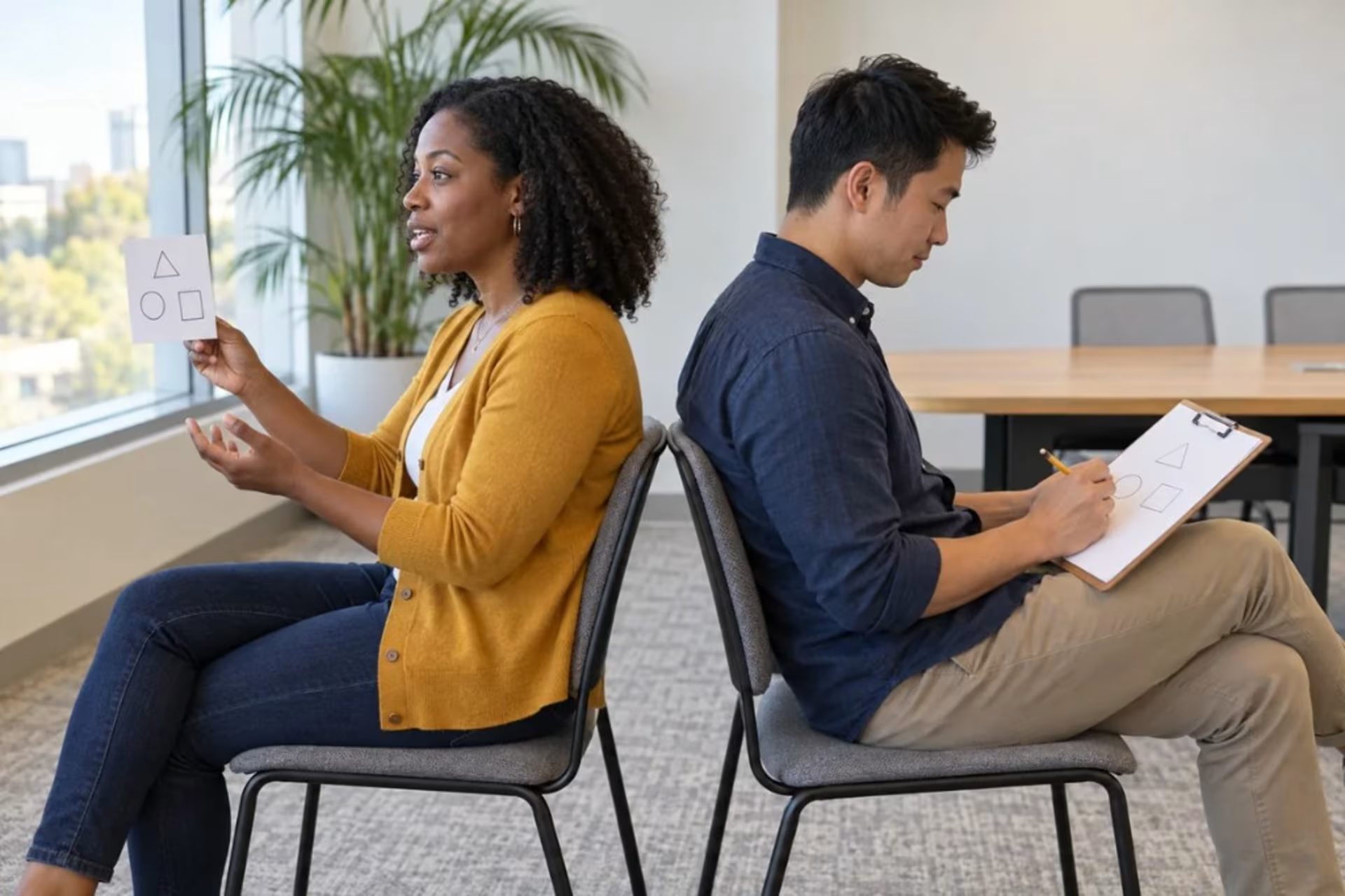
One person describes a simple image. Their partner draws it without seeing the original. The mismatch is usually funny, and it is a clean lesson about assumptions and team collaboration. You can see team collaboration when the pair fixes the instruction together. Creative problem solving shows up when the pair stops blaming the drawing and starts fixing the instructions.
Consent: Offer a non-physical version for anyone with a mobility limit, an injury, or a trauma history. Let people opt into a blindfold. Do not assign it.
Afterward, ask what made people feel more safe or less safe. Then connect it to a real meeting: what would it take to feel this steady when giving feedback in the next sprint review? Effective team building activities improve collaboration by building that kind of trust, not by making people catch each other.
Problem-Solving Games for Teams That Already Know Each Other
Once people know each other's names, the useful shift is decision-making, conflict tolerance, and a higher bar for the work.
Marshmallow Challenge

Teams build the tallest freestanding structure from spaghetti, tape, string, and one marshmallow on top. The marshmallow challenge rewards a quick test and punishes a long plan that never gets built. It is a clean way to encourage creative thinking and to watch who needs the plan to be perfect before anyone moves.
Egg Drop
Design a container from limited materials so an egg survives a drop. This is creative problem solving under a constraint, with a result everyone can see. The limit is the point of the problem solving.
Barter Puzzle
Give multiple teams different puzzles, each missing pieces that another group holds. The barter puzzle requires trade, persuasion, and coordination across groups. It is a logic task and a negotiation at the same time.
Internal Hack Time
Give small teams a half-day on a real company pain point. This is applied work, not a party game. Rotate roles such as facilitator, skeptic, and timekeeper so the usual hierarchy does not run the hour.
A facilitator can bring in an ACT idea here: you are stuck and frustrated, and you can be willing to stay with that discomfort long enough to try a different move. That is how a team can improve problem solving skills over time, instead of defaulting to the safest option. Strategic thinking is part of it. So is noticing when the safest option is just the familiar one.
Memory Walls and Story-Based Activities
Story-based activities help a team make sense of shared history. They matter during a transition: after layoffs, a merger, or very fast growth.
A Deeper Trivia Game
A second trivia game can use milestones and company culture, with questions a new person can still answer. Keep it a fun game. Do not make tenure the only way to score.
Memory Wall
Team members post a work memory or a proud moment on a sticky note and cluster them by theme: risk, support, learning, survival. When a team member shares a hard memory, a failed launch or a round of layoffs, the facilitator stays with it instead of steering back to cheer. One team member shares. The rest listen.
This can hold grief and organizational change without pretending the year was only a highlight reel. Communication activities also help people learn each other's strengths. A few team building games belong in the monthly rotation for the same reason: repetition makes the pattern visible.
Improv Class, Role-Play, and Communication Drills
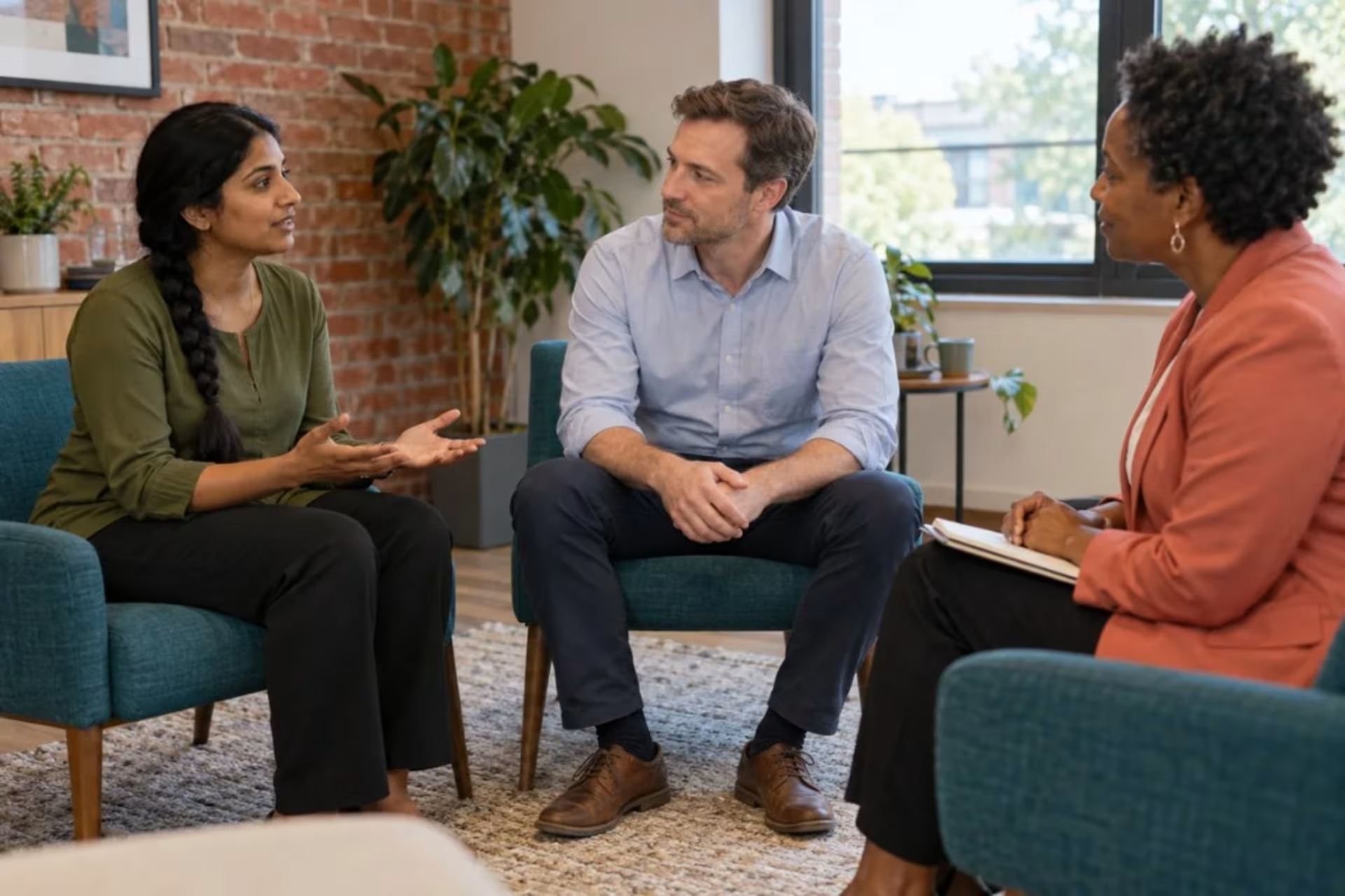
Communication-heavy work, including an improv class, a structured role-play, and a difficult-conversation drill, builds the teamwork skills that matter when the work gets hard.
Yes, And
The classic improv class exercise: one person makes a statement, and the next person builds on it. It practices acceptance and collaboration. It is a fun way to loosen a competitive environment without a winner.
Mock Performance Review
Pairs practice giving and receiving feedback from a script. We bring in skills from couples work and schema therapy: a soft start, naming the emotion, and separating what you saw from what you decided it meant.
Upward Feedback Role-Play
A team member practices feedback to a manager about a real pattern, with the details changed. People-pleasing, defensiveness, and anxiety show up here. Team building activities encourage open communication when the simulation is actually safe.
Safety: an opt-out, a content boundary, and a debrief about what surfaced. Leaders attend as participants, not as judges. Team building games are not a substitute for that conversation, and they should not be used to corner someone in public.
Virtual and Hybrid Team Building Activities
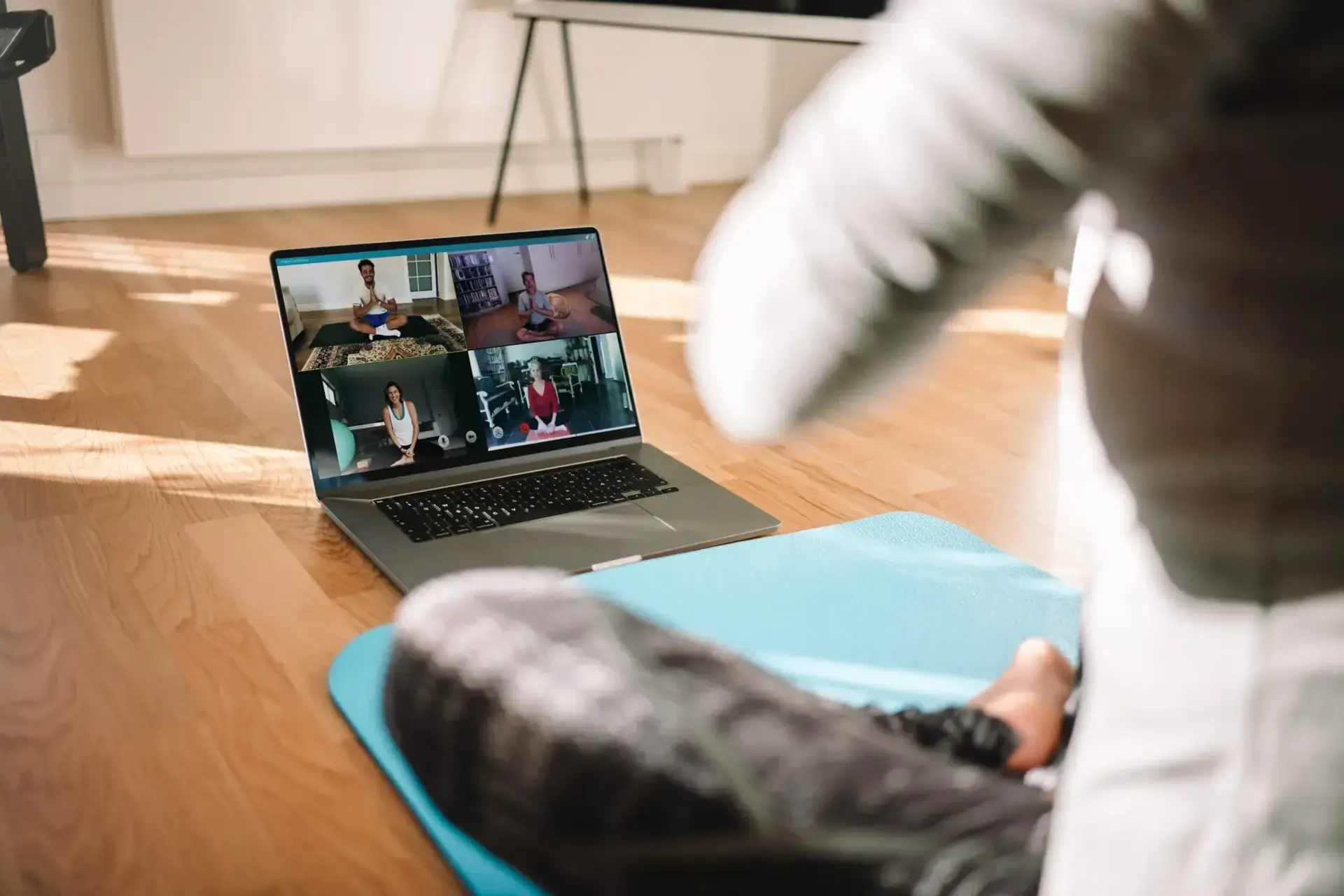
Working remotely changes contact. It can increase isolation, and it can make anxiety or low mood easier to hide if nobody builds a ritual on purpose. Virtual team building activities help remote teams stay in the work together. People working remotely still need a turn to speak, not only a link in the chat. A virtual team that never shares a room still has team dynamics worth naming.
Virtual escape rooms (45 to 60 minutes): problem solving and team effort.
Online office trivia (20 to 30 minutes): friendly competition.
Remote scavenger hunt (15 to 20 minutes): a reason to stand up.
A shared playlist (asynchronous): low effort, shared interests.
A meme thread (asynchronous): humor without a meeting.

Virtual team building can support remote collaboration. Escape rooms can run on video. A trivia game can too, including across time zones if you rotate the hour. Working remotely does not remove the need for a debrief. It makes the missed conversation easier to postpone.
Add a two-minute check-in, such as rose, bud, and thorn, so the meeting is not only tasks. A virtual scavenger hunt gets people away from the desk for a few minutes. Bay Area CBT Center offers online groups and workshops, including mindfulness-based stress reduction, and organizational coaching for remote and hybrid teams in California.
Ongoing Rituals, Not One-Off Team Bonding
Culture shifts come from what repeats. Regular team bonding is how relationships actually form. Short team bonding between meetings, and team bonding that does not require a performance, keeps the thread. Team spirit that depends on one party will fade. A second, smaller ritual does more for team spirit than another offsite photo.
A monthly book conversation on a work-relevant theme.
A weekly puzzle in chat, if people want it.
A rotating five-minute spotlight on a skill or a lesson.
A Friday round: one win, and one thing to do differently.
A volunteering day for a local cause, during paid time.
Short coffee calls for people who rarely share a room.
Participation is invited, not required. Put the time on paid hours. A short movement break or a guided pause from a mindfulness practice belongs in the same hour. Predictable contact helps people who are managing chronic stress, ADHD, or a mood disorder, including many neurodivergent employees who do better when the social plan is known in advance.
Choosing the Best Team Building Activities for Your Team
Different groups need different formats. A simple sequence:
Name the goal. Trust, feedback, creativity, or stress relief. A clear aim makes the hour easier to judge.
Name the constraints. Time, budget, team size, physical access, and whether people are in person, remote, or both.
Ask first. A short anonymous survey on format, access needs, and comfort with social or physical tasks.
Match the activity to the goal. Pick one or two from this guide.
Start with 20 minutes. Repeat what the group actually found useful.
Encourage team members, and the people who lead them, to take the workplace schemas quiz before you design the next session. We can help interpret the pattern and choose the activity. Skip anything that shames, singles someone out, or asks a person with a trauma history to override their limit for the sake of the schedule.
Team Building, Work Stress, and Burnout
Chronic work-related stress is tied to burnout, anxiety, low mood, and trouble regulating emotion. A well-designed set of team building activities can help people practice a boundary, notice a warning sign, and ask for help. Our guides to signs of burnout and navigating burnout go further than an afternoon activity can.
An activity with no change to meetings, workload, or leadership behavior will look like a performance. Pair the hour with something concrete:
Shorter meetings with a real purpose.
Permission to decline work that is not essential.
Career counseling or coaching for people in a transition.
Optional workshops on managing work-related anxiety sit alongside the social events, not instead of a workload conversation. Gallup's engagement research is about sustained support. It is not an argument for a pizza party.
Leadership Coaching and Team Building for Managers
A leader's patterns, including overcontrol, conflict avoidance, and over-accommodation, decide whether team building feels safe or staged. If a manager cannot tolerate disagreement during a board game, they will not tolerate it in a quarterly review.
Executive coaching can help a manager practice:
Feedback that stays clear instead of dissolving into vagueness.
Naming a mistake in front of the group.
Inviting disagreement instead of punishing it.
Staying non-defensive when someone names a problem during an exercise.
Executive and organizational coaching at this practice use the same evidence-based tools as therapy, adapted to workplace roles. We work with leaders one-on-one and with teams. Leadership skills that only appear in a slide deck do not change the meeting. The hardest team building exercise for a manager is often this: join as a learner, not as the person in charge. Stronger teams come from that posture. The whole team does not have to play the same game.
Schedule a free consultation if you want coaching and a team plan designed together.
Trauma-Informed, Inclusive Team Building

Many employees live with trauma, PTSD, OCD, bipolar disorder, chronic anxiety, or a neurodivergent nervous system that changes how groups feel. Trauma-informed design is not the absence of discomfort. It is consent about the discomfort.
Say ahead of time if a topic may be activating.
Keep physical tasks optional. Never require obstacle courses, a human knot, or touch.
Do not force self-disclosure, including "tell the entire group your biggest failure."
Offer more than one way in: speaking, writing, drawing, or chat.
Change the activity. Do not ask someone to push through.
Clinicians here are trained in trauma-focused care, including EMDR, somatic therapy, and schema therapy, and can help an organization shape a safer day. Inclusion means adjusting the plan. It does not mean asking people to override their limits for a mood. An interpersonal T-group is one structured way to practice this with a facilitator, rather than hoping a game will do it.
How to Tell Whether Team Building Did Anything
Move past "did people have fun?" Pick an outcome you can actually see.
Psychological safety: a short anonymous pulse, before and after.
Communication: a few interviews two to four weeks later.
Conflict: what changed in meetings over the next month.
Team performance: the metrics you already use, plus the team's own read, each quarter.
Repeating an activity lets you test a new norm and see if it holds. We can support assessment, a workshop series, and follow-up coaching. Tie what you saw in the game to a real process change: how decisions get made, what the team agreement says, or how feedback is given. That is what makes a team building event more than a line item.
When Team Building Is Not Enough
Chronic bullying, harassment, inequity, or an unresolved leadership conflict will not yield to a fun afternoon.
Turnover clustered on one team or under one manager.
The same HR complaint, repeating.
Widespread burnout next to a wellness program.
Grievances older than the current leadership team.
Organizational coaching, group work, and targeted leadership work address causes, not only the mood in the room. Pair any activity with a look at policy and structure when those signs are present. A joyful hour and an honest change process can exist in the same organization. They are not the same task. For some leaders the right next step is a mental health retreat of their own, separate from the team day.
How Bay Area CBT Center Can Support Your Team
We work with startups, nonprofits, and established companies. Sessions can be virtual anywhere in California, or in person in the Bay Area.
Executive coaching for conflict, feedback, and team dynamics.
Organizational coaching when the culture, not one person, is the work.
Corporate training on communication, psychological safety, and leadership.
Groups and workshops on mindfulness and schema awareness.
Care for work-related stress and burnout.
A typical path is a leadership coaching series alongside a team assessment, a one-day workshop on values and communication, or a quarterly series with debriefs. Repeat the team building activities that showed you something. Problem solving skills are what you are practicing, not the puzzle itself. Exercises are a start. Lasting change is new behavior with the specific people you work with.
In person options include San Francisco, Oakland, Los Angeles, San Diego, and Roseville. Online therapy anywhere in California covers teams that are not in one city. Book a free consultation if you want a plan rather than another generic offsite.
Frequently Asked Questions About Team Building Activities
Most teams do well with a 15 to 20 minute activity about once a month, and a longer session once or twice a year. Tie them to a real moment, such as a launch, a group of new hires, or the end of a quarter, so they are part of the work. During a reorg or fast growth, shorten the gap.
Start by making it voluntary. Resistance usually comes from a past event that felt forced, unsafe, or fake, not from a refusal to work with other people. Offer a low-social option next to a more interactive one, and ask what to change. Skepticism drops when the hour leads to a real change in how meetings run.
Not by itself. An activity can surface a pattern and open a conversation. It cannot fix an impossible workload or a conflict nobody will name. The useful combination is the activity plus coaching, care for work-related stress, and a change in how the work is structured.
Use short video-friendly formats, such as a virtual scavenger hunt, online trivia, or a show-and-tell, and rotate the time so one group is not always staying late. Add something asynchronous, such as a shared playlist or a short written prompt, so remote participants stay included between live sessions.
Bring someone in when the stakes are high, such as a merger, layoffs, or fast growth, when conflict is already known, or when your own events have felt flat or tense. An outside facilitator can keep the hour psychologically safe and tie it to behavior change. Bay Area CBT Center does this work with teams and with the leaders of those teams.
Teams can meet in person in San Francisco, Oakland, Los Angeles, San Diego, and Roseville, or online anywhere in California. Executive coaching, organizational coaching, and corporate training can be paired with the activities. Book a free consultation to talk through the format.