Sociopath: Understanding the Narcissism–Empathy Spectrum

Sociopathy is one of the most searched, most misunderstood, and most misused terms in mental health. Movies, true-crime podcasts, and social media have turned it into a catchall label for anyone who lies, cheats, or acts selfishly. The reality is more specific and more useful than that. This article breaks down what a sociopath actually is, where sociopathy sits relative to narcissism and psychopathy, how empathy works as a diagnostic lens, and what you can do if you have been harmed by someone with these traits.
Key Takeaways
A sociopath is a person at the extreme end of the narcissism spectrum who meets criteria for antisocial personality disorder (ASPD) and demonstrates high cold empathy (understanding what others feel) paired with low warm empathy (not being moved by it). Sociopaths lack empathy and remorse for their actions, which allows for sustained manipulation and emotional abuse. Here is what matters most:
Sociopathy is a severe form of antisocial personality that combines antisocial behavior with narcissistic and sadistic personality traits. It is strongly linked to conduct disorder in childhood and shaped by both genetics and environmental factors.
Bay Area CBT Center's perspective centers on two kinds of empathy. Warm empathy is being touched by someone's pain. Cold empathy is understanding someone's perspective without feeling it. Sociopaths have high cold empathy and low warm empathy, which is precisely what fuels manipulative behavior, gaslighting, and exploitation.
Sociopathy itself is not treatable in the sense that the person will develop warm empathy or a stable conscience. Therapy is most effective for survivors, helping them recognize patterns, rebuild boundaries, and recover.
Approximately 1% of the general population are sociopaths, but their impact on the people around them is disproportionately large.
This article is educational and not a substitute for professional assessment or treatment from a qualified mental health professional.
What Is a Sociopath? (Quick Definition)
Sociopathy is an informal term for antisocial personality disorder. It is not an official diagnosis in the Diagnostic and Statistical Manual of Mental Disorders. Neither "sociopath" nor "psychopath" is a formal diagnosis in the DSM-5. In clinical practice, professionals diagnose antisocial personality disorder ASPD, which appears in the statistical manual of mental disorders published by the American Psychiatric Association.
What the term captures, though, is real. A sociopath displays a pervasive pattern of chronic violation of others' rights, deceit, lack of remorse, and emotional callousness. At Bay Area CBT Center, we understand sociopaths as sadistic narcissists: they sit at the top of the narcissism spectrum, combining antisocial personality traits with deliberate emotional harm and personal gratification at others' expense.
Sociopaths are typically above average in cold empathy. They can read people, predict reactions, identify insecurities, and understand exactly what you feel. They are below average in warm empathy. They are not genuinely moved by your suffering. That combination is what separates them from people who are simply difficult or selfish.
It is also important to note that sociopaths are not always violent or criminal. Some with antisocial traits may not engage in violent behavior or crime. Some are high-functioning and operate in business, relationships, or social circles without ever being arrested. Sociopaths may appear charming but are often egocentric, using superficial charm and strategic presentation to maintain control.
Warm vs. Cold Empathy: A New Lens on Sociopathy
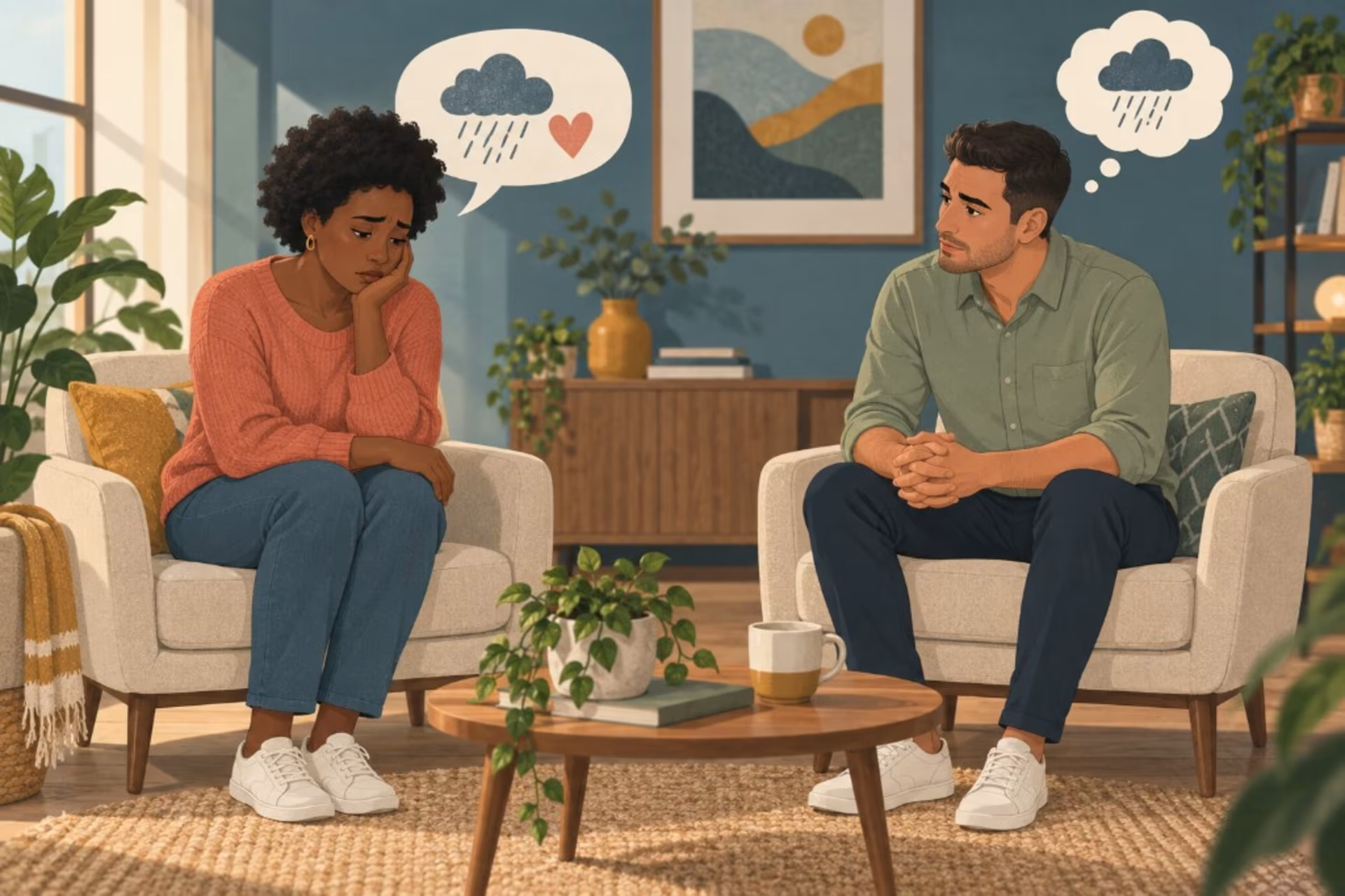
Understanding sociopathy requires understanding empathy, and empathy is not a single thing. Bay Area CBT Center uses a two-component framework: warm empathy and cold empathy. Where a person falls on these two dimensions explains most of the confusion between sociopathy, narcissism, autism, borderline personality, and codependency.
Warm empathy is a bodily, emotional response to another person's pain. You see someone suffering, your chest tightens, and you wish for the suffering to stop. It is caring. It is physiological. It is not a skill you learn; it is a response that happens or doesn't.
Cold empathy is cognitive perspective-taking. You can accurately understand another person's feelings, motives, and vulnerabilities without necessarily feeling them in your body. It is comprehension. You can develop and sharpen it, but it does not require you to be moved.
Sociopaths and other narcissistic personalities show high cold empathy and low warm empathy. They "get" you. They understand exactly what you fear, what you need, and what will hurt you. They are not moved by it. That is what makes manipulation, gaslighting, and exploitation possible.
Here is how this framework clarifies conditions that are frequently confused:
Autism (including what was previously called Asperger's): average or present warm empathy, lower cold empathy. Caring is not the problem. Understanding social cues is. Once they understand, they care. This is the opposite of a sociopath.
Borderline personality disorder: empathy collapses under emotional flooding. Cold empathy drops when the person feels threatened or abandoned. Warm empathy may be present but unstable. The deficit is dysregulation, not sadism.
Codependency: very high warm empathy, average or below-average cold empathy. Codependent people are deeply moved by others' pain but struggle to step back and see the situation clearly, which is why they stay in relationships with narcissists and sociopaths.
High-empathy people: above average on both. They feel for others and understand others, and they can move between the two without being consumed or cold.
A concrete example: a sociopath accurately predicts that you will panic if they threaten to leave. They use that prediction to control you. They feel no guilt. A codependent person in the same situation would feel the sociopath's manufactured distress, absorb it, and sacrifice their own needs to prevent the conflict. The sociopath exploits the codependent's warm empathy because they can see it clearly with their cold empathy.
Sociopath vs. Psychopath vs. Narcissist
These three terms are used interchangeably online, but they describe different points along a single antisocial–narcissism spectrum. Getting the main differences right matters for safety, treatment, and self-understanding.
Both sociopaths and psychopaths meet criteria for antisocial personality disorder, but they differ mainly in origin. Psychopathy is believed to be influenced by genetics and neurobiology. Psychopaths typically have a stronger genetic association than sociopaths. They tend to show more profound emotional blunting from early life. Sociopathy is often linked to childhood trauma and abuse, making it more of an acquired pattern. Research suggests that while biology sets the stage, environment shapes the expression.
Psychopaths are often seen as emotionally detached while sociopaths are more impulsive. A psychopath plans. A sociopath reacts. Psychopathy is considered a more severe form of antisocial personality disorder, with deeper emotional detachment and more calculated behavior. Psychopathy involves a profound lack of genuine empathy and emotional attachment, whereas sociopaths may form volatile, unstable bonds.
In Bay Area CBT Center's model, all sociopaths and psychopaths are narcissists, but most narcissists are not sociopaths or psychopaths. A narcissist may lack warm empathy and exploit others for an inflated sense of self-worth, but they may not cross into persistent rule-breaking, criminal behavior, or sadistic cruelty.
Key contrasts:
Cold empathy: high in all three. Narcissists, sociopaths, and psychopaths can all read people well.
Impulse control: psychopaths tend to have the most control; sociopaths often struggle with impulsive decisions; narcissists vary.
Violence risk: highest in psychopaths and low-functioning sociopaths; narcissists are more likely to use psychological and emotional abuse than physical violence.
Concern for image: narcissists are highly image-conscious; psychopaths manage image strategically; sociopaths tend to be more erratic and less consistent in impression management.
Antisocial Personality Disorder (ASPD) and Sociopathy
Antisocial personality disorder ASPD is the official DSM-5-TR clinical diagnosis most closely associated with the term sociopath. ASPD diagnosis focuses on behaviors such as deceitfulness and impulsivity rather than inner psychological experience. It is classified among personality disorders in Cluster B, alongside borderline personality disorder, histrionic personality disorder, and narcissistic personality disorder.
Core features include a persistent pattern of violating others' rights, chronic lying, conning others for personal gain or pleasure, impulsivity, irritability and aggressive behavior, reckless disregard for safety, consistent irresponsibility, and lack of remorse. These must be present by early adulthood, with evidence of conduct disorder symptoms before age 15.
Not everyone with ASPD is a sociopath in the sadistic sense described here. ASPD is broader. Sociopathy, as Bay Area CBT Center uses the term, refers to a particularly callous, exploitative subset with pronounced antisocial personality and narcissistic traits, sadistic tendencies, and deliberate emotional harm.
ASPD symptoms often co-occur with other mental health conditions. Substance use disorders, bipolar disorder, ADHD, depression, anxiety, and other personality disorders frequently appear alongside ASPD, complicating both diagnosis and treatment. ASPD prevalence is higher in substance use treatment programs, which means clinicians in those settings encounter it regularly.
Historical Background: From "Moral Insanity" to ASPD
The idea that certain people lack moral feeling despite intact intelligence dates to the nineteenth century, when physicians described "moral insanity" as a condition affecting conscience rather than reason.
Hervey Cleckley's 1941 book The Mask of Sanity crystallized what we now call psychopathic traits. Cleckley identified hallmark features still referenced today: superficial charm masking inner emptiness, absence of anxiety in situations that should produce it, lack of remorse after harming others, and shallow affect that mimics normal emotion without the substance behind it.
David Lykken's work in the late twentieth century added a crucial dimension: fearlessness and low anxiety as core features. His research suggested that individuals with these traits do not learn from punishment the way most people do, which helps explain poor impulse control and absent guilt.
Robert Hare then developed the Psychopathy Checklist-Revised (PCL-R) in the 1980s and 1990s, which became the gold standard in forensic settings for assessing psychopathic traits. The Psychopathy Checklist is used to measure traits associated with psychopathy, including grandiosity, pathological lying, shallow affect, and parasitic lifestyle.
The DSM itself evolved in parallel. The statistical manual in its first edition (1952) included "sociopathic personality disturbance." By DSM-III (1980), the term shifted to antisocial personality disorder, and the criteria began focusing more on observable behavior than inner experience. The current manual of mental disorders (DSM-5-TR) maintains this behavioral emphasis.
Prevalence and Demographics
How common are sociopathic tendencies and antisocial personality disorder? The answer depends on where you look.
Sociopaths make up an estimated 1% of the general population. Broader ASPD, which includes people who may not meet the full sociopathic profile, affects approximately 3.6% to 5% of U.S. adults over a lifetime. This condition affects people across all demographic groups, but not equally.
Sociopathy is more common in men than women. Males are more likely to develop ASPD than females, with prevalence rates roughly three times higher in men. Possible explanations include biological factors (testosterone, serotonin systems), cultural expectations around aggression, and diagnostic bias, as clinicians may under-recognize antisocial traits in women who present differently.
The overrepresentation in prisons is striking. Around 25% of incarcerated men meet criteria for sociopathy. Some studies report even higher figures: the prevalence of ASPD is 47% in male prisoners, depending on criteria and country. Cross-cultural findings from the international journal literature confirm that antisocial personality is present worldwide, though expressed and labeled differently depending on social rules, legal systems, and cultural expectations.
Risk factors for higher prevalence include younger age, lower income, lower education, and Native American ethnicity in U.S. samples.
Society, Culture, and Antisocial Personality
How we view sociopaths is shaped by culture, media, and legal systems. These forces influence who gets diagnosed, who gets treated, and who gets locked up.
Western, individualistic cultures tend to emphasize personal rights and criminal records when identifying antisocial personality. The DSM-5-TR criteria reflect this framing. Collectivist cultures may focus more on threats to family harmony and group cohesion, using different language and social consequences for the same behavioral patterns.
Media portrayals distort public perception considerably. From twentieth-century serial killer films to 2020s prestige TV antiheroes, the dominant image is dramatic violent behavior. This overemphasizes physical violence and underemphasizes the subtle psychological and emotional abuse that causes the most widespread harm in daily life. Most sociopaths do not commit murder. Many commit relational destruction that never makes the news.
In legal systems, ASPD and psychopathy influence sentencing, parole decisions, and risk assessments. PCL-R scores can affect whether someone is deemed eligible for release. This raises serious ethical questions about fairness, cultural bias, and the consequences of labeling someone with a personality disorder.
Stigma, fear, and moralizing language can make it harder for family members affected by sociopathy to seek professional support. It can also prevent people with ASPD from engaging with mental health services, even when comorbid conditions like depression or substance use disorders are treatable.
Risk Factors and Developmental Pathways
Sociopathy is not a single-cause phenomenon. It emerges from multiple risk factors: genetic vulnerabilities interacting with environment from pregnancy through adolescence.
Biological risk factors:
Family history increases risk of developing ASPD significantly. A parent or sibling with antisocial personality raises the odds.
Temperament traits present from early childhood, such as low fear, high sensation-seeking, and aggressive tendencies, are partially heritable.
Lower serotonin levels are linked to ASPD symptoms, particularly impulsive aggression. Neurochemical research through 2026 has also identified roles for testosterone, cortisol, and oxytocin in callous-unemotional traits and brain development abnormalities.
Differences in brain regions involved in impulse control and emotional processing, particularly reduced activity in the amygdala and anterior cingulate cortex, contribute to emotional detachment and deficits in emotional regulation.
Environmental risk factors:
Childhood trauma is a common cause of ASPD. Chronic childhood maltreatment, including physical abuse, emotional abuse, and neglect, is among the strongest predictors.
Poor parenting can contribute to the development of ASPD, especially inconsistent discipline, harsh punishment, and lack of warmth.
Exposure to domestic violence, unstable housing, poverty, and peer delinquency all elevate risk.
Sociopathic traits are often associated with learned behaviors from traumatic environments, where violence, deception, and exploitation were modeled as survival strategies.
Environmental influences shape how genetic predispositions are expressed, which is why sociopathy is often described as "made" rather than "born."
Sociopathy should be differentiated from mental illness like bipolar disorder or schizophrenia. While these can co-occur, antisocial personality reflects a long-standing personality pattern rather than episodic mood or psychotic episodes.
Conduct Disorder and Early Warning Signs in Youth
Conduct disorder is a childhood and adolescent mental health condition (before age 18) involving a persistent pattern of rule violation, aggression toward people or animals, property destruction, deceit, and theft. ASPD is associated with a history of conduct problems beginning before age 15, and most adults diagnosed with ASPD show this developmental pathway.
Specific behaviors to watch for include:
Cruelty to animals
Deliberate fire-setting
Repeated serious lying beyond what is developmentally typical
Bullying, intimidation, or physical violence toward peers
Truancy and serious rule-breaking at home and school
Theft or destruction of property without remorse
Not all youth with conduct disorder become sociopathic individuals. Risk increases substantially when callous-unemotional traits are present: the child shows signs of indifference to punishment, shallow affect, and absence of guilt. These traits signal reduced warm empathy, which tracks with the broader narcissism-empathy framework.
Early treatment can prevent ASPD development in children. Family therapy, parent training programs, and skills-based interventions targeting emotional recognition and empathy in youth show better long-term outcomes than waiting until adulthood. This is one area of behavioral sciences where prevention is genuinely more effective than treatment.
Core Traits and ASPD Symptoms in Adults
Sociopaths show a stable, persistent pattern of antisocial traits beginning in adolescence or early adulthood and continuing across settings. ASPD typically involves a long-term pattern of violating social norms, and these patterns are observable across relationships, workplaces, and communities.
Classic antisocial personality traits include:
Chronic lying and deceitfulness, including identity fabrication
Conning others for profit, pleasure, or personal gain
Impulsivity and failure to plan ahead; sociopaths often struggle with impulsive decision-making
Reckless disregard for safety of self and others, including risk taking behavior
Repeated arrests, law-breaking, or violation of social rules
Consistent irresponsibility in work, finances, or parenting obligations
Emotional and interpersonal features are equally defining. Superficial charm draws people in. Emotional detachment keeps them from connecting genuinely. Shallow affect means emotional displays are performances, not experiences. Sociopaths display manipulative and deceitful behaviors routinely, rationalizing harm with statements like "they deserved it" or "everyone does this."
Common life patterns include difficult relationships, frequent job changes, financial exploitation, and cycles of idealization, devaluation, and discard in close relationships. ASPD symptoms must persist across time and not be better explained by substance intoxication, manic episodes, or other mental disorders.
High-Functioning vs. Low-Functioning Sociopaths
"High-functioning" and "low-functioning" are informal terms, not part of any official diagnosis. But they describe an important distinction in how antisocial personality shows up in daily life.
High-functioning sociopaths have good cold empathy, above-average intelligence, and enough impulse control to avoid obvious legal trouble. They are often successful in business, finance, tech, or leadership. Research on corporate psychopathy shows that these individuals can rise in organizations through boldness, charm, calculated risk-taking, and exploitation of weak oversight. They engage in strategic manipulation, emotional exploitation in relationships, and financial harm, but they rarely leave fingerprints.
Low-functioning sociopaths show more impulsive, overt antisocial behavior. They have frequent arrests, visible aggression, and co-occurring conditions like alcohol use disorder or other substance use disorders. Their unhealthy behaviors are harder to hide, and they are overrepresented in criminal justice and forensic settings.
The critical point: harm to others can be severe in both groups. The main differences are visibility and how easily outsiders recognize the pattern. A high-functioning sociopath can destroy a partner's mental health, finances, and social standing without ever raising a public alarm.
Sociopathy and Other Mental Health Conditions
Antisocial personality often co-occurs with other mental health and neurodevelopmental conditions, which can blur the diagnostic picture. Accurate clinical diagnosis requires separating the stable personality pattern from episodic or treatable conditions.
Key distinctions:
Bipolar disorder: mood episodes (mania and depression) are episodic and cyclical. Antisocial personality traits are stable and present across moods. Someone with bipolar disorder may act impulsively during mania, but this looks different from the pervasive pattern of exploitation that defines sociopathy.
Psychotic disorders (like schizophrenia): loss of reality testing and hallucinations drive behavior. This is fundamentally different from the calculated disregard for others' rights seen in ASPD.
Substance use disorders: chronic alcohol or drug use can amplify antisocial acts, but substance use alone is not sufficient to explain persistent ASPD symptoms. When both are present, both need to be addressed.
ADHD: attention and impulse control difficulties can lead to rule-breaking or conflict, but not the deliberate exploitation and lack of remorse that define antisocial personality.
Having a mental illness such as depression, anxiety, PTSD, or OCD does not make someone a sociopath. Sociopathy is a distinct antisocial personality pattern, not simply "being mentally ill." Many mental disorders involve suffering and distress for the person who has them. Sociopathy is characterized by causing suffering in others with minimal internal distress.
How Sociopaths Present in Relationships

Many clients at Bay Area CBT Center describe the same trajectory: intense attraction, disorienting confusion, and eventual emotional devastation. If this sounds familiar, you are not alone, and you are not imagining it.
Early stage: Love-bombing, mirroring of your interests and values, rapid intimacy, and exaggerated promises. The sociopath uses cold empathy to identify your attachment wounds and present themselves as the perfect answer. Everything moves fast because speed prevents scrutiny.
Mid stage: Subtle devaluation begins. Gaslighting erodes your sense of reality. Triangulation introduces jealousy and competition. Blame shifts to you. Meanwhile, the sociopath maintains superficial charm to outsiders, which makes you feel isolated and crazy.
Late stage: Discard or abandonment, smear campaigns to mutual friends and family members, legal or financial manipulation, and attempts to hoover (pull you back in) when it serves personal gain. Sociopaths struggle to maintain stable relationships due to erratic behavior, but they may cycle through partners in a predictable pattern.
Throughout, the sociopath uses cold empathy to identify your insecurities, attachment wounds, or schemas and then weaponizes that knowledge. They know exactly which buttons to press because they understand you. They press them because they don't care.
Assessment and Diagnosis: How Professionals Evaluate Sociopathy

Only trained mental health professionals or forensic clinicians can diagnose antisocial personality disorder or assess psychopathy. Self-diagnosis from online articles, including this one, is not reliable. ASPD is diagnosed based on observable behaviors rather than internal traits, which means a thorough evaluation involves more than a questionnaire.
The Psychopathy Checklist-Revised (PCL-R), developed by Robert Hare, is the primary forensic tool. It assesses psychopathic traits through structured interview and file review, with scores above a defined cut-off indicating high risk for recidivism and violent behavior. It is used primarily in prisons and forensic hospitals.
Outside institutional settings, self-report measures like the Psychopathic Personality Inventory (PPI) and other antisocial personality scales are used in research and clinical screening. These are less rigorous than the PCL-R but can flag concerning patterns.
Full ASPD diagnosis requires thorough clinical interview, developmental history (including conduct disorder before age 15), review of records (legal, school, employment), and sometimes collateral information from partners or family members. Clinicians look for a pervasive pattern across settings, not isolated incidents.
The ethical and legal implications of labeling someone a "sociopath" or "psychopath" are significant. These labels carry stigma, can affect custody decisions and sentencing, and can be misused. Responsible clinicians are cautious with these terms and focus on specific, documented behaviors rather than sweeping characterizations.
Treatment: What Is and Is Not Possible
Bay Area CBT Center's position is clear: sociopathy itself is generally not treatable in the sense of developing warm empathy or a stable conscience. Treatment for ASPD and related traits is often challenging due to lack of insight. Most people with ASPD do not seek professional help, and those who do are frequently mandated by courts or pressured by family.
Traditional talk therapy often fails with sociopaths because emotional detachment, lack of motivation to change, and enjoyment of manipulation undermine the therapeutic alliance. Sociopaths may use therapy language as another tool of control, learning vocabulary to sound remorseful without experiencing remorse.
That said, ASPD can be treated with therapy strategies targeting specific harmful behaviors. Some structured interventions can lower specific risks:
Violence reduction programs in forensic settings
Impulse control training
Substance use treatment for co-occurring disorders
Therapy for ASPD includes anger management and empathy training, though the latter typically addresses behavioral compliance rather than genuine emotional change
A 2020 Cochrane review of 19 studies found mixed evidence for psychological interventions, with modest reductions in aggression in some cases but serious limitations in study quality
Psychotherapy can help treat patients with ASPD to some degree, particularly around comorbidities. Schema therapy, mentalization-based treatment, DBT elements, and motivational interviewing show some promise for reducing impulsivity and aggressive tendencies. No pharmacological treatments are specifically approved for ASPD, though SSRIs and mood stabilizers may reduce impulsive aggression.
Bay Area CBT Center primarily focuses not on "fixing" sociopaths but on treating people harmed by them, using schema therapy, DBT, ACT, EMDR, and trauma-informed care. Hoping a sociopathic partner or parent will suddenly develop warm empathy is usually unrealistic. Therapy is better directed at the survivor's healing, healthier responses, and decision-making.
Impact on Survivors: Mental Health After a Relationship with a Sociopath

If you have been in a relationship with a sociopath, the aftermath is real and the damage is not in your head. Common reactions include anxiety, panic, trauma symptoms, depression, self-doubt, and even physical health problems. These are normal responses to abnormal treatment.
Patterns we see frequently at Bay Area CBT Center include:
Questioning your own reality after prolonged gaslighting
Blaming yourself for the abuse and searching for what you did wrong
Feeling addicted to or obsessed with the sociopathic person, despite knowing they are harmful
Hypervigilance in new relationships and social situations
Prolonged exposure to manipulation and intermittent reinforcement changes the brain's reward system. This fuels trauma bonding and limerence, an intense, intrusive romantic obsession that can feel impossible to break. The cycle of charm, abuse, and false reconciliation triggers attachment injuries that can take months or years to process.
Links to complex PTSD are well established. Survivors often experience activation of old schemas, such as abandonment, defectiveness, or subjugation, that made them especially vulnerable to the sociopath in the first place. These schemas are not character flaws. They are patterns formed in earlier relationships that a sociopath identifies and exploits.
Beyond psychological harm, survivors may face social isolation, financial ruin, and legal stress. Custody battles, restraining orders, and smear campaigns create serious consequences that require integrated legal and mental health support.
How Therapy Helps If You've Been Hurt by a Sociopath

Bay Area CBT Center is an evidence-based therapy practice in California that works extensively with survivors of narcissistic and sociopathic abuse. Our approach is practical, structured, and designed around rebuilding your capacity to see clearly and protect yourself.
Key therapeutic goals include:
Rebuilding reality-testing and cold empathy: learning to step back, evaluate behavior patterns objectively, and trust your own perceptions again
Strengthening boundaries: identifying where boundaries were crossed, understanding why, and developing clear, enforceable limits
Processing trauma: using EMDR, somatic therapy, and prolonged exposure to reduce trauma symptoms and flashbacks
Understanding personal vulnerability without self-blame: mapping schemas and early relationship patterns that made you susceptible
CBT and schema therapy help clients identify maladaptive core beliefs like "I don't deserve better" or "My job is to fix people" that keep them stuck in abusive dynamics. These beliefs formed before you met the sociopath. The sociopath found them and used them.
DBT skills, including distress tolerance, emotional regulation, and interpersonal effectiveness, support breaking trauma bonds and managing urges to contact or return to the sociopath. Mindfulness practices build the capacity to observe urges without acting on them.
Bay Area CBT Center offers individual therapy, couples therapy for discernment (when one partner shows signs of strong antisocial traits), group therapy for survivors, and retreats designed to help survivors rebuild self-trust, well being, and relational safety.
Protecting Yourself: Boundaries and Safety Planning

You cannot change a sociopath's core personality traits. You can change your responses, your boundaries, and your level of exposure.
Practical recommendations:
Keep communication brief and factual. Avoid emotional disclosures they can weaponize. Do not argue about their intentions or try to get them to admit wrongdoing.
Use written records when necessary, especially in co-parenting situations. Document incidents with dates, screenshots, and witnesses.
In conversations, stick to observable facts. Sociopaths tend to escalate when you show emotion. Neutral, matter-of-fact communication deprives them of the reaction they seek.
If there is risk of physical violence or legal/financial harm, create a safety plan:
Consult an attorney who understands high-conflict personality dynamics
Involve law enforcement or domestic violence resources when safety is at risk
Secure financial accounts and important documents independently
A support network is essential. Trusted friends, family members, trauma-informed therapists, and support groups counter the isolation and self-doubt that sociopaths cultivate.
Leaving or limiting contact with a sociopath can be emotionally painful and complex. This is normal. Seek professional guidance, plan gradually when safety permits, and resist the urge to make impulsive decisions driven by guilt or fear. The sociopath will likely attempt to pull you back in. Planning ahead reduces vulnerability to these tactics.
Bay Area CBT Center's Perspective and Services
Bay Area CBT Center is a California-based mental health practice providing evidence-based, holistic care for adults, teens, couples, and families, both online and in-person. Our clinicians specialize in helping people who have been affected by narcissistic and sociopathic dynamics.
Our empathy framework provides clarity. Understanding warm vs. cold empathy helps clients differentiate sociopathy from autism, borderline personality, codependency, and high empathy. This is not just an academic exercise; it directly informs treatment and helps survivors stop blaming themselves for someone else's personality disorder.
Offerings relevant to readers of this article include:
Individual therapy for trauma and PTSD, anxiety, depression, OCD, and bipolar disorder
Group therapy for survivors of narcissistic abuse
Mental health retreats for intensive healing
Couples discernment counseling when one partner shows strong antisocial traits
We use specialty approaches including schema therapy, DBT, EMDR, ACT, mindfulness-based interventions, somatic therapy, and ketamine-assisted therapy where appropriate and legal for treatment-resistant conditions.
If you are in California and suspect you have been in a relationship with a sociopath or narcissist, we can help with therapist matching. You can also take our schema quiz to better understand your own patterns, vulnerability factors, and why certain relationships feel impossible to leave.
Frequently asked questions
People with antisocial personality disorder ASPD may form attachments and feel possessiveness, excitement, or desire. But warm, consistent, empathic love, the kind that involves being moved by a partner's pain and prioritizing their well being alongside your own, is usually limited or conditional. Many survivors experience confusion because sociopaths can convincingly mimic love early on using cold empathy, even if the underlying motivation is control or personal gain. Rather than debating whether the sociopath "really loved" you, focus on whether the behavior was safe, respectful, and healthy. That question has a clearer answer.
Genuine sociopaths rarely wonder if they are sociopaths. They tend to blame others and see themselves as victims or justified aggressors. If you are distressed by your own behavior, feel guilt, and sincerely want to change, you are more likely dealing with trauma, depression, anxiety, or another treatable mental health condition rather than sociopathy. Seek a professional mental health assessment to clarify what is going on. A therapist at Bay Area CBT Center can help identify sociopathic tendencies versus reactive patterns from past trauma and develop a personalized treatment plan.
Both narcissists and sociopaths lack warm empathy and can be exploitative, but sociopaths show a more pervasive pattern of rule-breaking, lying, and disregard for others' rights, often starting in adolescence. Red flags specific to sociopathy include early conduct problems, criminal behavior, sadistic enjoyment of others' pain, and complete lack of remorse even when faced with serious consequences. From a safety perspective, the exact label matters less than the pattern of harm. Prioritize your own well being and seek professional help to assess risk and plan next steps.
Sociopathy and autism are fundamentally different. Autistic people often care deeply (warm empathy is present) but struggle with cold empathy, meaning they have difficulty reading social cues and inferring intent. Sociopaths have strong cold empathy and weak warm empathy: they understand completely and do not care. Confusing the two is a serious error. ADHD involves difficulties with attention and impulse control, which can lead to conflict, but not the deliberate exploitation, emotional detachment, and lack of remorse that characterize antisocial personality. Social awkwardness, blunt communication, or forgetfulness are not signs of sociopathy. A nuanced mental health evaluation from a qualified mental health professional is essential for accurate differentiation.
Some people with antisocial traits do seek help, especially when facing legal trouble, relationship loss, or internal emptiness. While therapy is unlikely to create warm empathy from scratch, psychotherapy can sometimes help reduce harmful behaviors, improve impulse control, and build more pro-social ways of meeting needs. Anyone concerned about patterns of frequent lying, manipulative behavior, or aggression should seek an honest, nonjudgmental assessment. In California, Bay Area CBT Center can help explore these patterns and set realistic treatment goals, keeping in mind that developing antisocial personality disorder is shaped by both biology and environment, and that earlier intervention generally produces better outcomes.