Misophonia: When Certain Sounds Trigger Intense Emotional Distress

Imagine sitting at lunch with a friend, and the sound of their chewing sends a wave of rage through your body so intense that you have to leave the table. Or picture yourself in a meeting, unable to focus on a single word because someone across the room keeps clicking a pen. For people with misophonia, these are not minor annoyances-they are experiences that can feel physically unbearable and emotionally overwhelming.
Misophonia is a condition in which certain everyday sounds reliably provoke intense emotional and physical reactions. It affects daily life, relationships, and work in ways that most people never see. This article breaks down what misophonia is, what causes it, how it is assessed, and what you can actually do about it.
Key Takeaways
Misophonia is a condition where specific trigger sounds such as chewing, breathing, or pen clicking cause intense emotional distress and fight-or-flight reactions that go far beyond ordinary annoyance.
Misophonia symptoms can seriously affect daily life, relationships, work, and school, even though misophonia is not yet an official DSM-5-TR diagnosis.
Common trigger sounds are often soft, repetitive, and human-made, and visual cues like leg jiggling can also trigger reactions.
Current research reveals that misophonia involves altered connectivity between auditory, motor, and emotion networks in the brain, helping explain why certain sounds trigger disproportionate responses.
Practical, evidence-informed treatment options-especially CBT-based approaches like those used at Bay Area CBT Center-along with concrete coping strategies can help people treat misophonia symptoms and improve quality of life.
What Is Misophonia?
Misophonia is a condition in which specific sounds-often soft, repetitive, and produced by other people-trigger intense emotional and physical reactions that feel wildly out of proportion to the situation. The word itself comes from the Greek for "hatred of sound," but the actual experience varies. Some people feel sudden anger or disgust; others describe rising panic, anxiety, or an overwhelming urge to flee. Misophonia is sometimes referred to as selective sound sensitivity syndrome, though researchers continue refining the terminology.
It is important to distinguish misophonia from general noise sensitivity, hyperacusis (where sounds feel painfully loud regardless of type), or a simple dislike of irritating sounds. In misophonia, the problem is not volume-it is the specific, patterned nature of the trigger and the involuntary intensity of the response. A quiet chewing sound at a normal volume can be as intolerable as a fire alarm to someone with this condition.
Misophonia is currently a clinical construct rather than a formal standalone diagnosis in the DSM-5-TR. However, research since roughly 2013–2015 has increasingly validated it as a legitimate condition with consistent symptoms, measurable brain differences, and significant impact on functioning. Multiple groups have worked toward a consensus definition of misophonia, and that consensus definition continues to evolve as clinical science advances.
Misophonia typically appears in late childhood or early adolescence, often becoming chronic if unmanaged. Most people first notice symptoms around ages 10 to 14, with some studies reporting a mean onset around age 13. Without treatment, these reactions often persist into adulthood-sometimes for decades before the person even learns there is a name for what they experience.
Common Trigger Sounds and Visual Cues
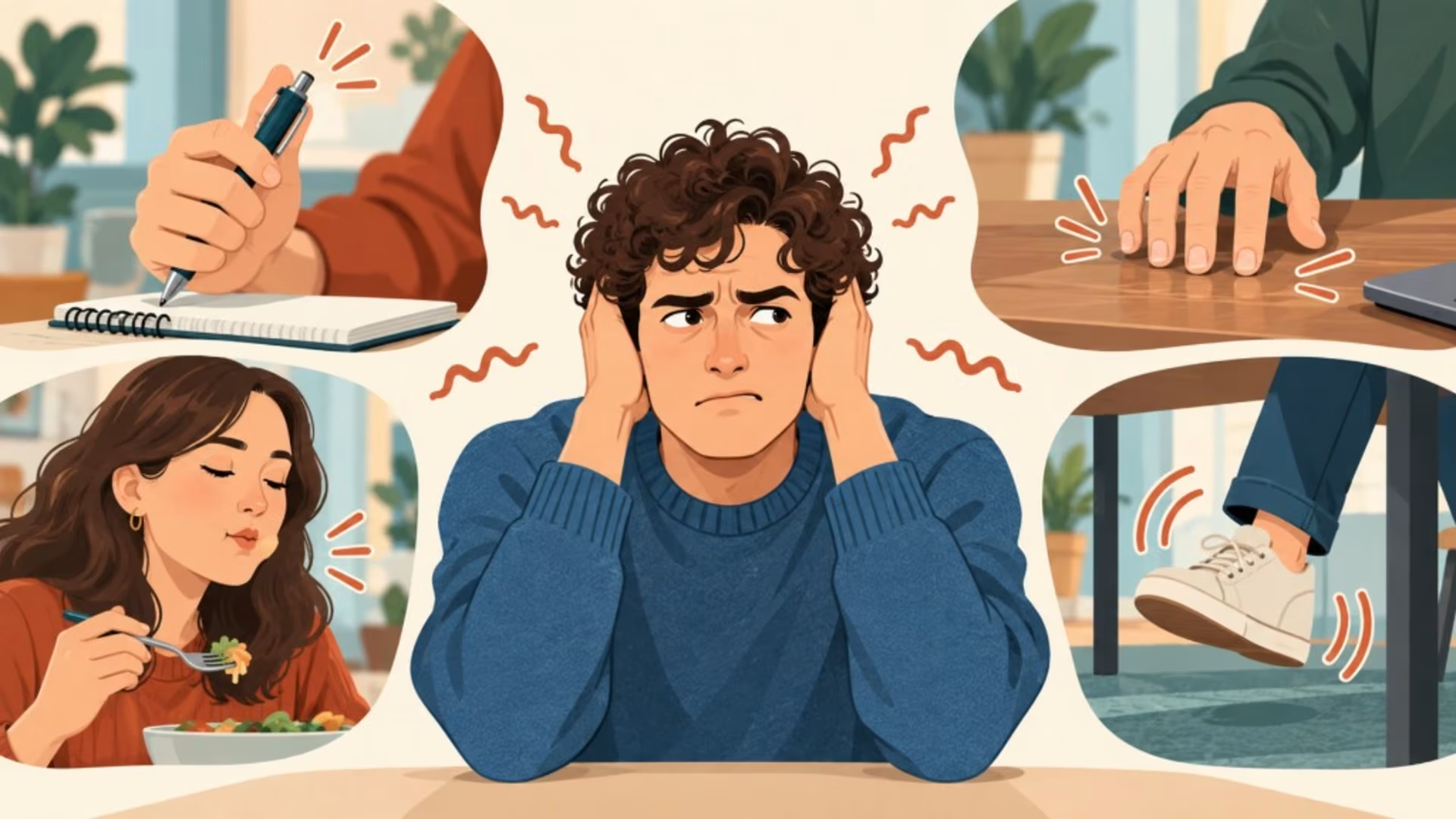
Misophonia is defined by specific sounds that reliably cause distress, not by an across-the-board intolerance of loud noise. The most frequently reported misophonia trigger sounds are chewing, lip smacking, slurping, swallowing, throat clearing, sniffing, breathing, nail clipping, keyboard tapping, pen clicking, finger tapping, and clock ticking. Common triggers include chewing, breathing, and tapping sounds-all of which share a pattern: they tend to be soft, repetitive, and biological or human-made. Most people around you barely register such sounds. For someone with misophonia, they are impossible to ignore.
Misophonia triggers often involve repetitive or biological sounds, but they are not limited to the auditory channel. Visual triggers-sometimes called misokinesia-can provoke similar reactions. Seeing someone's leg shaking under a desk, watching gum chewing across a table, or noticing repetitive hand movements can evoke strong negative emotional and physiological responses, sometimes even before any sound is heard. Visual stimuli add another layer to the experience that many people do not expect.
Each person's trigger profile is unique. One individual might react most strongly to eating sounds, while another is more affected by mechanical repetitive sounds or even animal sounds like a dog licking. Certain sounds that are unbearable for one person may not register at all for another, which is part of what makes misophonia so difficult for others to understand.
Misophonia Symptoms and Emotional Distress
Misophonia symptoms encompass a constellation of involuntary emotional, physiological, and behavioral responses that activate when specific sounds trigger the nervous system. The severity of misophonia symptoms may vary significantly among individuals-some experience mild discomfort, while others are overwhelmed by reactions that disrupt their entire day. Misophonia symptoms can range from mild to severe depending on the person, the trigger, and the context.
Emotional reactions are often the most striking feature. When hearing sounds that trigger them, people with misophonia describe sudden irritation, intense anger, disgust, anxiety, or a surge of rage that feels completely out of character. Misophonia triggers emotional reactions like anger and panic that can feel automatic and uncontrollable. Many people report feeling as though they have been personally attacked, even when they know the sound-maker has done nothing wrong.
Physical symptoms are equally significant. The fight-or-flight response is activated in individuals with misophonia when exposed to triggers, producing increased heart rate, muscle tension, sweating, flushing, stomach discomfort, and an overwhelming urge to escape or stop the sound immediately. Physical symptoms include sweating and increased heart rate. These are not signs of weakness-they reflect genuine autonomic nervous system activation.
Behavioral responses follow naturally from the emotional and physical distress. People may cover their ears, glare at or confront the trigger person making the sound, mimic the sound involuntarily, leave the room abruptly, or reach for noise canceling headphones as a lifeline. Over time, some individuals develop rigid avoidance routines-eating alone, skipping social events, or restructuring their entire schedule around potential triggers.
Anticipatory anxiety compounds the problem. Individuals may develop anticipatory anxiety about trigger sounds, worrying well in advance about family dinners, classrooms, offices, or public transit. Individuals with misophonia often experience chronic anxiety due to constant anticipation of noise triggers. After an episode, many feel guilt, embarrassment, or shame for "overreacting," which can worsen overall mental health over time.
How Misophonia Affects Daily Life, Relationships, and Work

Misophonia affects daily functioning significantly for many individuals, reaching far beyond the moment a trigger sound occurs. Eating with others becomes a minefield: family dinners, restaurant outings, and work lunches all carry the risk of encountering common sounds that provoke intense distress. People with misophonia often avoid restaurants to escape triggers, and sufferers of misophonia may avoid social situations to escape trigger sounds entirely.
Relationships absorb much of the impact. Partners and family members may feel criticized or confused when asked to chew differently, breathe more quietly, or stop tapping. Arguments about sounds that seem trivial to one person but agonizing to another can erode trust and intimacy. Misophonia can lead to social isolation and relationship strain when loved ones interpret the misophonic response as rudeness, anger problems, or an attempt to control the household.
Work and school performance also suffer. Concentrating during meetings in an open-plan office or sitting through a lecture while someone nearby sniffs repeatedly can feel impossible. Some people take frequent breaks, request remote work, change jobs, or avoid certain academic settings. Over time, ongoing avoidance can shrink a person's social life and professional opportunities, compounding emotional distress with loneliness and reduced self-esteem.
Is Misophonia a Mental Health Disorder? Current Diagnostic Status
Misophonia is not currently recognized as a distinct disorder in the DSM-5. As of 2024, there are no formal diagnostic criteria or a unique code for misophonia in either the DSM-5-TR or the ICD. This does not mean the condition is imaginary or unimportant-it means that classification systems have not yet caught up with the growing body of research validating misophonia as a consistent, measurable pattern of symptoms with real impairment.
Clinicians typically document misophonia as a condition that may co-occur with anxiety disorders, obsessive compulsive disorder, ADHD, autism spectrum conditions, or other sensory processing issues. Different professional groups conceptualize it differently: audiologists emphasize sensory and auditory processing; psychologists focus on emotion regulation and behavioral avoidance; neuroscientists study brain network connectivity. Some researchers argue that misophonia is a disorder of associative learning and emotional salience rather than a psychiatric disorder in the traditional sense.
What matters most for anyone reading this: the lack of a formal diagnosis does not make your suffering any less real. Misophonia can still be assessed, treated, and meaningfully improved with the right support. Calling it by name is a step toward getting help, not a requirement for deserving it.
How Common Is Misophonia?
Prevalence estimates for misophonia depend heavily on the assessment tools and definitions used. A 2024 study using a nationally representative sample of U.S. adults found that approximately 4.6% met criteria for clinically significant misophonia, according to data published by the Misophonia Research Fund. In Germany, about 5.9% showed clinically relevant symptoms on the Amsterdam Misophonia Scale. A UK study using the S-Five scale found that 18% of individuals report significant burden from misophonia.
Around 33% to 96% of people report negative reactions to trigger sounds in broader surveys, depending on how loosely or strictly "misophonia" is defined. The wide range reflects the fact that mild sound sensitivity is common, but clinically impairing misophonia is much less so. To put it in perspective, the estimated prevalence of misophonia is comparable to or greater than conditions like Tourette syndrome or panic disorder-conditions that are well-known and widely treated.
Under-recognition remains a major problem. Many people with misophonia never receive a formal assessment. Instead, they are told they are "too sensitive" or need to "just ignore it." Research using tools like the Duke Misophonia Questionnaire and the Amsterdam Misophonia Scale, developed between 2014 and 2023, is helping refine how severity and prevalence are measured-but there is still no universally agreed-upon cutoff for clinical significance.
What Causes Misophonia? Current Theories
There is no single confirmed cause of misophonia. Instead, research points to a combination of brain wiring, learning history, temperament, and sensory factors.
One influential framework is the neurophysiological model proposed by Jastreboff, which describes heightened connections between hearing centers, the limbic system (responsible for emotion), and the autonomic nervous system. In this model, certain sounds become paired with strong emotional reactions through associative learning-not because the sounds are inherently loud or dangerous, but because the brain assigns them excessive emotional meaning. Over time, repeated exposure in distressing contexts strengthens this connection, so that hearing sounds like chewing or sniffing automatically activates threat-like responses.
Another model proposes that trigger sounds strongly activate orofacial motor areas and the human mirror neuron system, as if the listener's brain is automatically simulating the chewing or breathing action it hears. Brain imaging studies from approximately 2017 to 2021 found that motor representations of mouth and throat movements become unusually activated during trigger sound stimulation. This may explain why many misophonia triggers involve mouth-related sounds: the brain is not just hearing the sound but involuntarily "mirroring" the action behind it.
Contributing factors may include sensory overresponsivity, anxious temperament, difficulties with emotion regulation, and perfectionism. People with misophonia may experience higher levels of perfectionism and have a lower threshold for tolerating ambiguity or sensory input they cannot control. Misophonia is linked to difficulties in emotion regulation, but none of these factors alone explain the condition. Importantly, misophonia is not the person's fault-it reflects differences in how the brain processes and responds to specific sensory input.
A 2026 review in Neuroscience & Biobehavioral Reviews reframes misophonia as a disorder of stimulus-specific salience encoding during sensitive periods of brain maturation. This developmental plasticity model suggests that during childhood and adolescence, immature prefrontal regulatory systems may allow maladaptive pairings between auditory input and emotional reactions to become wired more permanently.
How the Brain Processes Trigger Sounds
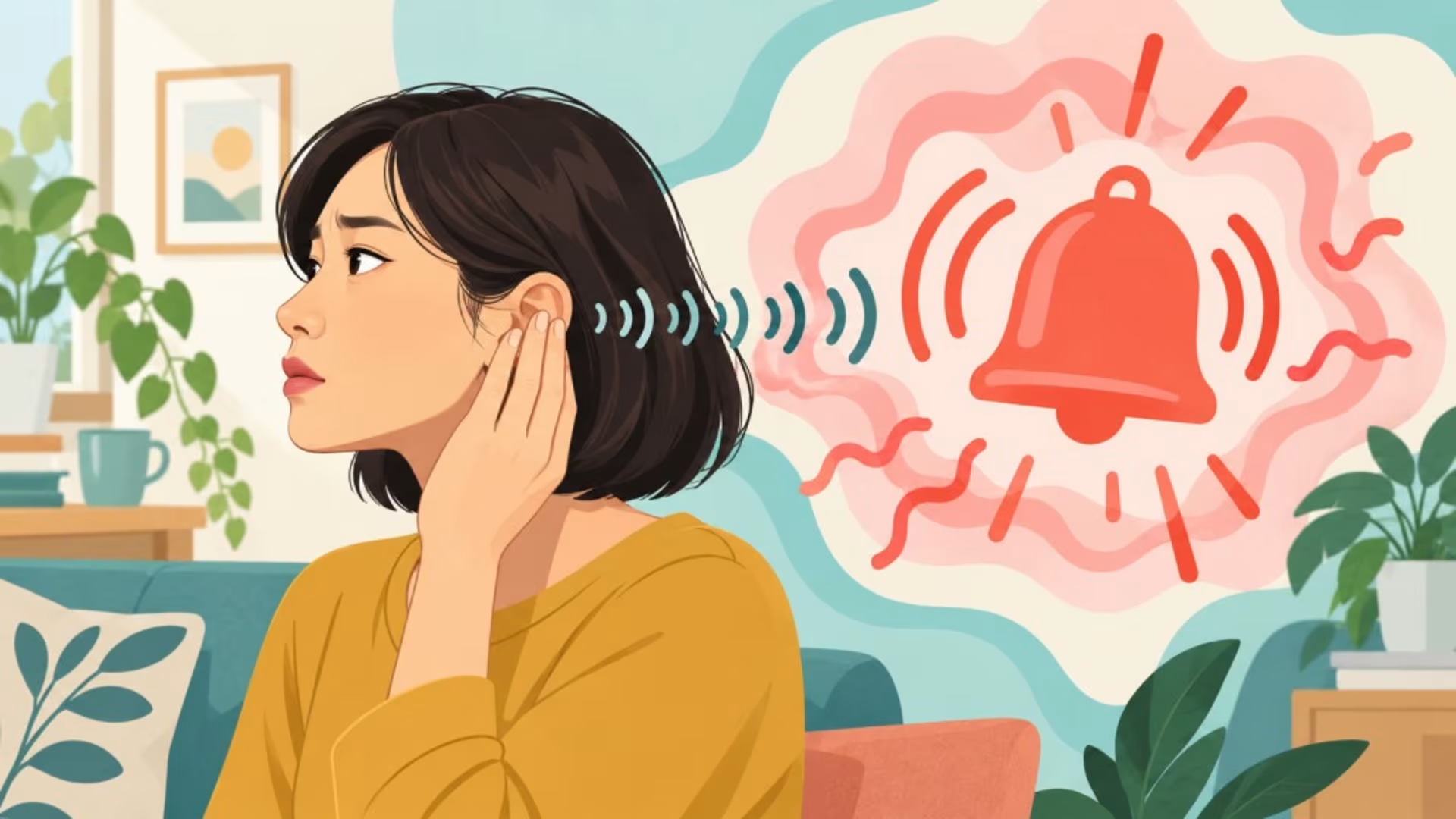
Neuroimaging studies reveal that people with misophonia show increased brain activity in regions that link sound perception, movement, and emotion. Specifically, fMRI research demonstrates heightened activation in the auditory cortex, the anterior insula (a hub for salience and interoception), and orofacial motor brain areas when individuals hear their specific trigger stimuli compared with neutral sounds.
In plain terms, the brain of someone with misophonia may treat certain everyday sounds as signals of threat or intrusion, rapidly activating fight or flight circuits. This heightened connectivity between auditory processing and emotional brain areas helps explain why innocuous sounds like quiet chewing can feel intolerable and impossible to ignore. It is as if the brain's alarm system has become overly attached to certain sounds, tagging them with urgency that does not match the actual level of danger.
Basic hearing tests are typically normal in people with misophonia. The significant difference lies not in the ear but in higher-level brain networks linking sound, movement, and emotion. Research has also identified increased myelination in some brain pathways-particularly the ventromedial prefrontal cortex-though scientists are still determining whether this is a cause or consequence of the condition. What is clear is that misophonia involves real, measurable differences in how the brain processes sound sources, not a failure of willpower.
Conditions That Commonly Co-Occur With Misophonia
Misophonia can appear on its own, but it frequently co-exists with other mental health and neurodevelopmental conditions. Misophonia often co-occurs with anxiety disorders, including generalized anxiety and panic disorder. Depression is also common. Approximately 24% of individuals with obsessive compulsive traits have misophonia, and misophonia can occur alongside ADHD and OCD in both children and adults.
Among autistic individuals, misophonia prevalence is notably higher, with estimates ranging from about 13% to 35%. Sensory processing sensitivities in autism and misophonia share some surface features, but misophonia triggers tend to be more specific and human-generated rather than driven by overall noise or decreased tolerance for sensory input.
These conditions can interact in ways that amplify distress. For example, anxiety may increase vigilance to potential trigger sounds, making it harder to let any sound go unnoticed. OCD can lead to rigid rituals around avoiding certain sounds or seeking reassurance. A comprehensive assessment that looks beyond misophonia symptoms alone-examining the person's full mental health picture including trauma history, mood, sleep, and attention-is essential for effective treatment planning.
How Is Misophonia Diagnosed or Assessed?
There is currently no single standardized diagnostic test, blood marker, or imaging scan for misophonia. When people ask how misophonia is diagnosed, the answer is: through a careful clinical evaluation rather than a formal DSM code. A clinician experienced with sensory and emotional difficulties can assess misophonia reliably, even without a universal diagnostic label.
A thorough assessment typically includes a detailed history of which sounds trigger reactions, when and where they occur, what emotional responses and physical symptoms follow, how the condition affects daily life and relationships, and whether other psychiatric problems or neurodevelopmental conditions are present. At Bay Area CBT Center, clinicians integrate misophonia-specific questions into a broader, trauma-informed and anxiety-focused evaluation, especially those clients in California seeking help for complex sensory and emotional difficulties.
Several structured tools are commonly used in research and practice to help diagnose misophonia and measure its severity. The Misophonia Questionnaire rates triggers, emotional responses, and impact. The Amsterdam Misophonia Scale measures symptom severity across multiple domains. The Duke Misophonia Questionnaire is a semi-structured interview assessing both past-month and lifetime experiences. A therapist might ask: "What specific sounds trigger you, and how do you respond-emotionally and physically?" or "How has this pattern changed your routines or relationships?"
You do not need an official label to access support. Assessment guides appropriate treatment options and can support requests for accommodations at work or school, especially those related to sound stimulation in shared environments.
Treatment Options: Can Misophonia Be Treated?
There is currently no proven "cure" for misophonia, and there is currently no FDA-approved medication specifically for treating misophonia. However, many people can significantly reduce their distress and improve daily life with targeted treatment. Psychological therapies such as Cognitive Behavioral Therapy are among the most effective treatment options available.
The main categories of treatment methods include CBT, dialectical behavior therapy skills for emotion regulation, sound therapy and environmental modifications, mindfulness practices, and-in some cases-medication for co-occurring anxiety or mood disorders. Sound therapy can involve white noise machines or noise-canceling headphones used to reduce the prominence of trigger stimuli in everyday environments.
A randomized controlled trial of manualized group CBT for adults found that 56% of completers showed clinically meaningful improvement, with gains sustained at 12-month follow-up. In youth, a 2025 RCT of a transdiagnostic CBT protocol showed 54% of young people responded to treatment, compared with 25% in the control group receiving only psychoeducation and relaxation. These results are promising, especially those for a condition that many people believed was untreatable.
At Bay Area CBT Center, therapists draw on evidence-based approaches-CBT, DBT, mindfulness, somatic, and trauma-informed methods-to tailor a treatment plan to each person's symptom profile and broader mental health needs. The goal is not to eliminate every negative reaction but to reduce suffering, rebuild functioning, and help people with misophonia re-engage with the parts of life they have been avoiding. For people whose sound sensitivity sits alongside a trauma history, a c-ptsd test is worth taking first.
How CBT and Related Therapies Help With Misophonia

CBT helps people examine and change the patterns of thought and behavior that intensify misophonia symptoms. Cognitive Behavioral Therapy helps reframe misophonia experiences by identifying beliefs like "I can't stand this sound" or "They're doing this on purpose" and testing whether those interpretations hold up. This is not about dismissing the distress-it is about loosening the grip of thoughts that amplify it.
Typical CBT components include psychoeducation about how misophonia works in the brain, systematic tracking of which sounds trigger reactions and where, cognitive restructuring of unhelpful beliefs about sounds and the people making them, and guided behavioral experiments. Exposure and Response Prevention gradually exposes individuals to triggers-starting with very mild versions of trigger stimuli in controlled, safe environments-while practicing grounding, relaxation, and self-compassion to reduce panic and anger over time.
Talk therapy approaches also draw on DBT skills such as distress tolerance, emotion regulation, and interpersonal effectiveness. These skills are especially those useful for moments when sounds trigger intense anger toward loved ones or coworkers. Mindfulness practices can help regulate emotional responses to triggers by teaching the person to observe rising distress without being swept away by it.
A practical therapy exercise might involve listening to a low-volume recording of a common trigger sound for a short, tolerable duration while using paced breathing and attention-shifting techniques. Over sessions, the duration and intensity increase gradually, building confidence that the misophonic response can be survived and even reduced.
Day-to-Day Coping Strategies for Misophonia
Coping strategies for misophonia work best when they balance immediate relief with long-term resilience. Overreliance on avoidance can sometimes reinforce sensitivity by preventing the brain from learning that a trigger sound is survivable, so the goal is to use tools wisely rather than build a fortress against all sounds.
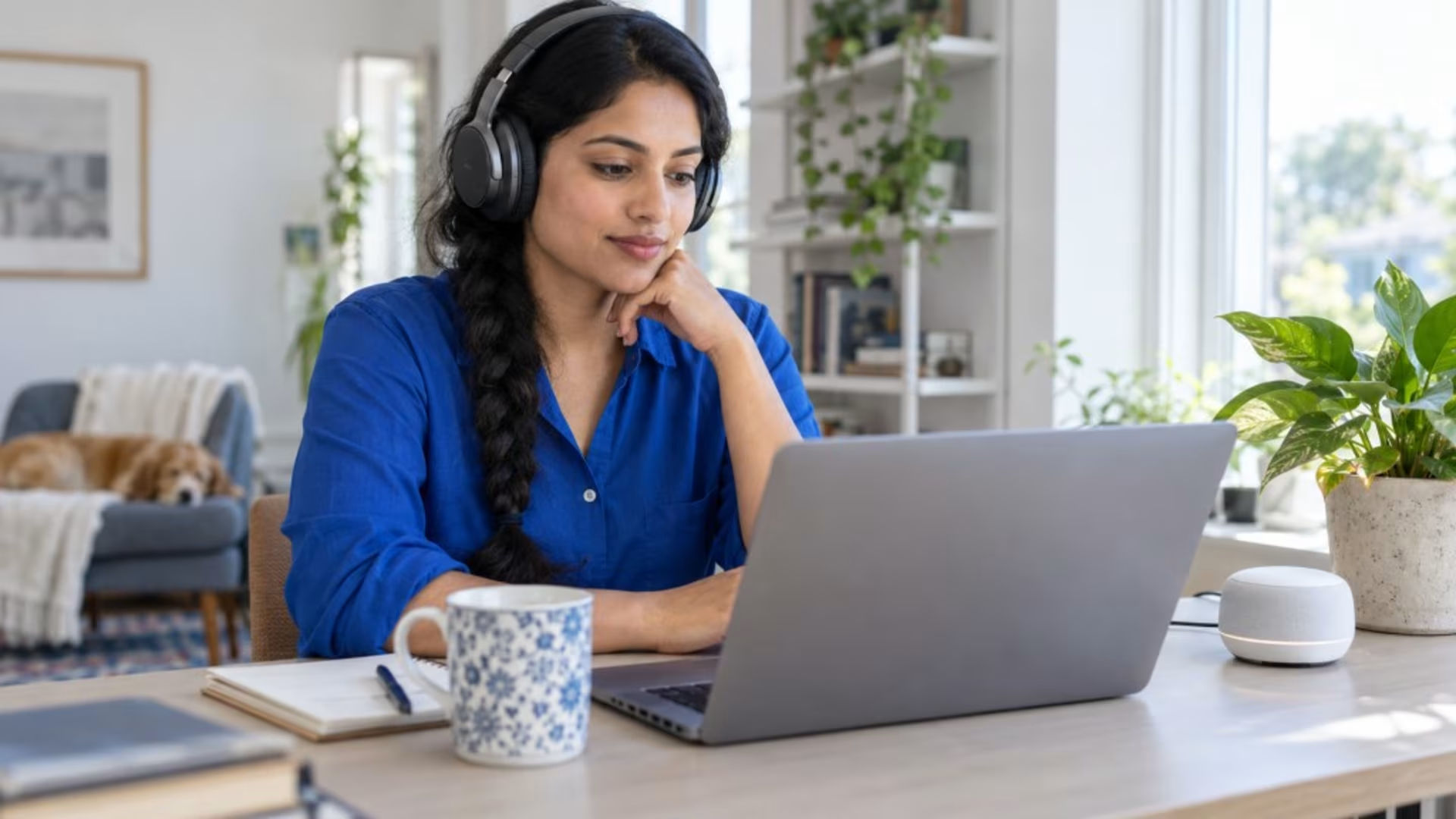
Environmental tools are often the first line of defense. Coping strategies for misophonia may include sound masking and creating quiet zones. Earplugs can help tune out bothersome sounds in daily life, and noise canceling headphones are invaluable in open-plan offices or on public transit. White noise apps, fans, or soft background music during meals and work sessions can reduce the prominence of trigger sounds without completely blocking all sensory input.
Interpersonal strategies matter just as much. Calmly explaining misophonia to trusted friends, family members, or coworkers-using language like "my brain reacts this way to certain sounds" rather than "you're being rude"-can open the door to collaborative problem-solving. Adjusting seating arrangements at dinner, agreeing on mealtime norms, or choosing sound sources like background music for shared spaces are small changes that make a real difference.
Internal coping skills round out the toolkit: paced breathing, grounding through the five senses, progressive muscle relaxation, and self-talk that validates distress without amplifying it. Phrases like "This is hard and I can still get through this moment" acknowledge the reality of the experience without catastrophizing. These skills are most effective when practiced regularly, not just during a crisis.
Support, Community, and Family Involvement

Family understanding can dramatically reduce conflict and shame, especially around shared spaces like the dinner table. When family members acknowledge that misophonia is a brain-based reaction-not drama, not manipulation-tension drops and collaborative solutions become possible. Encouraging open, non-blaming conversations using neurobiological language helps everyone involved.
Online communities, social media groups, peer support forums, and nonprofits focused on misophonia can help people feel less alone and share practical coping strategies. It is wise, however, to evaluate the reliability of advice found online and distinguish personal anecdote from evidence-based guidance.
For couples or families struggling with the relational impact of misophonia, couples or family therapy can help partners and relatives negotiate compromises around trigger behaviors and create mutually respectful routines. For teens and adolescents, involving parents or caregivers in treatment planning is often crucial to reducing conflict and improving daily life at home and school.
When to Seek Professional Help for Misophonia

Self-help strategies are a solid starting point, but they are not always enough. If misophonia symptoms significantly interfere with daily life, cause major emotional distress, or harm relationships or job and school performance, professional support is warranted. Red flags include avoiding most social events, being unable to eat with family, frequent arguments about sounds, panic attacks or rage episodes triggered by common everyday sounds, or noticing that your world is getting smaller because you avoid trigger sounds.
If you are in California and suspect that misophonia is part of a broader pattern of anxiety, trauma, OCD, or emotional dysregulation, consider reaching out for a consultation. Starting therapy typically involves an initial session focused on history-taking, followed by collaborative goal setting-something concrete like eating one shared meal per week or tolerating an open-office environment for a set duration.
You do not need to have a perfect understanding of your condition, a formal diagnosis, or severe symptoms to benefit from support. If sounds are making your life harder than it should be, that is reason enough.
How Bay Area CBT Center Can Help
Bay Area CBT Center is a California-based therapy practice specializing in evidence-based treatments for anxiety, OCD, trauma, emotional dysregulation, and sensory-related distress, including misophonia. Misophonia is a disorder that touches many of the clinical areas where our team has deep expertise.
The Center offers individual, couples, family, and group therapy-both in-person and online throughout California-and emphasizes careful therapist matching so that each client works with a provider whose experience aligns with their needs. Clinicians integrate CBT, DBT, mindfulness, somatic approaches, EMDR, and schema therapy when appropriate to address both misophonia symptoms and underlying issues such as trauma, perfectionism, or chronic anxiety.
For executives and professionals dealing with misophonia in high-stakes environments, the Center also offers coaching and workplace-focused interventions. Whether your concern is a lifelong condition that has never been named or a recent escalation of sound sensitivity, you deserve support tailored to your experience. If you recognize yourself in the descriptions above and reside in California, scheduling a consultation is a straightforward first step.
FAQ
No. Misophonia goes far beyond ordinary annoyance. When specific sounds trigger a misophonic response, the result is an intense, automatic fight-or-flight reaction with strong emotional distress, physical arousal, and often an overwhelming urge to escape. People with misophonia frequently recognize that their reaction seems disproportionate, but they cannot simply ignore the sound or "tough it out." A generalized dislike of noise or preference for quiet does not, by itself, mean someone has misophonia. The hallmark is that certain sounds-not all sounds-reliably evoke strong negative emotional and physiological responses.
Yes. Misophonia often begins in late childhood or early adolescence, with many people noticing their first intense negative reactions to trigger sounds around ages 9 to 13. In school settings, signs may include difficulty sitting near classmates who make certain sounds, frequent requests to leave the classroom, emotional outbursts during lunch, or avoidance of group activities. Early, supportive intervention-especially those approaches involving parents and teachers-can prevent unnecessary shame and reduce long-term avoidance patterns that might otherwise become entrenched.
For some people, triggers and avoidance behaviors can expand over time if the only strategy is escape, because the brain never has the opportunity to learn that the sound is survivable. However, this does not mean misophonia inevitably worsens. With targeted therapy and active coping strategies, many people report reduced distress and better daily functioning. If you notice your world shrinking because you increasingly avoid trigger sounds, that is a strong signal to seek help rather than waiting for the problem to resolve on its own. Healthcare providers experienced with misophonia can make a significant difference.
There is no medication specifically approved to treat misophonia itself. However, some people benefit from medication for co-occurring conditions such as anxiety, depression, or obsessive compulsive disorder, which can indirectly reduce the intensity of emotional reactions to triggers. Medication works best when combined with psychotherapy and coping strategies rather than used as a standalone treatment. Anyone considering medication should consult with a psychiatrist or prescribing clinician who understands both the condition and the broader mental health context.
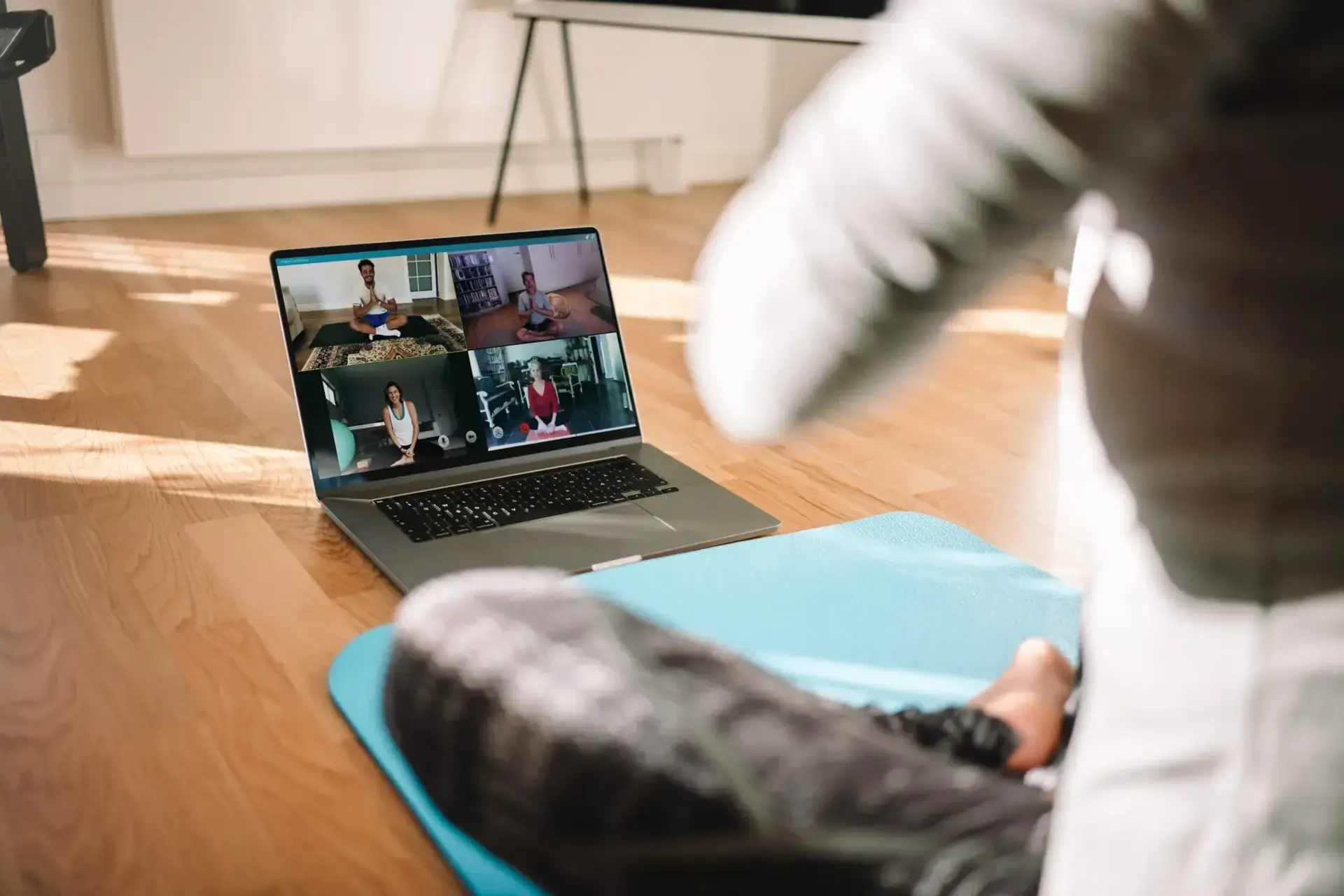
Absolutely. Online therapy can be an effective way to receive CBT and related treatments for misophonia, especially those clients who feel safest practicing exposure exercises in their own environment. Bay Area CBT Center provides online therapy throughout California, allowing clients to work on misophonia symptoms, anxiety, trauma, and related concerns from home. During an initial consultation, you and your therapist can discuss your specific triggers, goals, and the best treatment plan for your situation-whether that involves individual sessions, couples work, or a combination of approaches.