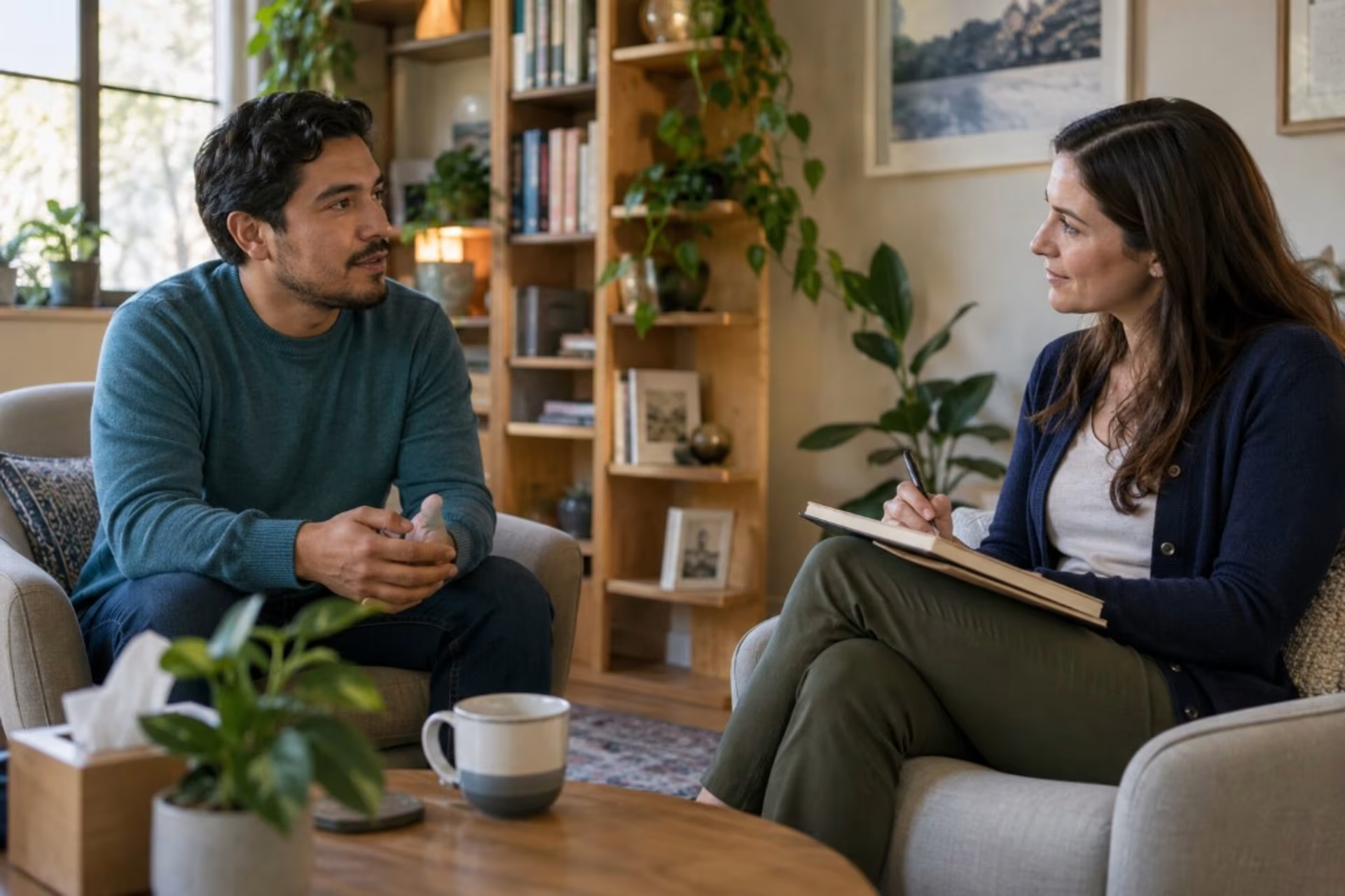
Couples Therapy: What to Expect First Session

Starting couples therapy can feel overwhelming, especially if it's your first time. Many couples wonder what will actually happen during that initial session and how it might help. At Bay Area CBT Center, we approach the first session as a foundational step to understanding your unique relationship dynamics. This session is about creating a safe space to explore the core beliefs and patterns that shape your interactions, not about quick fixes or assigning blame. By the end, you will have a clearer picture of the underlying issues and a collaborative plan for moving forward together.
Key Takeaways
The first couples therapy session at Bay Area CBT Center is an assessment and mapping session, not a quick fix or a blame session. The goal is to understand your relationship dynamics, not resolve every conflict in one sitting.
Each partner completes a relationship schema questionnaire before or during the first session. The therapist uses it to identify core beliefs driving your conflict, like "I'm going to be left" or "I'm not good enough."
By the end of the first session, you leave with a clear formulation of the pattern underneath your fights and a shared plan for next steps.
Bay Area CBT Center offers couples therapy in San Francisco, Oakland, Los Angeles, San Diego, Roseville, Berkeley (via Oakland and online), and online couples therapy across California, plus retreats, workshops, and specialized services.
Why the First Couples Therapy Session Feels So Intense
It's completely normal to feel nervous or skeptical before your first couples therapy session. Most couples walk in not knowing what to say, worried about being judged, or afraid the therapist will take sides. That anxiety makes sense. You're about to talk about painful things in front of a stranger.
Here's what the first session actually is: the starting point for honesty, safety, and collaboration with your couples therapist. Therapy should not be seen as a trial where one partner is judged. The "client" is the relationship itself, not either individual. This first meeting is where you and your therapist decide together whether it's a good fit and what you want from therapy.
Unlike the same argument you have at home, a therapy session has a slower pace, clear structure, a neutral facilitator, and agreed ground rules. Many couples report feeling unheard in their relationships, and common relationship issues that bring couples in include communication problems, trust breaches, escalating arguments, and emotional disconnection and intimacy issues. Some people simply describe these as relationship problems when they are trying to explain what has not been working. That first appointment is designed to give both of you the experience of actually being listened to-maybe for the first time in a while.
How to Prepare for Your First Couples Therapy Session (Without Overdoing It)

Preparation can help couples feel grounded for their first therapy session, but you don't need to write a speech. You do not need to arrive with all your problems solved to begin therapy. Here's what actually helps:
Reflect on your top concern before attending. Think of two or three specific situations-a fight about money last week, feeling like roommates since last year-that show what's not working.
Jot down what you hope will be different three to six months from now. "Argue less about chores." "Feel closer." "Decide whether to stay together." These don't have to be polished.
Discuss your goals with your partner before the session. Even if your individual goals differ, try to agree on one shared hope. Many couples seek therapy as a team once they frame it this way.
Arrive early to set a calm tone before the session. If you're online, test your tech. Avoid having a big argument right before you log on.
Be honest about your feelings during the session. Willingness matters more than preparation.
Step-by-Step: What Actually Happens in the First Couples Therapy Session
Couples therapy typically begins with an intake and orientation session. At Bay Area CBT Center, the general flow looks like this:
Brief introductions and explanation of how couples counseling works here
Review of any questionnaires completed beforehand
Each partner shares their perspective on why you're here now, while the therapist listens for different perspectives
Relationship history and current stressors
Therapist reflections and pattern-mapping
Next steps are planned toward the end of the first session
The joint assessment focuses on understanding both partners' perspectives in therapy. Goals for therapy are identified in the first session, and the therapist helps couples agree on shared goals during sessions. Some immediate relief often comes from simply having a calmer, guided conversation than you have at home-even if no big solutions are reached yet.
Introductions, Ground Rules, and Confidentiality

Clear ground rules matter because they prevent the session from turning into a replay of fights at home. During the first session, therapists review confidentiality and policies, including limits around safety concerns and how secrets are handled between joint and any possible individual sessions.
Common ground rules the therapist may propose for the couples counseling session include:
One person speaks at a time
No name-calling, character attacks, or threats
Taking a pause if voices rise
Using "I" statements instead of "you always" or "you never"
Therapists maintain neutrality and avoid taking sides. The therapist's job is to make sure both partners get equal time and to redirect if things become attacking or defensive. Therapists create a safe space for open communication-that's the foundation everything else is built on.
The first session usually lasts between 50 to 90 minutes. Frequency is often weekly at first to build momentum, and your therapist will explain how cancellations and between-session communication work.
Sharing Your Story: From "How We Met" to "Why We're Here"
The therapist asks open-ended questions to explore what brings couples to therapy. Expect questions like: How did you meet? What drew you to each other? When did you feel closest?
Then the conversation shifts: When did things start feeling different? What arguments keep coming back? What specifically led you to schedule this first session now? Couples share their relationship history—essentially telling the therapist their relationship story—during the first session, and the therapist pays close attention to recurring themes, not just isolated incidents.
Each partner is encouraged to speak from their own experience while the other listens. The therapist listens to both partners without judgment and prevents pile-ons or cross-examination. They observe communication patterns during sessions-how similar fights show up across topics like chores, sex, in-laws, or parenting. That's where the real data is. Practice active listening during these discussions, especially since partners can remember events differently even when they lived through the same experiences; it sets the tone for everything that follows.
The Relationship Schema Questionnaire: What It Is and Why We Use It

This is where Bay Area CBT Center's approach gets specific. Before or during your first couples therapy session, each partner completes a relationship schema quiz.
Schemas are core beliefs about yourself and relationships that formed early-often in childhood-and keep repeating in adult partnerships. They sound like:
"I'm going to be left."
"I'm not good enough."
"My needs don't matter."
"Nobody will really be there for me."
The quiz asks about your typical thoughts, feelings, and behaviors in conflict, and highlights patterns such as abandonment, mistrust, emotional deprivation, self-sacrifice, entitlement, and unrelenting standards. It's a self-reflection tool based on our schema therapy framework, not a psychiatric diagnosis. Seeing the pattern named on the page often helps things click before you talk about solutions.
Schema Chemistry: How Your Core Beliefs Pulled You Together and Fuel Conflict

Schema chemistry is the way each partner's core beliefs and coping styles fit together like puzzle pieces. Often, the schemas that drew you together are the same ones now driving your conflict. The person with a self-sacrifice schema is drawn to someone confident about what they want-and years later feels used.
In the first session, the therapist starts connecting the dots between each partner's quiz results and the real fights you describe. Instead of "you're the problem," the couple begins to see "this is our shared pattern." That shift takes blame out of the room and can start rebuilding emotional connection.
Common Schema Pairs You Might Recognize
Failure and unrelenting standards. One partner re-loads the dishwasher after the other loads it, points out the typo in the email, asks why the kitchen still isn't clean. The partner with the failure schema thinks "I can never get it right," feels shame and a sinking in the chest, and stops trying. They leave tasks undone or wait to be told. The perfectionist partner thinks "If I don't do it, nobody will," gets more critical and controlling. The more perfectionistic that partner gets, the more the other feels like a failure, and the more they actually fall behind. Each one's coping proves the other's belief.
Abandonment and subjugation. One partner texts three times when the other is late, needs reassurance, gets upset when plans change. The partner with subjugation feels controlled, thinks "I have no say here, I have to give in," goes along at first, then quietly pulls away-stays late at work, stops sharing plans. The pulling away sets off the abandonment schema even harder: more texts, more pursuit, more anger. The pursuer feels left; the other feels trapped.
Self-sacrifice and entitlement. One partner handles the kids' schedules, remembers the birthdays, cancels their own plans when the other wants something. The entitled partner gets used to having their needs met and pushes back when asked to give more: "Why are you making this a big deal?" The self-sacrificing partner swallows resentment, then explodes-and the explosion gets treated as the problem.
Emotional deprivation and defectiveness/shame. One partner keeps asking for closeness: "You never ask about my day," "I feel alone in this relationship." The partner with defectiveness hears every request as proof they're not good enough, feels exposed and ashamed, and shuts down or deflects. The shutting down confirms "nobody will ever really be there for me," so the requests turn into criticism, which deepens the shame. Couples therapy can help with this kind of emotional disconnection and intimacy issues-once the loop is visible.
In the first session, your therapist listens for which of these pairs describe you, using both your stories and your schema questionnaire results. Seeing the pattern clearly can be an early step toward more emotional closeness. You can explore the most common schemas we see in couples therapy to learn more.
Building Your Formulation: Naming the Pattern Under Every Fight

A formulation is a clear, shared map of what's driving your stuck pattern: the schemas each partner carries, the triggers that set them off, and the coping behaviors that keep the cycle going.
By the end of the first couples therapy session, the therapist will usually offer a first draft of your formulation-something like: "When you feel criticized, your failure schema shows up; you shut down, which triggers your partner's emotional deprivation schema, leading them to protest more loudly."
The therapist looks at four parts for each partner: thoughts ("I'm going to be left"), feelings (anger, fear, shame), body sensations (tight chest, racing heart, numbness), and coping behaviors (criticizing, withdrawing, people-pleasing, stonewalling). The therapist observes communication patterns and communication styles across multiple examples you share.
Once the couple can name this pattern together, they can catch it in real time-"This is our perfectionism and failure loop again"-and choose a different outcome that supports a more connected relationship. The formulation is collaborative and evolves over the first few sessions as more nuances emerge.
From Self-Fulfilling Prophecy to Shared Problem
When you expect abandonment, criticism, or rejection, you may behave in ways-clinging, attacking, shutting down-that make those outcomes more likely, which then "proves" your belief. This is how schemas become self-fulfilling prophecies within relationships.
The therapist reframes this in the first session: instead of seeing your partner as the enemy, you both see how each of you is trying to protect yourselves in clumsy ways that accidentally hurt the other. This shift-from "you're doing this to me" to "we're in this loop together"-is often one of the biggest reliefs couples feel in the very first meeting. It gives you a path forward and a clearer sense of what you're actually working on.
Our Integrated, Evidence-Based Approach to Couples Therapy

Bay Area CBT Center doesn't use one method for every couple. We primarily draw from schema therapy and cognitive behavioral therapy, then integrate tools from the Gottman method (softened start-ups, repair attempts), emotionally focused therapy, Imago couples therapy (mirroring and validating dialogue), and acceptance and commitment therapy. Many people also refer to this work as marriage counseling.
In session, we attend to thoughts, feelings, body sensations, and behaviors. We use somatic approaches to help partners notice and calm nervous system activation before reacting. Therapists guide couples in practicing new communication skills-like taking sixty seconds to feel your feet on the floor and slow your breath before responding, or using a sentence stem like "What I heard you say is…"
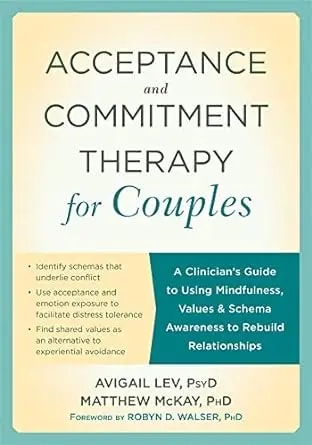
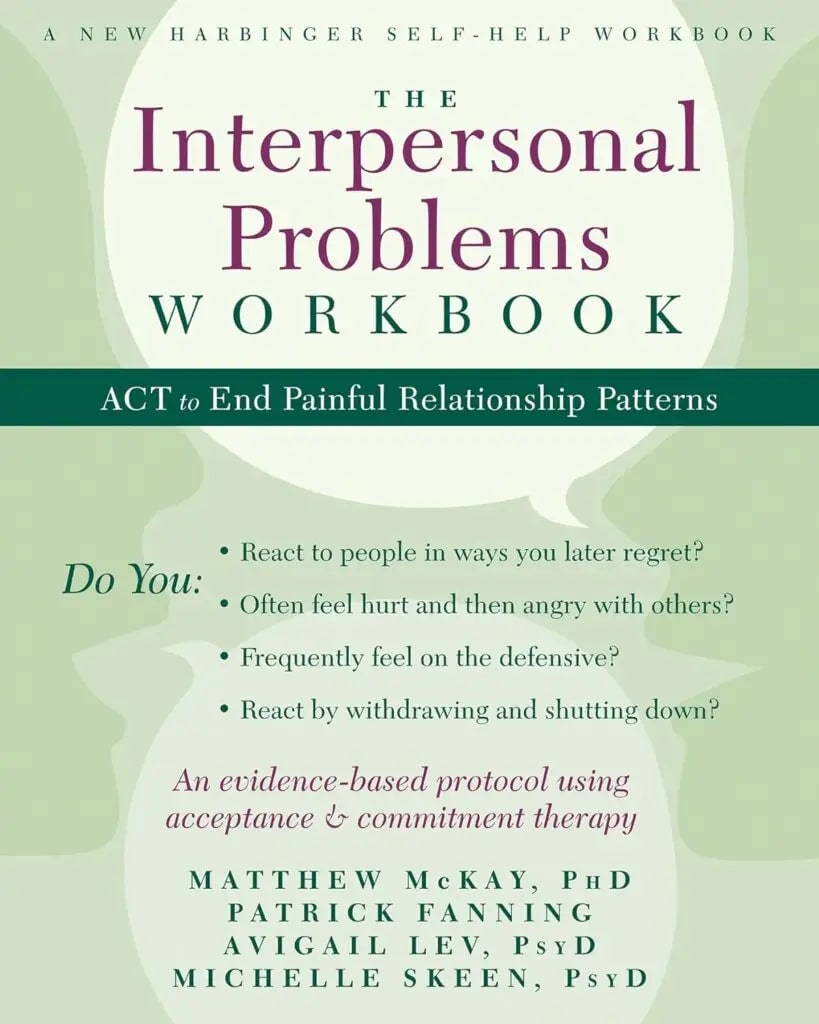
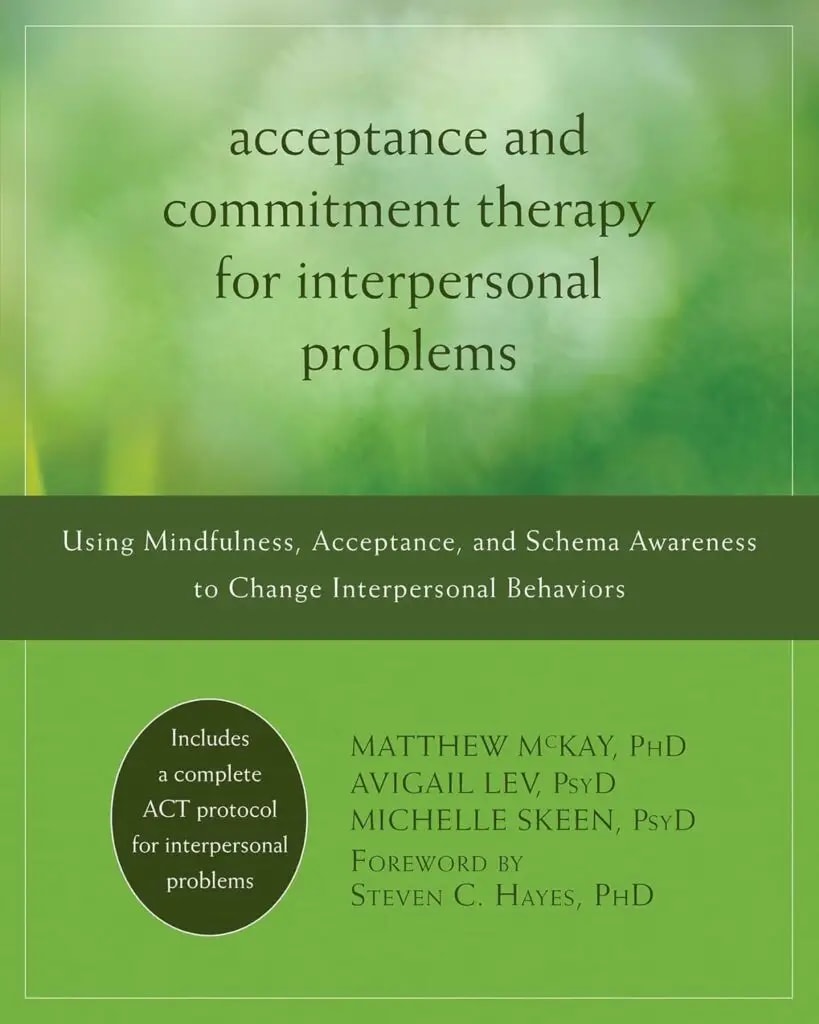
Outside sessions, we assign mental health exercises and communication homework tailored to your formulation. Partners learn problem solving skills and develop healthier ways to navigate challenges together. Our founder, Dr. Avigail Lev, co-authored the books our couples method is built on, published by New Harbinger: ACT for Couples, ACT for Interpersonal Problems, and The Interpersonal Problems Workbook. You can find these and more on our books page. When children or the larger household are affected, family therapy may also be recommended alongside couples work.
Will We Have Individual Sessions Too?
The primary focus at Bay Area CBT Center is the couples counseling session, but an individual session may be recommended when personal trauma, addiction, or severe anxiety needs parallel support. Individual therapy runs alongside the couples work, not in place of it.
When individual sessions are part of the treatment plan, the therapist is transparent about how information will be used and always brings the work back to the relationship. Some couples prefer to keep couples therapy and individual therapy with separate therapists; the first session is where you discuss which setup makes sense.
The decision about individual versus joint work is collaborative. A skilled therapist or family therapist helps you figure out what will most effectively move your shared goals forward, whether that involves a licensed marriage and family therapist for both tracks or separate providers.
What Happens After the First Session?

After the first session, people often feel a mix of relief, vulnerability, hope, or emotional fatigue. It is completely normal to feel emotional afterward. This does not mean therapy is going badly.
Most couples start with weekly couples therapy sessions so changes can build. Future sessions may shift to biweekly or monthly as things stabilize. The therapist refines your formulation, and couples often set one to three realistic therapy goals together-common goals include improving communication, rebuilding trust, improving intimacy, and better communication during conflict. These goals guide the therapeutic process and future sessions.
You may receive short between-session practices: a ten-minute nightly check-in, a body-awareness pause during conflicts, or a values exercise. Setting goals helps couples focus on positive changes. Encourage yourselves to notice small shifts-less escalation, quicker repair, more self-awareness-as early signs the work is paying off.
Couples Therapy Services at Bay Area CBT Center
We offer in-person and online options across California:
Couples therapy in Oakland (Berkeley is served through our Oakland office and via online therapy)
Online couples therapy in California for anyone in the state
Specialized offerings for couples include:
Sex therapy for sex life concerns and intimacy
Discernment counseling for couples unsure about staying together
Premarital counseling for engaged or pre-commitment couples navigating major life transitions
Couples retreat for immersive, focused therapy work
Couples workshops focused on schema awareness and healthier communication
Explore our assessment tools to get a better understanding of where you stand: take the relationship satisfaction quiz or browse all our mental health tests. Our goal across all services is the same: help you understand and change the core patterns driving your relationship distress using an evidence-based, schema-informed approach.
Cost, Logistics, and Getting the Most from Couples Counseling
Couples therapy cost varies based on therapist experience, location, and session length. At Bay Area CBT Center, fees reflect specialized, evidence-based care delivered by licensed clinicians. A good therapist and marriage counselor focused on lasting change costs more than a quick band-aid, but consider the financial and emotional cost of ongoing conflict, separation, or divorce.
To get the most from each couples therapy session:
Come on time with one or two concrete examples from the week
Practice communication skills between sessions
Let your therapist know if something isn't working for you
Periodically revisit the relationship schema quiz or relationship satisfaction quiz to track shifts over time
You don't need to feel uncomfortable about starting couples therapy or starting couples counseling. Many couples wait longer than they need to. The first step, showing up, is the hardest part.
FAQs About Your First Couples Therapy Session
Honesty matters, but the first session doesn't require unloading every detail. The priority is a safe environment and a clear overview of what's happening. If there has been an affair or another major breach of trust, it is usually helpful to name that early so the therapist can frame the work accurately, even if specific details are saved for later. Secret-keeping between partners can complicate the therapeutic process, so talk with your therapist about how to handle difficult disclosures in a way that protects everyone.
Different readiness levels are common. Many couples seek therapy with one partner more on board than the other. The first session is partly about expressing what each person wants, from repair to clarity about separating. You don't have to be on the same page right away; the therapist may help you talk openly about ambivalence without pressuring either partner. If one person is "leaning out," discernment counseling is an option specifically designed for that crossroads.
Some conflict in the room is expected and actually useful. It gives the therapist real-time data on your relationship patterns and communication difficulties. Unlike at home, the therapist will slow things down, point out the schema triggers and coping behaviors, and help you notice what's happening in your bodies and thoughts before you react. Part of the first session is testing and adjusting ground rules so arguments don't spiral the same way they do outside therapy. A different outcome is possible when a skilled therapist is managing the conversation.
Skill-building begins early, often by the end of the first or second session, once there is a basic formulation in place. Understanding the pattern first prevents misusing tools (for example, using a communication skill to keep score rather than connect). In the first few sessions, couples typically practice at least one small exercise between appointments, like a specific check-in format or softened start-up. You won't feel stuck in the past for long.
Many couples seek therapy when they feel stuck about whether to stay together, and this is a valid reason to come in. The first session focuses on clarifying what each partner hopes for: repair, a better separation process, or more understanding before making a decision. We offer discernment counseling for exactly this kind of crossroads. The schema lens helps both partners understand what they want to carry forward, or change, in any future relationship, whether together or apart. Even the process of gaining clarity can bring relief, regardless of the decision they make.