Anhedonia: When Nothing Feels Good and What Actually Helps

If you used to enjoy things and now you don't, or if daily life feels muted like someone turned the color saturation down to zero, you may be dealing with anhedonia. This is not a character flaw. It is not proof that you have become a different person. It is a state, and states can change - though usually not by waiting.
Key Takeaways
Anhedonia is the inability to experience pleasure from activities that used to feel good. It is a core symptom of depression, and it also shows up in burnout, grief, trauma, some medications, and other mental health conditions.
Anhedonia affects 35 to 70 percent of people with major depression. It can be partial (reduced pleasure) rather than total, and it often involves a deficit in motivation and anticipation more than in the raw capacity to enjoy.
The trap: when nothing feels good, you stop doing things. That withdrawal removes the only input that can restart the brain's reward system. Waiting to "feel like it" usually deepens the flatness.
Anhedonia treatment works best when it targets both the underlying condition and the reward pathways directly - through behavioral activation, cognitive behavioral therapy, ACT, savoring practices, and sometimes medication adjustments.
Anhedonia is a state, not a permanent identity. Evidence-based treatment can help, even when it has lasted a long time.
What Is Anhedonia? (Meaning, Not Just a Mood)
Anhedonia means loss of interest and pleasure in things that used to matter to you. Hobbies, food, sex, music, time with people you love - these stop registering. The anhedonia meaning goes deeper than "being in a bad mood." It is more like the emotional volume is turned almost all the way down.
Anhedonia symptoms often look like emotional blunting, flatness, or feeling numb. But here is what catches people off guard: you can usually still feel pain, anxiety, guilt, and stress. It is positive emotions that go missing. Negative emotions often remain loud and clear.
Anhedonia is listed as a core symptom of major depressive disorder in the Diagnostic and Statistical Manual published by the American Psychiatric Association. But it also shows up in bipolar depression, post traumatic stress disorder, schizophrenia-spectrum and other psychotic disorders, long COVID, chronic pain, eating disorders, and after some medications - including selective serotonin reuptake inhibitors, antipsychotics, and GLP-1 drugs. Anhedonia can occur in conditions such as schizophrenia and bipolar disorder well outside of what most people think of as "depression."
Anhedonia can be partial. Many people still get a faint sense of interest or comfort at times, even if "nothing feels good" most of the day. Total absence of any pleasure is less common than a general flattening. That distinction matters for treatment, as we will cover below.
Wanting vs. Liking: Anticipatory and Consummatory Anhedonia
Research by Berridge and colleagues established that wanting and liking are separate processes in the brain. Wanting is the motivational pull - the anticipation, the urge to pursue something. Liking is the pleasure you feel during or after the experience. These run on different neurochemical tracks: dopamine drives wanting, while opioid and endocannabinoid systems support liking.
Anticipatory anhedonia is the inability to look forward to enjoyable activities. It shows up as a blank when you try to imagine anything being worth the effort. You may know, intellectually, that you used to love hiking or cooking, but no pull arises.
Consummatory anhedonia is the lack of pleasure during enjoyable activities. You show up to the dinner, the concert, the conversation - and feel flat. You are going through the motions.
Treadway and Zald's influential work reframed our understanding: for many people with depression and anhedonia, wanting, effort-based decision-making, and reward learning are more impaired than the basic capacity to enjoy. This means motivational anhedonia - the deficit in wanting - is often the bigger problem than the deficit in liking.
A few examples you might recognize: you can genuinely laugh at a show if someone else turns it on, but you never feel like turning it on yourself. You care deeply about your child but cannot feel warmth during the interaction. You know the right things to do but the emotional signal is absent.
How Anhedonia Differs from Depression, Burnout, and Emotional Blunting
Anhedonia often rides alongside depression and anxiety, but it is not identical to either. Understanding the difference matters because the treatment focus shifts. It is also easy to mix this up with ennui vs depression, which can look like emptiness without the same clinical picture.
Major depressive disorder includes persistent low mood, guilt, sleep and appetite changes, fatigue, concentration problems, and sometimes suicidal thoughts. Anhedonia is one of two required depressive symptoms for an MDD diagnosis, but it can appear with or without ongoing sadness. Some people feel mostly numb rather than sad - and that presentation is frequently under-recognized. Anhedonia is often misdiagnosed as major depressive disorder when it may be part of a different clinical picture.
Burnout is usually tied to a specific role - work, caregiving, parenting - and may lift when you step away or rest. You might still enjoy other parts of life. Anhedonia tends to be more global, persisting even with rest, crossing into areas that have nothing to do with the source of stress.
Apathy is low motivation or not caring. With anhedonia, you often still care about people and goals but cannot feel joy or drive. The caring without feeling is one of the more distressing aspects.
Emotional blunting from medications (SSRIs, antipsychotics) flattens both positive and negative emotions. It can coexist with anhedonia but is not the same thing, and may require a medication review with your prescriber.
Common Anhedonia Symptoms: How It Shows Up Day to Day
From the inside, anhedonia often sounds like: "I know I love them, but I can't feel it." "Everything feels like a chore." "It's like the color drained out of life." If those resonate, you are not alone, and you are not making it up.
Specific anhedonia symptoms in plain terms:
Loss of interest in hobbies - anhedonia can manifest as a lack of interest in hobbies you previously cared about
Music sounds flat; food tastes dull
Sex feels mechanical or like work - sexual anhedonia results in a lack of pleasure during sexual activity
Social withdrawal: preferring to cancel or avoid rather than engage
Reduced facial and verbal expressiveness
A persistent sense that life is on pause
There are two main types of anhedonia: social and physical. Social anhedonia involves disinterest in social interactions - feeling detached at gatherings, disconnected even with close friends, conversations feeling like labor. Physical anhedonia refers to a lack of pleasure from physical sensations - muted pleasure from touch, warmth, movement, or physical comfort, even when you can intellectually recognize something "should" feel good. Physical anhedonia involves reduced pleasure from sensory experiences that used to be grounding or comforting.
When these symptoms persist for weeks and affect your functioning - work, school, parenting, relationships - it is a clinical concern, not just a phase of boredom.
What Causes Anhedonia? (Stress, Illness, Medication, and More)
Anhedonia arises when the brain's reward system - particularly the ventral striatum and prefrontal cortex - gets disrupted by prolonged stress, illness, or neurochemical changes. This is not weakness or failure of willpower.
Anhedonia affects 35 to 70 percent of people with major depression. It is especially prominent in more severe or long-standing depressive disorders, in bipolar depression, and when depression co-occurs with generalized anxiety disorder. It appears in affective disorders, mood disorders, and across depressive symptoms of varying severity.
In trauma and posttraumatic stress disorder, chronic threat states and emotional numbing blunt positive affect. The nervous and mental disease literature documents how common anhedonia is in trauma survivors. Anhedonia in PTSD often persists even when the acute fear response stabilizes.
Chronic stress can exhaust the brain's reward system. Burnout, prolonged grief, caregiving overload - all of these can gradually shut down the circuits that generate positive emotions. The pattern is often slow, making it harder to notice until the flatness is pervasive.
Other contributors include substance use, schizophrenia-spectrum conditions (where anhedonia appears among the negative symptoms), Parkinson's disease, long COVID, and medication effects. Anhedonia can occur in schizophrenia and Parkinson's disease due to disruption of dopaminergic pathways. Sometimes anhedonia appears or worsens after a dose change in SSRIs, antipsychotics, or GLP-1 medications.
How Is Anhedonia Diagnosed and Measured?
Anhedonia itself is not a standalone diagnosis in DSM-5. It is a symptom - but an important one, because it predicts severity, suicidal ideation, and treatment response. Clinical correlates of anhedonia include poorer outcomes and higher relapse rates.
To diagnose anhedonia, clinicians conduct a careful interview covering depression symptoms, mood, anxiety, sleep, medical history, medications, substance use, and family history. This typically happens over more than one session. A depression test can help you check whether these symptoms fit before that appointment.
Commonly used measurement tools include:
Snaith-Hamilton Pleasure Scale (SHAPS): assesses consummatory pleasure across domains like food, hobbies, social contact
Temporal Experience of Pleasure Scale (TEPS): differentiates anticipatory or consummatory anhedonia
Dimensional Anhedonia Rating Scale (DARS): captures physical and social anhedonia, frequency, and intensity
Revised Social Anhedonia Scale: focuses specifically on social pleasure deficits
Standard depression rating scales (PHQ-9, Hamilton Depression Rating Scale, MADRS) include anhedonia items and help track change over time.
Self-report is central. Your own description of loss of interest or "nothing feels good" is the primary data. There is no blood tests or brain scan used in routine practice to diagnose anhedonia, though schizophrenia research and clinical psychology studies are exploring biomarkers.
The Trap: Why Waiting to "Feel Like It" Makes Anhedonia Worse

Here is the cycle. When nothing feels good, the obvious move is to stop doing things and wait for the interest to return. That is exactly backwards.
Withdrawal removes the only input that can restore the reward system. Less activity gives the brain fewer chances to experience even faint reward. This reinforces the belief that nothing matters, which deepens the withdrawal further. Anhedonia can lead to social withdrawal and isolation through this self-reinforcing loop. The sequence looks like this: avoidance → temporary relief → more time alone or inactive → more rumination → lower mood → even less motivation. Nolen-Hoeksema's work on rumination shows that passive, repetitive thinking about why you feel bad maintains and worsens depression.
The core stance in treating anhedonia: behavior comes first, feeling comes second. Waiting for interest or energy to return before you act usually prolongs the problem.
One of the most discouraging parts is trying an activity and feeling flat, then using that as proof that "nothing works." That interpretation - not the activity itself - is often what keeps anhedonic symptoms stuck. The feeling is the lagging indicator, not the test of whether you should keep going.
Behavioral Activation: Doing Before You Feel Like It

Behavioral activation is a first-line, evidence-based anhedonia treatment. The COBRA trial (Richards et al., 2016) randomized 440 adults with major depression to behavioral activation therapy or cognitive therapy and found BA was just as effective at 12 months. Behavioral activation therapy is effective for treating anhedonia, and behavioral activation therapy focuses on re-engaging rewarding activities rather than analyzing feelings first.
The logic is straightforward: schedule small, specific, valued activities and do them regardless of mood. Track the impact on pleasure and mastery to slowly retrain the reward system. Reconnecting with past enjoyable activities can improve motivation, even when the first attempts feel neutral.
Concrete examples of "valued, not necessarily fun" activities:
Emailing a friend three sentences
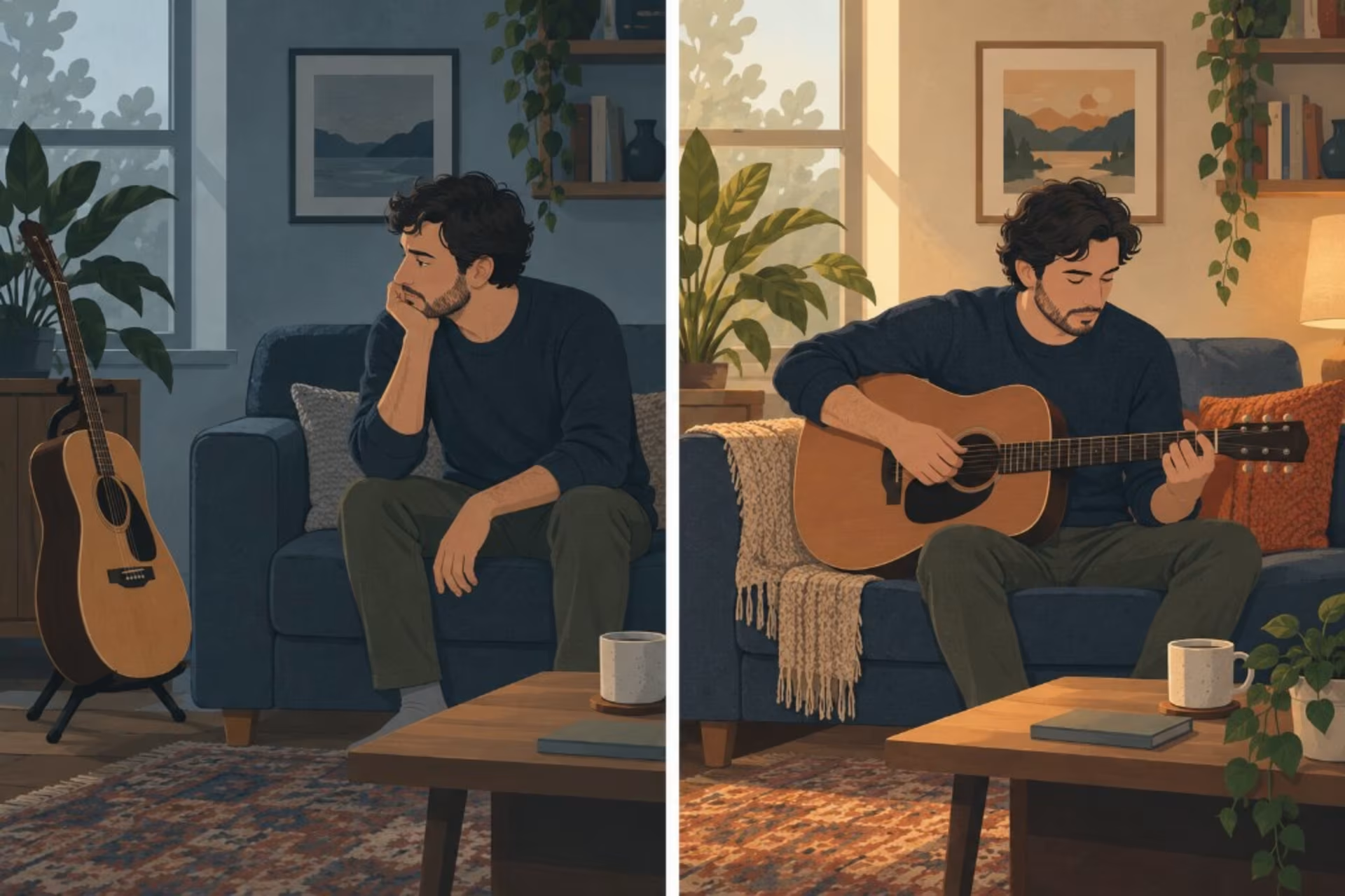
Playing guitar for five minutes
Cooking a simple meal
Sitting on a bench outside for ten minutes
Reading two pages of a book you used to like
Use a simple daily log - activity scheduling worksheets work well - to record what you did, pleasure (0–10), and mastery or meaning (0–10). This makes subtle improvements visible when your brain insists nothing changed.
The grade is for showing up, not for how good it felt. Pleasure is a lagging indicator. A 1 or 2 out of 10 is data, not failure.
Working with Thoughts: CBT and ACT Approaches to Anhedonia

Behavior change is central, but thoughts about effort, futility, and self-judgment strongly influence whether you attempt activities at all. Cognitive behavioral therapy (CBT) is effective for anhedonia because it addresses the thinking patterns that maintain avoidance.
Common thinking patterns in anhedonia:
"Nothing will help."
"This proves I'm broken."
"If I don't feel joy, it doesn't count."
All-or-nothing standards for pleasure: anything less than the old feeling is treated as zero.
Cognitive behavioral therapy techniques help you notice and gently test these thoughts through experiments rather than argumentation. For example: "If I rate my pleasure honestly for a week, do I see any 1s or 2s instead of 0s?" Journaling can help identify and reframe negative thoughts - not by forcing positivity, but by catching the automatic dismissals that keep anhedonic symptoms in place.
Acceptance and commitment therapy (ACT) adds another layer: willingness to feel flat or numb while still taking small actions guided by values. Instead of waiting for motivation, you show up for your partner, care for your body, or text a friend because that aligns with the kind of person you want to be. The success metric is alignment with values, not the presence of pleasure.
At Bay Area CBT Center, therapists often blend cognitive behavioral therapy CBT, ACT, and behavioral activation so you work on thoughts, behavior, and values together.
Savoring and Attention to Positive Experience (Even at 2/10)

Savoring means deliberately paying attention to small instances of okay-ness or mild pleasure. Fred Bryant's work on savoring and positive emotion shows that attention plays a direct role in amplifying or suppressing enjoyment. Practicing mindfulness can enhance positive feelings and savoring experiences, even when the signal is weak.
Specific savoring practices suited to anhedonia:
Notice the warmth of a shower for ten seconds and name it: "warm"
Feel the weight of a mug in your hand
Register a brief moment of physical ease when your body is still
During a conversation, notice one thing the other person said that was unexpected
You are not trying to force joy. You are trying to notice what is there on a 0–10 scale, even if it is a 1 or 2, and name it in simple words. When you combine savoring with behavioral activation - slowing down during a walk to name three neutral-to-pleasant sensations - you support reward learning and give the brain clearer signals to encode.
The inner critic will say a 2 out of 10 is not good enough. Treat that small signal as data that your system can still respond, however faintly. That is the point.
Social Anhedonia and Isolation Loops

Social anhedonia involves disinterest in social interactions - reduced pleasure from being with others, feeling detached even with close friends or family. Conversations feel like work. Social anhedonia is linked to increased risk of anxiety disorders and can deepen depressive symptoms through isolation.
The isolation loop works like this: social withdrawal to conserve energy → temporary relief → more loneliness and less positive input → increased belief that connection is not worth it → more withdrawal. Anhedonia can lead to social isolation and relationship struggles that compound over time.
Very small, practical social steps when energy is low:
Text one person, even just a few words
Reply instead of ignoring - partial engagement counts
A short video call, five minutes
Sit in a public space without needing to talk
Social anhedonia can show up in schizophrenia-spectrum and autism-spectrum conditions, but in depression and anxiety it is often highly responsive to behavioral activation and gentle social exposure. The success metric is contact and alignment with values - being the kind of friend or partner or parent you want to be - not immediate enjoyment.
Movement, Sleep, and the Body's Role in Anhedonia
Regular physical activity may help stimulate dopamine synthesis in individuals with anhedonia. The evidence (see Schuch and colleagues' meta-analysis) shows that exercise reduces depressive symptoms, and physical activity can boost mood and combat anhedonia - but the benefit comes after repeated practice, not from how any single workout feels.
Modest starting points:
Standing and stretching for two minutes
Walking to the end of the block
Gentle yoga or pacing while on a phone call
Track any shift in energy or sleep, even if minor. Do not set the bar at "enjoyment."
Sleep and anhedonia have a bidirectional relationship. Poor sleep dampens reward responsiveness. Anhedonia and rumination make healthy sleep routines harder. A few realistic strategies: keep a consistent wake time, dim screens before bed, and keep the bed mostly for sleep. For more structured relaxation and self-care approaches, guided exercises can help without requiring a full insomnia protocol.
Nutrition, chronic pain, and medical conditions also influence reward systems and your mental and physical health overall. If anhedonia appears alongside major physical health changes, bring that to a healthcare provider.
Anhedonia, Anxiety, Trauma, and Eating Disorders
Anhedonia rarely exists in isolation. It often rides alongside other mental health conditions, and treatments for anhedonia should target the underlying condition and the brain's reward pathways simultaneously.
In generalized anxiety disorder, chronic worry and hyperarousal can coexist with anhedonia, especially when GAD overlaps with depression. The nervous system stays on alert, making it harder to access sensory experiences of pleasure or comfort.
In trauma and PTSD, emotional numbing, detachment, and diminished interest are part of the diagnostic criteria. Trauma-focused therapies - like EMDR or trauma-focused CBT - may be needed alongside behavioral activation to address the root. A cptsd quiz can help you check whether old injuries are still in the mix.
Eating disorders involve altered reward responses to food and body cues. Augmented depression therapy approaches that address both the eating disorder and anhedonic symptoms can gradually restore the ability to experience pleasure from physical and social domains.
At Bay Area CBT Center, clinicians screen for these co-occurring issues so anhedonia treatment is integrated with broader work on anxiety, trauma, or disordered eating rather than treated in a vacuum.
Medications, Ketamine, and When to Review Your Treatment Plan
Medications can both help and, in some cases, worsen anhedonia. Decisions should be made collaboratively with a prescriber - not by stopping medications on your own.
Traditional SSRIs sometimes leave residual anhedonic symptoms or contribute to emotional blunting. Dopamine-targeting medications may help alleviate anhedonia symptoms - bupropion, for example, works on dopamine and norepinephrine and is sometimes used as an augmentation. Other agents in clinical psychopharmacology with multimodal mechanisms are being studied as depression treatments specifically targeting reward dysfunction.
Ketamine therapy can improve anhedonia symptoms in some patients. A 2024 systematic review across 22 studies found that ketamine produced significant anti-anhedonic effects, sometimes within hours, including in treatment-resistant cases. Bay Area CBT Center offers ketamine-assisted psychotherapy within a structured framework that includes integration and behavioral change - not medication alone.
Transcranial magnetic stimulation shows promise for treating anhedonia as well. This form of noninvasive brain stimulation, sometimes called noninvasive brain stimulation in the research literature, targets the prefrontal cortex and related circuits. While evidence is still developing, TMS is worth discussing with a mental health professional for severe symptoms that have not responded to standard approaches.
If you notice emotional blunting after starting or changing a medication - including GLP-1 agonists - bring it up with your prescriber. Dose adjustments or alternatives may be available.
What Treatment with Bay Area CBT Center Can Look Like

Therapy for anhedonia at Bay Area CBT Center typically begins with a thorough assessment: anhedonia symptoms, depression, anxiety, trauma history, eating patterns, medications, and what matters to you. From there, therapist matching and collaborative goal-setting.
Core components of treatment:
A behavioral activation plan tailored to your values and current limitations
CBT or ACT to work with hopeless thoughts and self-criticism
Savoring and mindfulness exercises
Support with sleep, movement, and social reconnection
For clients with bipolar depression, PTSD, or complex trauma, therapists integrate modalities like DBT, EMDR, schema therapy, or somatic approaches as appropriate - always keeping anhedonia as a key target.
Sessions focus on very small, concrete experiments rather than dramatic life overhauls. Someone with anhedonia often has limited bandwidth, and pacing matters.
If you are in California and want structured, evidence-based support, you can explore our depression therapy or book a free consultation.
When Anhedonia Is a Red Flag to Seek Help Now
Persistent anhedonia, especially combined with hopelessness, feeling like a burden, or thoughts of not wanting to be alive, is a serious symptom of depression that deserves prompt attention.
Research links anhedonia to increased suicidal ideation in major depressive and bipolar disorders, independent of sadness levels. "Numb but not sad" is not automatically safer. Untreated anhedonia carries risks that extend beyond mood - it predicts worse outcomes and higher relapse rates across mental disorders and psychotic disorders.
Signs it is time to reach out to a mental health professional:
More than two weeks of severe loss of interest across most areas of life
Inability to function at work, school, or in relationships
Neglect of basic self-care
Any suicidal thoughts, plans, or urges
If you are thinking about ending your life, contact emergency services (911) or call/text 988, or go to the nearest emergency room.
Asking for help does not require certainty about your diagnosis. Noticing that "nothing feels good and I can't fix this alone" is enough reason to reach out.
Living with Anhedonia: Self-Compassion and Long-Term Change
Progress with anhedonia is often slow and uneven. There will be periods of flatness even as the overall pattern improves. That is not failure - it is the normal shape of recovery from abnormal psychology states that affect the reward system deeply.
You did not choose this state. Tiny efforts - a five-minute walk, one text, one bite of real food - matter more than they feel like they do. Self-compassion here is not about positive self-talk. It is about not attacking yourself for something that is not your fault.
Track change over weeks and months. Rate pleasure and interest on a 0–10 scale. Note small shifts: "music felt 1% less distant today." The brain's tendency is to miss gradual improvement and remember only the flat days. Simple data counters that.
The central message: anhedonia is a state maintained by patterns of avoidance and withdrawal, and those patterns can be changed through scheduled, values-based action - often with the help of structured therapy. You do not need to feel like it first. You need to do it first, and let feeling catch up.
If you are in California and want company and guidance while you practice doing before feeling, Bay Area CBT Center offers evidence-based therapy designed for exactly this. You can schedule a free consultation here.
Frequently Asked Questions about Anhedonia
Current research and clinical experience show anhedonia can improve, even after years, especially when targeted directly with behavioral activation, cognitive behavioral therapy, ACT, and when appropriate, medication changes. There is no fixed timeline - some people notice small shifts in weeks, others over months. For some, anhedonia occurs in waves tied to stress or illness. But "stuck forever" is not what the data suggest. Anhedonia is a common symptom, not a life sentence.
Yes. Some people experience anhedonia symptoms without meeting full criteria for major depressive disorder. This happens in schizophrenia-spectrum conditions, after trauma, with chronic medical illness, and as a side effect of medication. Even in these cases, the same principles - structured activity, attention to reward, social connection, and addressing underlying conditions - help restore the ability to experience pleasure over time.
Pay attention to timing. If emotional blunting or loss of enjoyment started or clearly worsened after beginning or increasing a medication - such as an SSRI, antipsychotic, or GLP-1 drug - it is worth discussing with your prescriber. Do not stop medication on your own. Bring detailed notes about changes in mood, interest, and functioning to your appointment. Anhedonia diagnosed as "just depression" may actually be a medication side effect that can be addressed with dose changes or alternatives.
Studies suggest regular, modest physical activity can improve depressive and anhedonic symptoms over time. The benefit often comes after repeated practice, not from how any single workout feels. Start with the smallest, most tolerable movement. Track effects on sleep, energy, and mood over weeks. Frame it as a physiological input - something that supports mental health and physical health - rather than something you have to feel joy during to justify.
If previous therapy focused mainly on analyzing the past or talking about feelings without concrete behavioral plans, you might benefit from a more structured, behavioral approach centered on anhedonia itself. Ask a prospective therapist specifically about their experience with behavioral activation, cognitive behavioral therapy, ACT, or Positive Affect Treatment for anhedonia - and how they track changes in pleasure and interest over time. Talk therapy that includes structured tools for tracking and measuring shifts tends to produce better outcomes for anhedonic symptoms than open-ended conversation alone.