Benefits of Meditation: A Practical, Science-Based Guide to Training Your Mind

Meditation is one of the most researched mental health tools available, yet most people still misunderstand what it is, what it does, and why it works. This guide cuts through vague wellness claims and lays out the benefits of meditation in skill terms: what meditation practice can and cannot do for you-grounded in clinical research, everyday examples, and the exposure-based principles we use at Bay Area CBT Center.
Key Takeaways
Meditation is training attention and learning to stay with whatever is present (pleasant or unpleasant), not clearing the mind or forcing calm.
The concrete, skill-based benefits include better emotional regulation, less reactivity in conflict, reduced rumination, improved focus, better sleep, more self-compassion, and a steadier sense of self.
The real benefit is being able to feel what you feel and still do what matters in daily life; calm is a possible side effect, not the main goal.
A beginner's meditation session can start at 3–5 minutes with simple posture options, an attention anchor like the breath, and a plan for when thoughts and discomfort arise.
Exposure-based, science-backed practices — including emotion exposure, ACT and CBT-informed meditations — can be practiced at home and are taught in individual therapy, group therapy, and mental health retreats at Bay Area CBT Center.
What Mindfulness Meditation Actually Is (and What It Is Not)
Meditation practice is systematic training of attention and awareness. It is not a mystical escape, not an instant calm button, and not a way to manifest a better parking spot. Mindfulness practices have roots in Eastern traditions, but in a clinical context, meditation is closer to strength training for your capacity to be present with life as it is.
Three myths need to go:
It is not clearing your mind. Thoughts will arise. That is normal. The practice is noticing them and returning your attention-not achieving blankness.
It is not forcing yourself to relax. Sometimes practicing meditation surfaces anxiety or sadness. That is still practicing meditation before any calm appears.
It is not positive thinking or "manifesting." Mindfulness meditation focuses on the present moment and breath, helping you see thoughts more clearly rather than generating artificially positive ones.
Consider this: you sit down for daily meditation and immediately notice anxiety about an email from your boss. Instead of grabbing your phone to check, you stay with the tight chest and racing thoughts for a few moments. That act-staying with what is present without needing it to change-is the entire point. Research suggests that 95% of our behavior runs on autopilot without mindfulness. Meditation practice interrupts that autopilot.
At Bay Area CBT Center, we view meditation as a mental fitness practice. You would not expect one gym session to transform your body. Meditation works the same way. How you meditate matters less than that you meditate consistently.
How Meditation Helps Reduce Stress in Daily Life: Skills, Not Vibes
The benefits of meditation, including physical health and well being, show up more in real-life moments-conflict with a partner, a stressful work deadline, insomnia at 2 a.m.-than during the meditation session itself. What meditation builds are concrete skills: nervous-system regulation, cognitive flexibility, and the ability to choose a response instead of firing off a reflex.
People often notice shifts after several weeks of consistent practice, not overnight. A meta analysis of 163 studies, and a later systematic review of mindfulness-based interventions, found medium effect sizes for emotional and interpersonal improvements, with attention gains close behind. These are not vague wellness claims. They are observable behavior changes in daily life.
Emotional Regulation: Feeling Big Emotions Without Getting Hijacked
Emotional regulation does not mean you stop feeling anger, shame, or fear. It means you recover faster and are less likely to act in ways you later regret. Meditation can help improve emotional regulation and self-control by training you to notice early signs of activation-tight jaw, clenched fists, racing thoughts-and respond with a pause instead of a reflex.
Before regular meditation: Your partner says something critical during dinner. Your heart rate spikes, and you send a hurtful text or storm out.
After months of practice: You notice the heat in your chest, take a deep breath (or two more deep breaths), and say, "I need a 5-minute break." You return to the conversation.
Meta-analyses of mindfulness-based interventions show medium to large effect sizes in reducing emotion dysregulation, including better impulse control and goal-directedness under emotional pressure. In adolescents, the effect size for emotional regulation was approximately g = −0.43. Meditation helps promote better emotional health and coping strategies-not by eliminating feelings, but by changing your relationship to them.
Less Reactivity in Conflict: Creating Space Between Trigger and Response

Mindfulness meditation builds a gap between a trigger and response, giving you a choice instead of a reflex. Focused attention practices-like following sensations of each inhale and exhale-strengthen the same attentional muscle you use to pause before reacting to a partner's tone of voice or a teenager's eye roll.
A concrete example: in a tough work meeting, someone hears sharp criticism. Pre-meditation, they would immediately defend themselves. With practice, they feel the sting, take one breath, and ask, "Can you clarify what you meant?" The Raugh et al. 2024 meta-analysis (N ~ 8,100) found mindfulness-based strategies significantly reduce reactivity, with equanimity (acceptance) showing the strongest effects (g ~ .30).
This skill directly improves relationships. Fewer escalations, more ability to stay in hard conversations, more repair after ruptures.
From Rumination to Clarity: Working With Thoughts Instead of in Them
Rumination is replaying a mistake at work all night, re-running a fight with your partner in the shower, or obsessing over what your boss "really meant" by that comment. Mindfulness trains the mind to recognize negative thought loops and encourages returning attention to the present moment instead of following every storyline.
Meditation helps you see thoughts as events in the mind rather than facts. Acceptance and Commitment Therapy calls this "defusion"-instead of "I'm a failure," you practice noticing, "I'm having the thought that I'm a failure."
Example: after a misstep in a Monday meeting, you notice the late-night "I ruined everything" spiral. Instead of following it for two hours, you label it ("self-criticism"), let it be there, and return to your breath. Reduced rumination often leads indirectly to better mood and better sleep-without guaranteeing a cure.
Improved Focus, Attention, and Sleep
Every time the mind wanders during a meditation session and you gently return attention to the anchor, you are doing a rep for your focus muscle. Meditation strengthens the brain's neural pathways related to concentration, and even brief sessions of meditation can yield measurable changes in the brain. Research shows that 12 minutes of meditation, five days a week, improves attention.
Workday example: staying with a report for 20 minutes without checking your phone because you have practiced returning attention hundreds of times during daily meditation.
Meditation can ease anxiety and improve sleep quality by reducing pre-bed rumination and helping the nervous system downshift. Instead of doom-scrolling at 1 a.m., you try a body scan meditation-which involves focusing on different body parts sequentially-and notice physical sensations without changing them. Meditation may improve sleep quality, help with chronic pain, and reduce insomnia; studies show improvements in sleep quality, reduced wake time, and better sleep efficiency (SMDs from 0.44 to 1.09).
Meditation practices may also contribute to healthier blood pressure patterns and promote relaxation that can help reduce blood pressure. People use them alongside medical care for chronic pain, acute pain, and the immune system, not as replacements.
A Steadier Sense of Self and More Self-Compassion

Meditation enhances self-awareness by shifting you from "I am my thoughts and moods" to "I'm the one noticing them." The metaphor from ACT: you are the sky, thoughts and feelings are the weather. Weather changes constantly; the sky remains.
This "self-as-context" perspective leads to less over-identification with shame, anxiety, or low mood. After a breakup, someone notices the story "I'm unlovable," labels it as a thought, and offers themselves a self-compassion phrase: "May I be gentle with myself when I fall short."
Regular meditation practice may increase resilience. Consistent meditation builds psychological flexibility-the ability to hold difficult inner experiences without letting them dictate your actions. Brain studies show long-term meditators have increased cortical thickness in regions involved in self-referential processing, suggesting a more stable sense of self amid changing moods.
The Real Benefit Is Not Calm: Doing What Matters While Feeling What You Feel
If you judge meditation by "did I feel relaxed?" you will quit the first week you feel anxious or sad on the cushion. Meditation can provide a sense of calm and balance, and it activates the relaxation response, reducing physical signs of stress. But calm is sometimes a side effect, not the main outcome.
The deeper benefit: being able to feel whatever you feel-anxiety before a presentation, anger after an argument, grief after a loss-and still act on your values.
Presenting at work with a racing heart, staying with your values of courage and contribution.
Having a hard parenting conversation even while feeling anxious.
Sitting with loneliness at night without reaching for a distraction.
Meditation can help lower stress levels over time, and it lowers the production of stress hormones like cortisol. But the real metric is not stress levels-it is what you do while stressed.
State-Dependent Learning: Why You Should Practice With Real Emotions
State-dependent learning means what you practice while calm is most accessible when you are calm; what you practice while a bit anxious is more accessible when anxiety returns. This has direct implications for meditation.
The fire drill analogy: You rehearse the exit under some pressure, not by pretending the building will never burn. Meditation works the same way.
Contrasting examples:
| Approach | What Happens |
|---|---|
| ————————————————————————————————— | —————————————————————————————————————————————- |
| Practicing deep breathing only on a quiet Sunday morning | Skill is stored in the "calm" state; hard to access during a tense meeting |
| Practicing while deliberately recalling a stressful conversation | Skill is linked to the "activated" state; available when stress actually shows up at work |
Meditation can help lower stress levels significantly when practiced under conditions that resemble real life. Bay Area CBT Center's exposure-based meditation practices encourage people to stay with manageable levels of hard feelings-anxiety, shame, grief-so the skills transfer to real-world moments. Meditation can improve overall wellness habits by increasing awareness of your emotional landscape, not by avoiding it.
"May I" Phrases vs. Positive Affirmations
Generic positive affirmations often fall flat. "I'm confident, I'm successful, I'm the best" gets pushed back on by the part of you that does not believe it. When the claim is too discrepant from current experience, research shows it can trigger cognitive dissonance and actually make you feel worse.
Loving-kindness meditation phrases are wishes, not claims. You can wish for something you do not yet feel, so there is nothing to argue with.
| Affirmation (Claim) | "May I" Phrase (Wish) |
|---|---|
| ————————————— | ——————————————————————— |
| "I'm not anxious." | "May I hold this anxiety kindly." |
| "I love my body." | "May I be a little kinder to my body today." |
| "I am brave." | "May I be brave today." |
| "I'm over this breakup." | "May I accept myself as I am right now." |
Loving-kindness meditation involves silently repeating phrases of goodwill-"May I feel safe. May I be at ease."-and this format lands because it requires honesty, not pretending. For more loving-kindness phrases, keep the wording as a wish, not a claim.
Validation vs. Reassurance: How You Talk to Yourself in Meditation
Reassurance tells you the feeling is unnecessary. Validation tells you the feeling makes sense.
Reassurance: "This presentation will be perfect, stop worrying." (Asks the feeling to leave.)
Validation: "It makes sense you're anxious-this is important and uncertain." (Lets the feeling stay and be understood.)
Meditation can become a space for validation rather than self-dismissal. When you sit with anxiety, shame, or grief, you can practice saying: "Of course I'm scared. This matters to me and I don't know how it will go."
Validating statements are more effective both in meditation and in relationships. Clinical trials in DBT and ACT, including more than one systematic review, show that emotion labeling combined with acceptance reduces depressive and anxiety symptoms more effectively than reassurance or suppression. Feelings soften when they are heard, not argued with.
When Meditation Becomes Avoidance: Toxic Positivity and Spiritual Bypassing
Spiritual bypassing means using meditation or "good vibes only" to avoid real pain or necessary conversations. Toxic positivity dismisses difficult emotions under a veneer of optimism. Both defeat the purpose of mindfulness practice.
Examples:
Using "everything happens for a reason" to skip grieving a loss instead of sitting with the grief.
Meditating to numb out rather than addressing a recurring conflict with a partner.
Repeating "I'm grateful" while ignoring legitimate anger about being mistreated.
Exposure-based meditation is the opposite: you deliberately turn toward the difficult experience and stay with it. Bay Area CBT Center's meditations are built on exposure, willingness (choosing to feel discomfort in service of what matters), and non-duality (experiences are not inherently good or bad-they are experiences to be met with awareness).
How to Meditate: A Step-by-Step Guide for Complete Beginners

No meditation cushion required. No yoga mat required. No incense. If you're learning how to meditate, here is what to do. These practical tips are enough to start meditating this week, and they pair with how to practice mindfulness in daily life:
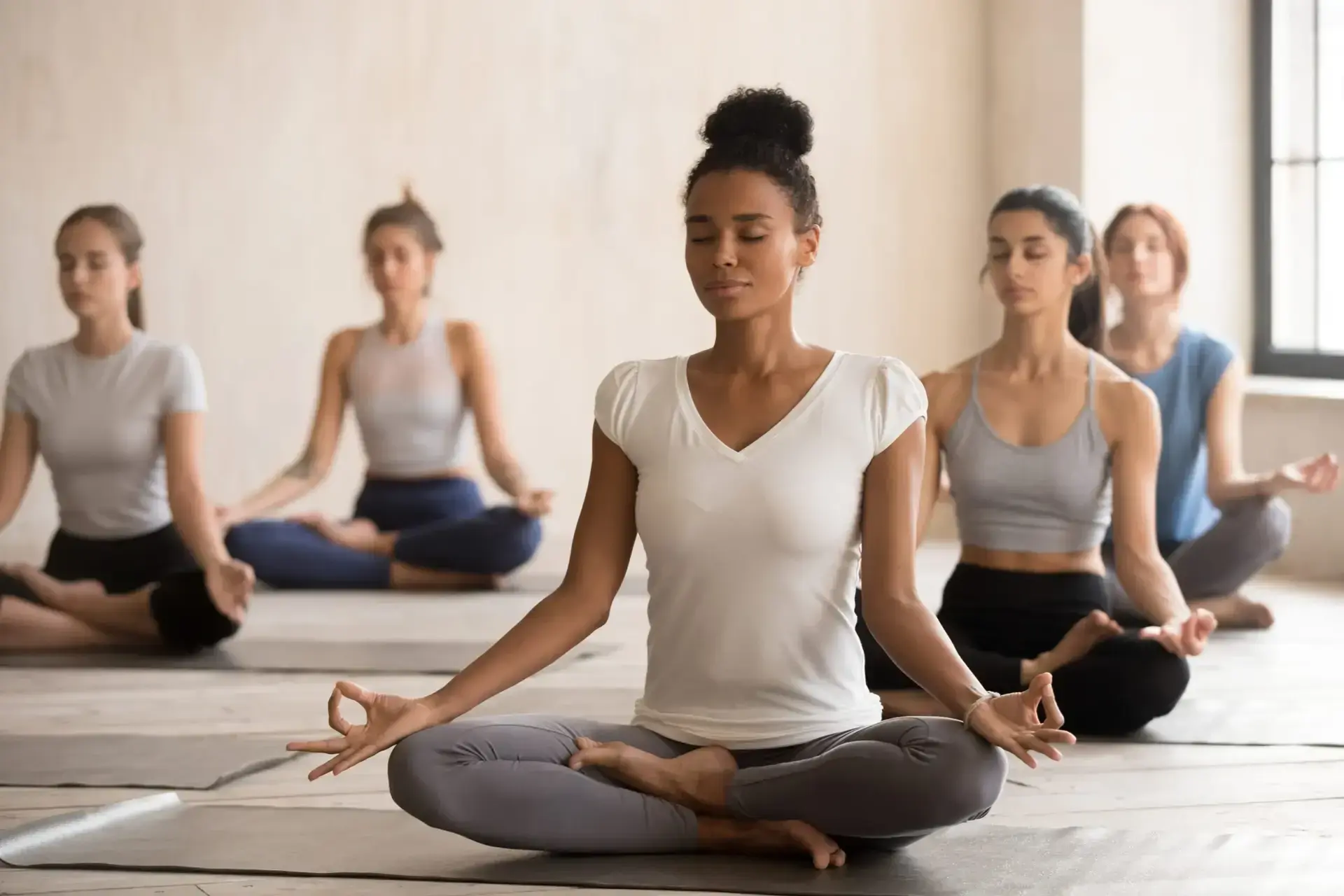
Posture: Sit on a chair, couch, or the floor. Lie down if needed. Walk slowly if sitting feels overwhelming. Keep your spine straight but not rigid, feet flat on the floor if seated. Good posture supports alertness without tension.
Time: Start with 3–5 minutes, not 20. Even a few minutes of consistent practice builds the habit. Meditation can be practiced for just 5 to 10 minutes daily.
Anchor for attention: Place attention on breath sensations in the nose or chest. Simple breathing exercises work here too, contact points of the body on the chair, or nearby sounds. A body scan works too-simply breathe and notice what your body feels, region by region.
When your mind wanders: Most people experience a wandering mind during meditation. This is not failure. Notice what pulled you away ("planning," "worrying," "remembering") and gently return to the anchor. That return is the actual rep. A wandering mind caught and redirected is the exercise working.
Discomfort and restlessness: A tight throat, fidgety legs, a busy mind-stay curious about these for a few breaths before adjusting. Treat them as practice material, not problems.
How often: Daily meditation beats occasional longer practice. A quiet setting helps beginners focus, but you can meditate anywhere — parked car, office, or bed — and you can meditate with a busy mind. When the mind wanders, that is the rep.
Realistic first two weeks: Some sessions will feel boring. Some will feel frustrating. You might fall asleep or feel more anxious. Occasionally, you will have a few moments of real presence. Track changes in daily life-fewer blow-ups, quicker recovery, catching a rumination spiral-rather than chasing in-session bliss.
Common Obstacles and How to Work With Them
"I can't stop thinking." You are not supposed to. Success is noticing thoughts pass and returning to the anchor, even 100 times in one session. When the mind wanders, you meditate by coming back. Meditation practice can help improve attention and mindfulness through exactly this repetition.
"I get more anxious when I sit still." That is often the anxiety you have been avoiding becoming visible. Start with 1–3 minutes, use an eyes-open posture, and pair with validation: "It makes sense I'm anxious." Use exposure principles-start small.
"I fall asleep." Sit up instead of lying down. Open your eyes slightly with a soft gaze. Meditate earlier in the day rather than right before bed. If you still fall asleep, meditate sitting up with eyes slightly open.
"I don't have time." Three minutes counts. Insert it into an existing routine — after brushing teeth, before opening email, sitting in a parked car. Even a few minutes of practice is enough to start meditating, and enough to meditate on a workday.
"I don't feel anything." Feeling something specific is not the goal. Attention and willingness are. A neutral session is still a session.
"It makes me feel worse." Distinguish between normal exposure discomfort (manageable, comes in waves) and overwhelming distress. If meditation consistently destabilizes you-especially with a history of trauma or severe depression-seek support from a trauma-informed therapist. There is no right or wrong way to feel during practice, but there is a difference between discomfort and harm.
A Menu of Meditation Practices: Calming vs. Exposure-Based

Here is a practical overview of different types of meditation and meditation techniques you can try. Each involves focusing attention differently:
| Practice | How To | Type |
|---|---|---|
| ———————————————————————————- | —————————————————————————————————————————————————————————————————————————————- | —————————— |
| Breath awareness | Focus on sensations of inhales and exhales at the nose or belly. Simply breathe and stay focused. | Calming |
| Body scan | Move attention slowly through the whole body from toes to head, noticing physical sensations without changing them. | Calming / Exposure |
| Loving-kindness (metta) | Silently repeat "May I be safe. May you be at ease." | Soothing |
| Self-compassion meditation | Offer care to yourself during shame or disappointment: "May I be kind to myself in this moment." | Exposure |
| RAIN | Recognize, Allow, Investigate, Nurture. Particularly helpful for anger, grief, or shame. | Exposure |
| Noting practice | Lightly label experiences: "thinking," "hearing," "feeling warmth." Builds distance from content. | Mixed |
| Walking meditation | Bring attention to the sensation of each step and movement. Useful when sitting feels overwhelming. Walking meditation emphasizes awareness of each step. | Calming |
| Mantra meditation | Repeat a single word or phrase silently to anchor attention. Other forms of formal meditation use mantras as the primary anchor. | Calming |
| Tonglen | Breathe in your own or others' pain, breathe out relief. Advanced, powerful for compassion work. | Exposure |
| Emotion exposure | Intentionally bring up a difficult emotion and practice staying with it in the body. | Exposure |
Guided meditation uses mental imagery to promote relaxation and can be a helpful entry point, and different approaches to meditation work better for different people. Bay Area CBT Center offers guided meditations across many of these styles.
Emotion Exposure Meditation: A Step-by-Step Example

Emotion exposure meditation means deliberately inviting a manageable dose of a hard feeling and learning to stay with it in the body instead of escaping.
Worked example: shame after a work mistake
You sent an email to 50 colleagues with a visible error. You imagine them reading it and you feel exposed.
Bring the situation to mind. See the email, the mistake, the recipients.
Locate the feeling in your body. Where does shame live? Stomach tightening? Heat in the face? Heaviness in the chest?
Physicalize it. What shape is it? What color? What temperature? What texture? Is it moving or still? Rate the intensity from 0 to 100.
Stay with it. Track how it shifts over a few minutes-grows, shrinks, moves-without forcing change.
Notice urges to escape. The pull to check your phone, change the subject, get up. Label the urge and make room: "I'm willing to feel this shame for a bit if it helps me learn not to run from it."
Close and act. End the meditation session and do a value-based action despite lingering discomfort-send a brief follow-up correction email.
Mindfulness practices can help reduce stress and anxiety not by making shame disappear, but by teaching you to hold it without being controlled by it.
ACT-Informed Meditation Exercises
Acceptance and Commitment Therapy (ACT) is a science-based approach focusing on present-moment awareness, acceptance, and values-based action. These exercises integrate into any meditation session:
Present-moment awareness: Anchor to breath, body, or sounds. When distracted, gently return. Mindfulness meditation focuses on present moment awareness as its foundation.
Defusion: Try "leaves on a stream"-imagine each thought landing on a leaf and floating past. Or prefix stressful beliefs with "I'm having the thought that..." to create distance.
Self-as-context: You are the space in which experiences occur (the sky), not the experiences themselves (weather). Notice multiple thoughts and feelings coming and going while "the observer" remains constant.
Acceptance and making room: Breathe into tight or anxious areas of the body. Soften resistance. Emphasis is on willingness, not liking the feeling.
Values-based choosing: Name one value-being a loving partner, a present parent, a responsible colleague-and ask, "Given what I'm feeling right now, what small step toward that value can I take?"
The willingness question: "Am I willing to have this feeling and still do what matters to me?" Bring this question into any meditation practice and any everyday decision.
CBT-Informed Meditation: Thoughts, Distortions, and Interoceptive Exposure
Cognitive Behavioral Therapy focuses on how thoughts, feelings, and behaviors interact. Meditation supports CBT work by increasing awareness of automatic patterns.
Mindfulness of thoughts: During a meditation session, watch automatic thoughts arise and notice cognitive distortions-catastrophizing, all-or-nothing thinking, mind reading-without engaging or fixing. Meditation practice can help improve attention and mindfulness around these patterns.
Interoceptive exposure: Bring on physical sensations deliberately-30 seconds of jumping jacks to raise heart rate, brief breath-holding, or spinning slowly-then sit quietly and observe the sensations with curiosity instead of panic. Mindfulness practices can change how pain sensations are experienced, and meditation alters how the brain processes pain signals.
Concrete example: Someone who fears a racing heart before presentations does jumping jacks, then sits and watches the heartbeat slow down. Over time, a fast heartbeat stops being a signal of danger and becomes just a sensation.
These exercises are best done gradually. For people with certain health conditions, trauma histories, or a medical problem, collaborate with a therapist. Bay Area CBT Center's clinicians can guide you through interoceptive and exposure-based work safely.
How to Tell if Your Meditation Practice Is Working
Do not judge success by how peaceful a single session feels. Judge it by behavioral markers over weeks and months:
You stay in a difficult conversation instead of shutting down or exploding.
You recover faster after emotional upsets.
You catch rumination spirals earlier-after 5 minutes instead of 2 hours.
You fall back asleep more easily after waking at 3 a.m.
You choose a values-based action (apologizing, asking for help) while still feeling anxious or ashamed.
You can improve focus at work for longer periods without compulsive phone-checking.
Progress is subtle and nonlinear. Some meditation sessions will feel messy. The real question is whether you are becoming more able to feel what you feel and still do what matters in your daily routine. Regular meditation can lower stress levels over time, and meditation may support the immune system and boost immune cell activity, but those are longer-term gains from a consistent practice-not something you measure after one session.
Guided Meditations and Mental Health Exercises from Bay Area CBT Center

Bay Area CBT Center offers guided meditations and mental health exercises that clients and non-clients can do at home, including body scan, breath-focused practices, loving-kindness, RAIN, and emotion exposure meditations. These practices are integrated into individual therapy, group therapy, and our mental health retreats (and meditation retreats). They are also taught on our yoga retreats. Weekly MBSR groups and our interpersonal mindfulness T-group are separate options if you want a class rather than a retreat to support work with anxiety, trauma, depression, relationship issues, OCD, and more.
The meditations are exposure-based, science-based, and built on willingness and non-duality-designed to help people manage symptoms and reduce avoidance rather than just feel calm. If you are in California and seeking deeper support, combining a regular meditation practice with evidence-based mindfulness-based therapy can enhance emotional regulation, support lasting change, and help you build a life organized around your values rather than your fears.
Start with three minutes tomorrow morning. Not to feel better — but to practice being with whatever shows up. If sitting still is hard, including for ADHD and meditation, walking meditation still counts. If you are in California, these same skills are taught in therapy, including online therapy, and at retreats; you can also use our guided practices at home.
FAQ
Many people with trauma or panic benefit from meditation, but certain practices-long silent sits, intense emotion exposure, or aggressive pushing into traumatic memories-can be overwhelming without guidance. Start with short, guided meditations emphasizing grounding: sounds, contact with the chair, eyes open. Meditation helps manage symptoms of post-traumatic stress disorder, and meditation practices can help people manage symptoms of PTSD, but if you have a history of severe panic or PTSD, consult a trauma-informed therapist before doing deeper exposure work. Between 8% and 33% of participants in studies report adverse experiences at varying intensity levels, so working with a professional-such as clinicians at Bay Area CBT Center-helps you practice safely and at your own pace.
No. Meditation can help with anxiety, low mood, managing stress, and stress levels, but it is not a substitute for appropriate medical or psychological treatment. Meditation can ease anxiety and low mood effectively as part of a broader plan. View mindfulness practice as one component alongside therapy (CBT, ACT, EMDR, DBT), medication, lifestyle changes, and social support. Never stop or change medications without consulting your prescribing clinician. For people dealing with chronic pain or acute pain, meditation can change how chronic pain and acute pain sensations are experienced, but it does not replace treatment for the underlying condition. Similarly, meditation may contribute to healthier blood pressure and high blood pressure management, but always work with your medical provider for health conditions like these.
Three to five minutes of consistent daily meditation practice can begin to shift attention and reactivity patterns. Twelve minutes of meditation, five days a week, can enhance attention based on systematic review and meta analysis data. Many people gradually increase to 10–20 minutes as it becomes comfortable, but consistency across days and weeks matters far more than any single longer practice. Choose a realistic time you can stick with at your own pace. A short daily routine beats a 45-minute session once a month.
Meditation, as presented here, is a science-based training of attention and acceptance used in evidence-based therapies like CBT and ACT from the field of behavioral medicine-not a belief system or spiritual commitment. Approach it as an experiment: practice for a few weeks and evaluate changes in concrete outcomes like conflict reactivity, rumination, focus, and sleep quality. If you can track that you are recovering faster from upsets or staying in hard conversations longer, the practice is working regardless of how it "feels" during the session. The benefits of mindfulness therapy are well documented across the National Center for Complementary and Integrative Health and peer-reviewed research.
Guided meditation can be especially helpful for beginners or during harder seasons-grief, breakups, high stress-because it offers structure, validation, and reminders of what to do when the mind wanders. It also helps you sit quietly without feeling lost. Unguided sessions work well once you know the basics and want more silence or flexibility. Many people alternate between guided meditations and quiet sits depending on the day and what they need. Bay Area CBT Center provides a range of guided practices-body scan, breath awareness, loving-kindness, emotion exposure-so you can experiment and find what fits. There is no to do list to complete. Start small, keep showing up, and let the practice teach you what you need.