














The Short Version
- A couples retreat is focused couples therapy over a short stretch of time, as intensive or as gentle as you need. It’s not a vacation.
- We find the patterns underneath your fights, then help you practice new ways of relating, together.
- You can come as a private couple or join a group of couples of any size.
- We build every retreat around you: how long, how intense, where, and who comes.
- After the retreat, you can keep going with couples therapy, individual therapy, or a support group.
What Is a Couples Retreat?
A couple’s retreat is time away from everyday life to focus on one thing: your relationship. Some retreats for couples are mostly about rest and fun. Ours are about change. A couples retreat with therapy gives you several sessions a day with licensed therapists, practice with real conversations, and time to rest in between.
People use a lot of names for this: couples marriage retreats, a marriage counseling retreat, a marriage therapy retreat, couples counseling retreats, relationship retreats for couples, or couples intensive therapy. At Bay Area CBT Center, they all mean the same thing: a retreat for couples led by our own clinical team, built around your relationship, with a plan for what happens after.
A retreat gives your relationship a private, intimate setting and real focus. It is more focused than weekly therapy sessions and less restrictive than residential treatment. It works whether you’re in crisis, feel quietly disconnected, or want to make a good relationship stronger.
Couples Therapy Retreat vs. Spa Retreats for Couples
If you search for a couples retreat, a lot of what comes up is spa retreats for couples: a spa resort, spa treatments, a couples massage, a private chef, and wellness activities like yoga by the pool. Those spa getaways can be a lovely romantic getaway. A spa day can help you relax and feel close for a weekend. What a spa usually can’t do is change the fight you’ll have the week after you get home.
Here’s the honest difference:
- A spa retreat is built around relaxing: spa treatments, a couples massage, good food, and a pretty, intimate setting. Most spa packages don’t include any therapy.
- A luxury couples retreat or couples retreat vacation packages at a resort may add one workshop or a talk. It’s still mostly a spa vacation.
- Couples therapy retreat resorts add some counseling, but the depth depends on who’s leading it that month.
- A couples therapy retreat with us is therapy first. The setting supports the work. It doesn’t replace it.
We don’t include spa treatments, a couples massage, or a private chef. But because every retreat is customized, you can choose a location close to a spa and book spa time on your own before or after the work, if that’s what you want. Plenty of couples like to end a hard week with a spa afternoon. Just know the spa is the dessert, not the meal.
Can a Couples Therapy Retreat Include Spa Time?
Yes, if you want it. Some partners want to pair hard emotional work with rest, and a spa can be a good way to relax after a long day of sessions. Because we build every retreat around you, we can choose a setting near a spa, or a resort with spa accommodations, and you can book spa treatments on your own time. A couples massage after a tough morning session can help both of your bodies settle. We just keep the spa separate from the therapy. We don’t schedule spa time into your sessions, and spa services aren’t part of our price.
Some couples ask whether to do a spa weekend first and a couples therapy retreat later. Our honest answer: if your relationship is in a hard place, a spa weekend alone probably won’t fix it. A spa helps you feel good together for a few days. A couples therapy retreat helps you understand why you stopped feeling good together. Many couples do both: focused work first, then a spa day or a romantic getaway to enjoy the connection they’ve rebuilt.
What to know about spa retreats for couples:
- A spa resort is great for rest, but spa staff aren’t trained to help with relationship problems.
- Spa packages often include a couples massage, spa treatments, and meals, but no counseling.
- A day spa, a hot spring spa, or a wellness spa can be a nice add-on after therapy.
- If a spa promises to save your marriage, ask who is leading the counseling and what their training is.
Couples Workshops vs. a Customized Couples Therapy Retreat
Many relationship retreats are built around workshops: a room full of couples, a speaker, and the same set of exercises for everyone. Workshops can teach useful skills, and large workshops cost less. But in most workshops, you don’t get time with a therapist on your own fight, and the workshops cover the same material no matter what your marriage needs.
Our retreats can include small workshops when you join a group, but most of your time is spent on your relationship with your own therapist. Think of workshops as a class and a couples therapy retreat as treatment. If you’ve tried couples workshops or marriage workshops and still feel stuck, that usually means you need more personal work, not another round of workshops. Workshops and weekend seminars are a fine place to start. A retreat is where you focus on your own patterns.
Why Choose an Intensive Couples Retreat Over Weekly Therapy?
Weekly sessions work for a lot of people. But when the same pattern keeps coming back, fifty minutes a week often isn’t enough time to get underneath it. By the time you catch your couples therapist up on the week’s fight, the session is half over.
An intensive couples retreat changes the math. You stay with the emotional work long enough to get past the surface, into past wounds, and out the other side. You try new patterns in real time, with a therapist there to slow things down when they heat up. For many couples, this intensive format is the first time therapy feels like it’s actually moving.
Intensive couples counseling also takes you out of your daily life. No dishes, no inbox, no school pickup. That focus is the point. It gives you intentional time you rarely get at home.
What You Actually Do at a Couples Retreat
Everything at our retreats is hands-on, and the focus stays on your relationship. You won’t sit in chairs talking in circles. You’ll practice with each other, with expert guidance from your therapist.
Map Your Schemas and Your Cycle
You and your partner each map your schemas and see the cycle you create together. Someone with an abandonment schema reaches for reassurance, and a partner with a subjugation schema feels controlled and pulls away. Seeing the cycle out loud takes a lot of the blame out of the room.
Inner-Child and Empathy Work
You learn to see your partner as the kid who didn’t get what they needed, not just the adult who is frustrating you right now. Sharing old hurts in a safe space makes room for forgiveness and emotional healing, without excusing hurtful behavior.
Calm Each Other Down
Somatic work helps your nervous systems settle each other through breath, touch, voice, and eye contact. You practice staying with hard feelings in your body instead of numbing, blaming, or leaving the room, a step at a time.
Unhook From Your Stories
From ACT for couples, you learn to notice thoughts like “you never care” or “I’m always too much” as stories, not facts. The story doesn’t disappear, but it loosens its grip.
Turn Needs Into Requests
“I need to feel included” is a need. “Can you text me when you’re running late?” is a request. We help you turn needs into clear, doable requests, and practice hearing no. A real request allows a no. If a no gets punished, it was a demand.
This work comes from Nonviolent Communication (NVC), which pairs clear requests with real listening. Alongside requests, we use active listening exercises: one partner speaks, the other reflects back what they heard before responding. Active listening exercises improve understanding and prevent defensiveness in conversations, so a hard talk stays a conversation instead of turning into a fight.
Repair Rituals and Homework
You build your own repair rituals for after future fights, plus homework exercises and a few private exercises to do between sessions. You leave with your own scripts, not generic advice.
Our Approach: Schemas, Values, and Real Agreements
Our method blends Schema Therapy, Acceptance and Commitment Therapy, somatic work, and Nonviolent Communication. It grows out of the clinical work and books of our founder, Avigail Lev, PsyD, including ACT for Couples.
Values Matter More Than Compatibility
Your values are what you stand for as partners: being honest, kind, fair, reliable. Hobbies, politics, and taste in music are traits, not values. With shared values, a couple can negotiate almost anything. At the retreat, you clarify your values and build shared meaning around the life you want together, then set relationship goals that come from those values.
Compromise, Not Sacrifice
For big issues like sex, money, in-laws, chores, and parenting, we use a structured negotiation. Each of you names your values, writes down your ideal outcome and what you can’t live with, and then you brainstorm options together until you reach something that feels fair enough to both of you.
A Willing Partner
The most important thing in a relationship is a willing partner: someone who is affected by your feelings and takes your needs seriously, even when they don’t fully agree. Resentment is information. It shows up when needs go unsaid, when a partner isn’t willing, or when agreements get broken. We help you use it to make changes, not just let it go.
How Our Approach Compares to the Gottman Method and EFT
Many retreats in the United States use the Gottman Method or Emotionally Focused Therapy. The Gottman Method, developed by John and Julie Gottman, is a well-known approach built on research about how couples argue and repair. Some Gottman Method retreats are large workshops where many couples learn the same skills together.
Our retreats are different in a few ways. We start with your schemas, so we know why your fights happen, not just how. We work with your values, so decisions come from what you both care about. And every retreat is customized, instead of a set curriculum. If you’ve already done Gottman Method work or EFT, a lot of what you learned fits right in.
Types of Couples Retreats We Offer
Private Couples Retreat
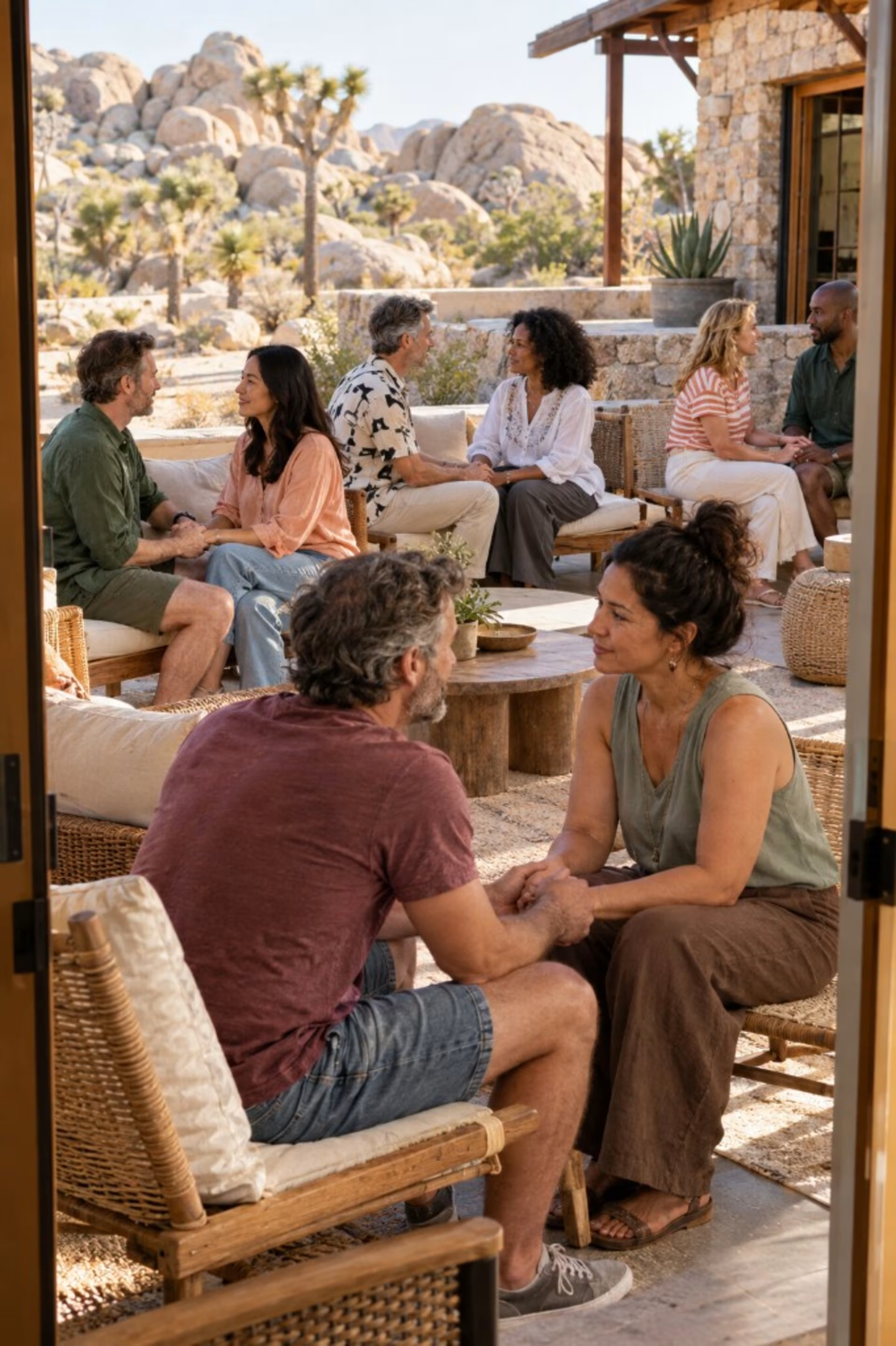
A private retreat is one couple and your therapist, with a schedule built just for you. It gives you complete privacy and lets you focus on what matters most at your own pace. It’s often the best fit for infidelity, high conflict, or sexual concerns.
Group Couples Retreats
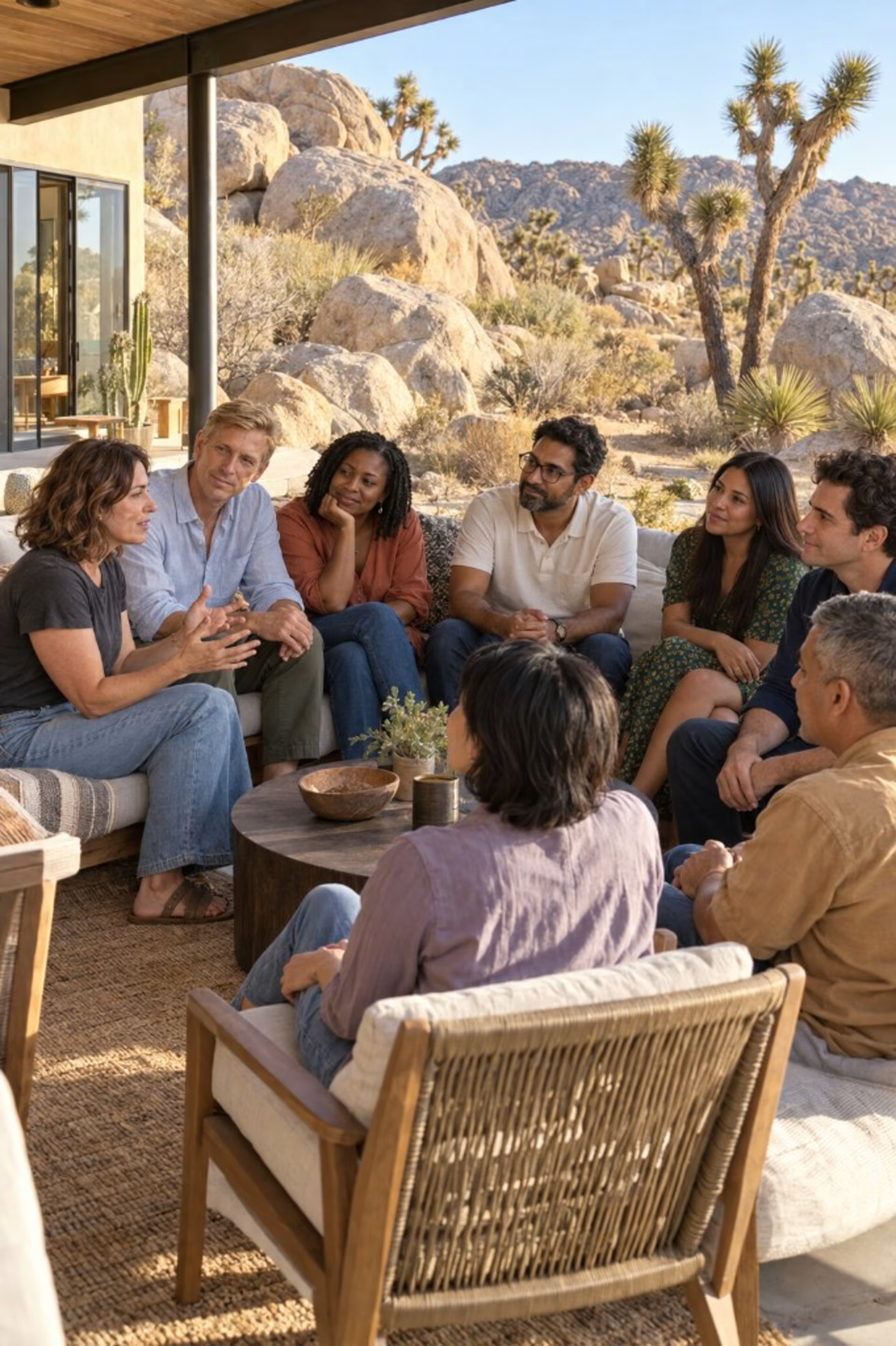
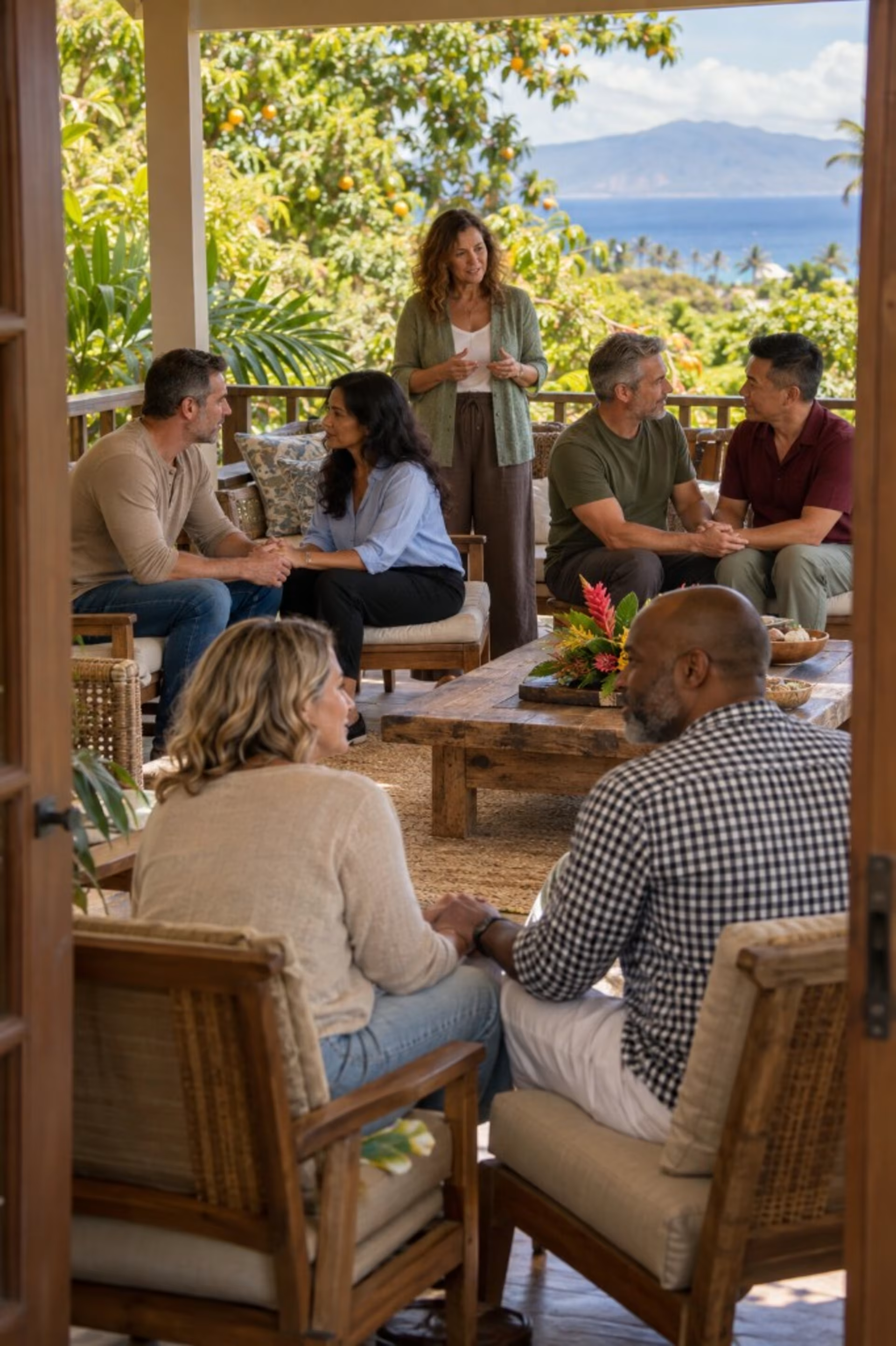
Some couples want to do this with others. Group retreats bring couples together for shared learning plus time on your own with a therapist. Groups can be any size, and we set them up based on fit and safety. Group retreats sometimes run on select dates, so let us know your timing when you apply.
Marriage Intensives and Couples Intensives
Marriage intensives are the most focused version of this work: long days of intensive therapy for couples who want the deepest reset in the shortest time. Couples look for marriage intensives when a betrayal has just come out, when divorce is on the table, or when years of couples therapy haven’t moved things. A marriage intensive retreat can be one day or several. Of all the marriage intensives out there, look for ones led by licensed clinicians, not coaches. Our marriage intensives are built the same way as all our retreats: personal, evidence-based, and with a plan for after.
Intimacy Retreat
An intimacy retreat focuses on sexual intimacy and emotional closeness: mismatched desire, sex that feels like a chore, shame, or distance that crept in over the years. We go at the pace that feels safe for both partners, and the focus is on closeness, not pressure. Nothing is forced. If sex is your main concern, see our sex therapy services too.
Marriage Enrichment Retreat
You don’t have to be in trouble to come. Partners who are doing fine often want time in an intimate setting to focus on their relationship. A marriage enrichment retreat helps a good relationship get stronger, whether you’re newly engaged, newly parents, or empty nesters. Engaged couples can also look at our premarital counseling.
Discernment Retreat
If one of you is unsure about staying and you’re both seeking clarity, a retreat can help you get clarity together, whether you stay or separate. See our discernment counseling.
Couples Meditation Retreat and Spiritual Retreats for Couples
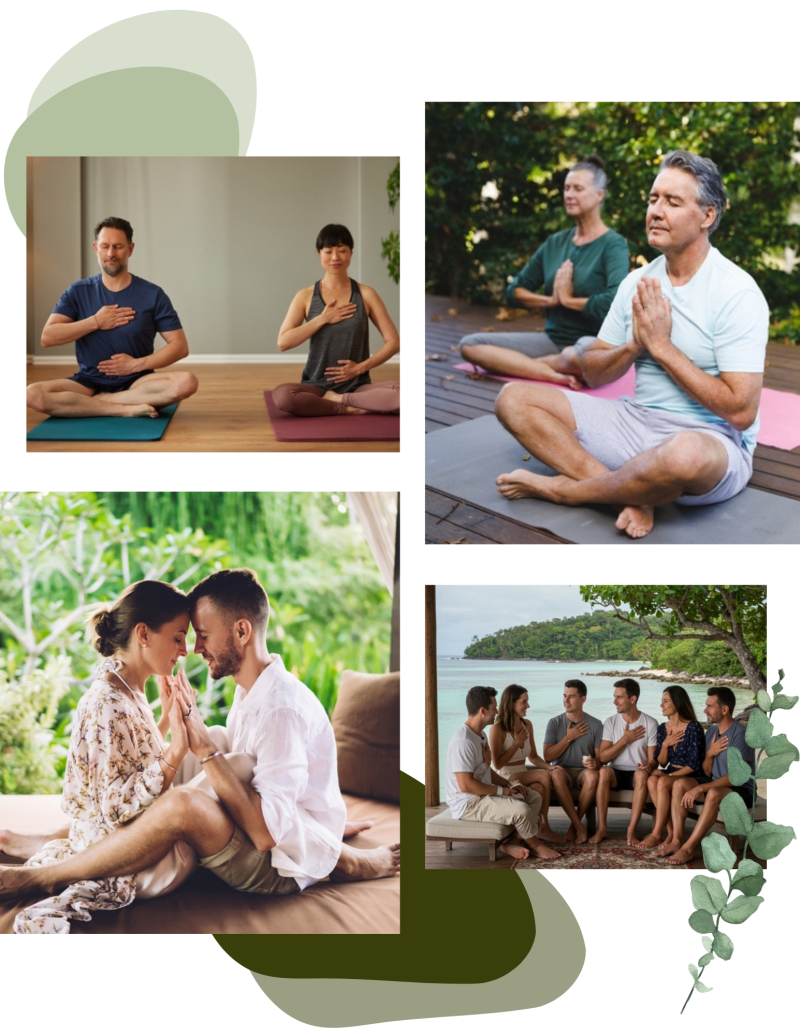
Some couples want mindfulness, meditation, or a spiritual focus as part of the work. A couples meditation retreat with us can add guided meditation and loving-kindness practice to the therapy. Spiritual retreats for couples can include your faith or spiritual practice if that matters to you. Your retreat can be secular or not. It’s up to you.
Couples Wellness Retreats
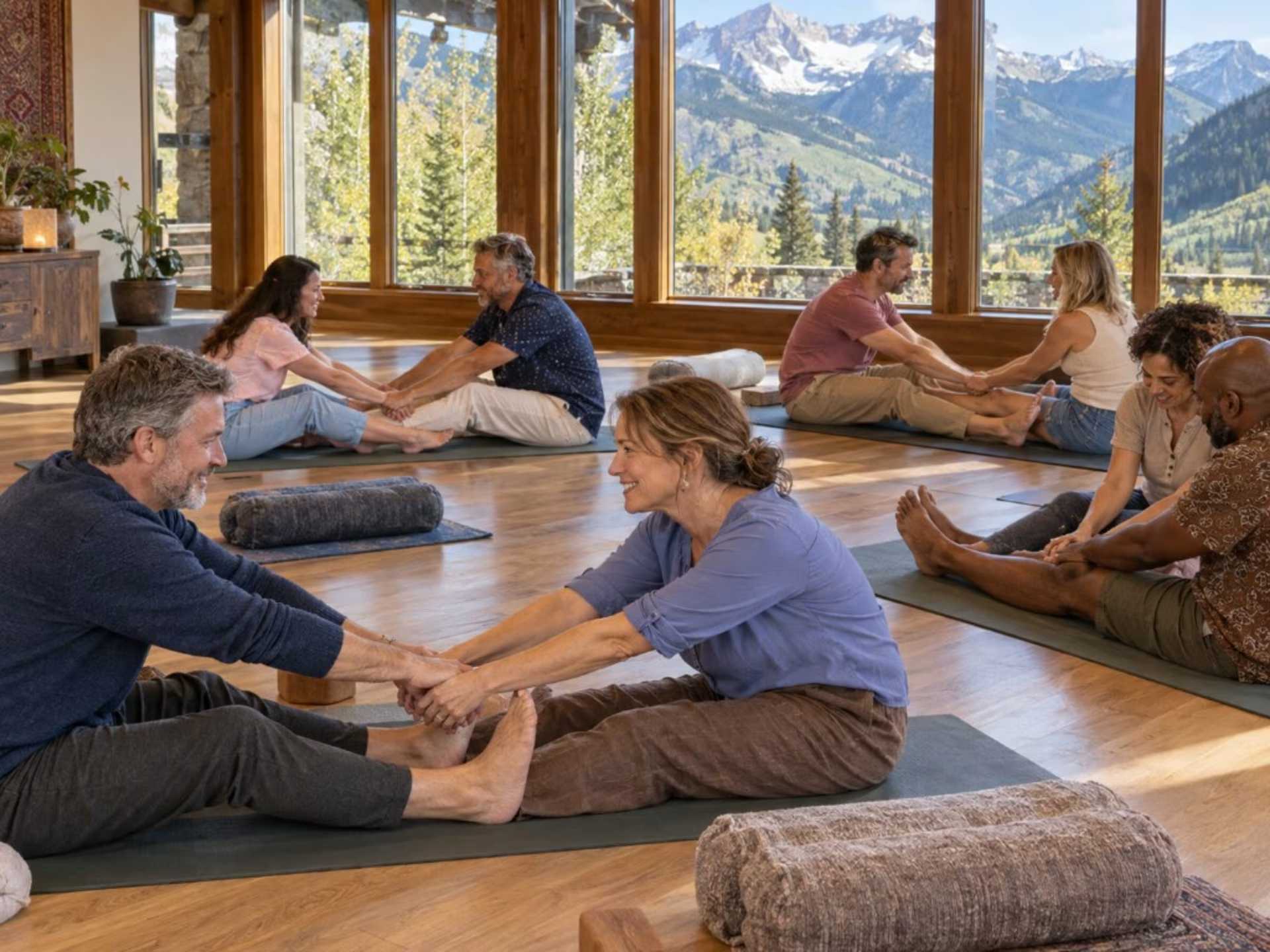
Couples wellness retreats mix therapy with movement, time in nature, and rest. A wellness retreat for couples with us still puts therapy at the center, with wellness activities like hiking trails, yoga, and quiet time to support it. Self care for each of you matters too, so there’s time alone to reset.
Couples Retreat Programs and Packages: What to Expect
Many couples retreat programs sell set couples retreat packages: a weekend, a week, a fixed list of workshops. Couple retreat packages are easy to compare, but they’re built for the average couple, not for you.
We don’t sell fixed packages. Every couples retreat program we run starts with your application and a meeting with us. From there, we build your retreat: the length, the intensity, the setting, the therapeutic approaches, and who’s in the room. Your couples retreat program is yours alone.
Where We Hold Couples Retreats
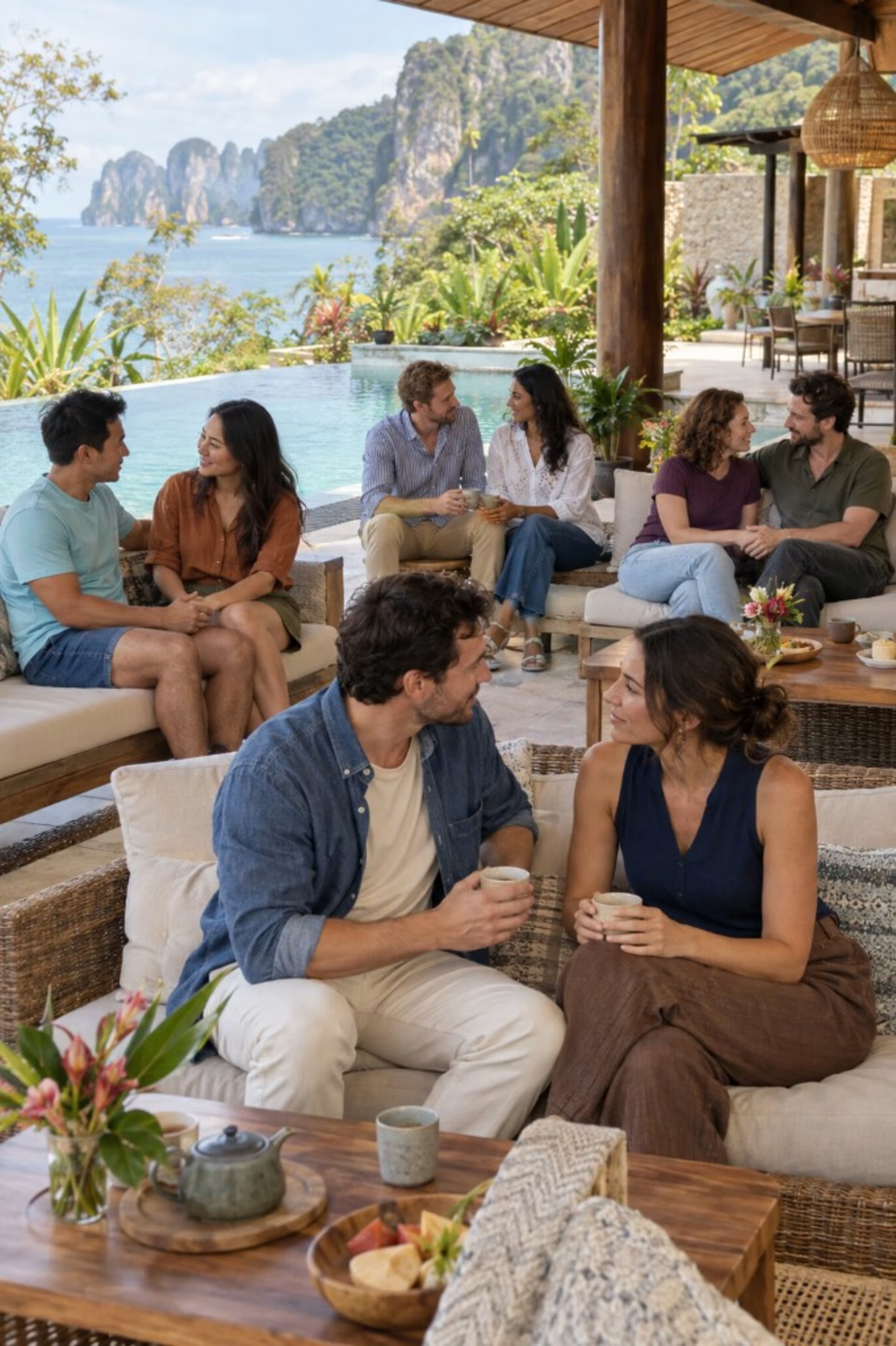
We hold retreats anywhere in the United States or around the world. If you’re looking for a couples retreat, USA or abroad, we can find a place close to home or somewhere you’ve always wanted to go. We look for privacy, access to nature, quiet space for sessions, and cozy accommodations. Some couples want hiking trails outside the door. Some want a quiet retreat center. Some want a city with good food.
Accommodations vary by place: a cabin, a cottage, or a small hotel. We choose accommodations with enough privacy for sessions and rest, and your accommodations are included in the price. We don’t run everything out of one retreat center. We pick the place for you.
The setting matters because it helps you relax and step out of your routines. But the setting supports the work. It doesn’t replace it.
How to Find the Best Couples Retreat
What makes the best couples retreat? It’s not the thread count. The best couples retreats have a few things in common, and none of them is a spa:
- Licensed therapists: A good retreat is led by licensed mental health professionals, not coaches or hosts. Clinical rigor matters when your relationship is on the line.
- A real assessment first: The best retreats talk with you before you arrive to set therapeutic goals and make sure it’s safe and the right fit.
- Evidence-based therapies: Ask which therapeutic approaches they use and why.
- A plan for after: Ask what follow up looks like. Without it, gains fade.
- Clear pricing: You should know what’s included before you commit.
The same goes for the best marriage retreats and the best intensive marriage retreat. Look past the photos and ask who’s leading it. Many of the best couples wellness retreats also combine real therapy with rest, not just spa time.
Couples Retreat 2026: Planning Your Retreat
If you’re thinking about a couples retreat in 2026, start with the application. It’s free, there’s no obligation, and it helps us understand what’s going on. We’ll reach out when we have a retreat and a therapist that fit you, then meet with you to plan the details. Tell us your preferred dates and how flexible you are, especially if you’re interested in a group retreat on select dates.
Rebuilding Intimacy and Connection
Intimacy isn’t only about sex. It’s feeling known, wanted, and safe with your partner. When intimacy fades, partners often focus on the symptom, like less sex or less talking, instead of the pattern underneath. At the retreat, we work on both emotional intimacy and physical intimacy, at a pace that works for both partners.
Small, specific requests rebuild intimacy faster than big promises. Many partners are surprised how quickly intimacy comes back once the fighting calms down and they feel heard. The intimate setting of a retreat, quiet, private, and away from home, makes it easier to explore closeness again. The focus is connection, not performance.
Deeper connection grows from repeated small moments: a hand on the back, a real question at dinner, a repair after a fight. We help you build those moments into your relationship so the connection keeps growing at home.
Who Our Couples Retreats Are For
Couples in Crisis
Couples recovering from infidelity or another betrayal, partners thinking about separation, and couples who escalate fast and feel hopeless. A retreat can be a turning point. It isn’t crisis intervention for danger. If there’s ongoing violence, active addiction, or someone isn’t safe, we’ll help you find the right level of care first.
Couples Who Feel Disconnected
Long-term partners who feel more like roommates, couples stuck in resentment over chores or unmet expectations, and couples whose weekly therapy has stalled. Many are seeking a deeper connection and don’t know how to get it back.
Couples Facing Big Changes
Engaged couples, new parents, empty nesters, and couples dealing with a move, an illness, or a career change who want to face it as a team.
Couples Who Can’t Talk Without Fighting
Couples who want better communication patterns, conflict resolution skills, and a way to have hard conversations without it blowing up. We work on this in an intimate setting where you can practice with support.
What Changes After a Couples Retreat
Many couples notice shifts during the retreat itself: new language for old fights, more empathy, and calmer conflict. Many say it was a transformative experience. Deeper change comes over weeks and months as you keep practicing at home. A retreat is a strong start, not a magic cure.
That’s why we plan for after. Before you leave, you have written agreements, a practice plan, and a clear idea of what to do on hard days. You can keep going with couples therapy, individual therapy, or a support group with the other couples. Some couples come back for a shorter follow-up retreat later. The goal is emotional connection that lasts, and personal growth for each of you, not just a good week.
Your Well Being Comes First
Deep work can bring up hard feelings. We watch your pacing, balance intense sessions with rest, and adjust as we go. Therapy doesn’t replace medical treatment. If either of you takes medication, that stays with your prescriber, and we can help you explore other treatments you might need alongside the retreat. We also think about the people who depend on you. When your relationship feels steadier, your kids, your work, and your loved one all feel it too.
The Bottom Line
If you keep having the same fight and weekly therapy isn’t breaking through, a couples therapy retreat is worth trying. We find what’s underneath your fights, help you practice new patterns together, and give you a plan to keep going at home. It’s not a spa weekend or a romantic getaway. It’s the work that makes the weekends better.