Trauma-informed, phase-informed care
Care prioritizes physical and emotional safety, collaboration, choice, and stabilization before or alongside any trauma-memory work, with pacing adjusted to the person’s needs.
Evidence-informed care, shaped around you
Trauma therapy in San Jose, CA can help you understand what you are experiencing after difficult events and build a steadier sense of safety and choice.
Through secure California telehealth, our team helps San Jose clients find a therapist who can prioritize safety, coping resources, and a pace that fits their needs.
 Your pace.
 Care at your pace
Trauma responses can affect sleep, trust, concentration, relationships, and how safe the present feels. You do not need to have a PTSD diagnosis or tell your story all at once to talk with someone.
Trauma treatment in San Jose starts with what helps you feel grounded now. Your therapist can discuss whether trauma-focused work is appropriate, with consent and collaboration at each step.
Start with a free consultWe help connect San Jose clients with evidence-informed trauma psychotherapy via California telehealth. Your therapist can discuss safety, readiness, and methods with you, rather than treating disclosure or exposure as a requirement on day one.
You can ask about approach, session format, and fees during a free matching conversation. Therapy should make room for your questions and your own goals.
Meet our cliniciansLicensed California therapists · secure sessions · collaborative care
A useful plan begins with what you want to change and what has felt difficult to navigate on your own.
Developing a greater sense of day-to-day safety, grounding, and stability
Responding to intrusive memories, nightmares, or distressing reminders with practical coping skills
Reducing avoidance gradually and collaboratively when it is clinically appropriate
Building emotion-regulation and distress-tolerance skills
Exploring trauma-related beliefs such as guilt, shame, or self-blame without assuming they are present
Supporting sleep, concentration, routines, and daily functioning affected by stress reactions
Practicing boundaries, communication, and trust at a personally chosen pace
Reconnecting with meaningful relationships, roles, and values
Progress looks different for each person. Your therapist can help you define what matters to you.

Trauma-informed care begins with your goals and current safety. Grounding, coping skills, and stabilization may be important before trauma-memory work, especially when daily life already feels overwhelming.
EMDR in San Jose can be accessed through California telehealth when clinically appropriate. A therapist may also consider cognitive processing therapy or trauma-focused CBT. You should have room to ask questions and choose a pace you can work with.
Talk through your optionsYour clinician can explain which methods fit your concerns and why. Not every approach is needed for every person.
Care prioritizes physical and emotional safety, collaboration, choice, and stabilization before or alongside any trauma-memory work, with pacing adjusted to the person’s needs.
A structured CBT approach that can pair coping skills, attention to unhelpful trauma-related interpretations, and carefully paced trauma processing when appropriate.
CPT is a trauma-focused cognitive therapy that helps examine and update unhelpful beliefs connected to a traumatic event and its aftermath.
PE uses planned, gradual, and collaborative work with trauma memories and avoided situations to reduce the hold that reminders can have, after readiness and safety are assessed.
EMDR is a structured trauma-focused approach that uses bilateral stimulation while processing distressing memories and related beliefs, sensations, and emotions.
Grounding, emotion-regulation, distress-tolerance, and behavioral skills can strengthen stability and support daily functioning before or during trauma-focused work.
ACT can support values-guided action and a more flexible relationship with difficult thoughts and feelings, as an adjunct when it aligns with the person’s goals.
Schema Therapy explores long-standing beliefs and coping patterns shaped by early experiences. When appropriate, it can support work on trust, boundaries, and self-criticism alongside trauma-focused care.
Trauma outpatient treatment in San Jose can focus on symptoms affecting daily life while you continue work, school, or family routines. Your plan may begin with grounding and stabilization before trauma-memory work.
Complex trauma treatment in San Jose may address the effects of repeated or early experiences, including difficulties with trust, boundaries, and emotion regulation. We do not assume everyone needs the same treatment sequence.
Explore your optionsWe start with your experience, then shape a plan together.
Build skills for the present when stress reactions feel intense.
Explore ways to respond to nightmares, memories, or distressing cues.
Practice workable ways to move through strong feelings.
Consider meanings attached to the past without rushing or assuming.
Approach boundaries, connection, and trust at your pace.
Decide collaboratively whether trauma-focused treatment is appropriate.
We help connect San Jose clients with evidence-informed trauma psychotherapy via California telehealth. Your therapist can discuss safety, readiness, and methods with you, rather than treating disclosure or exposure as a requirement on day one.
A matching consult can help you ask about fit, format, and what an initial plan might look like—without assuming you already know exactly what you need.
Find a therapist who fitsCare begins with the impact on your actual life, not an abstract checklist.
Sessions can connect insight to manageable changes between meetings.
Secure online appointments for eligible clients located in California.
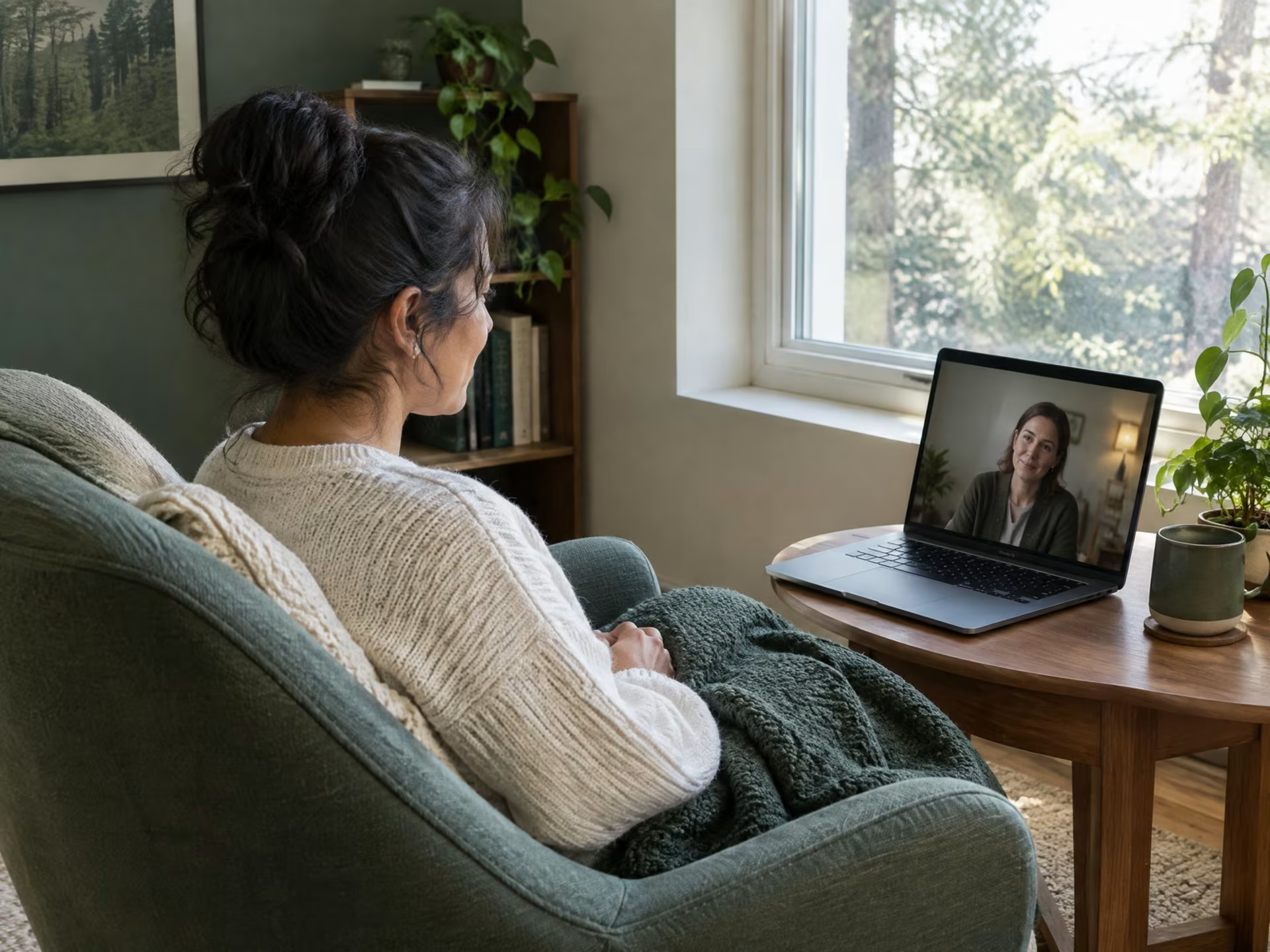
Trauma-informed therapy in San Jose, CA is available by secure video from a private, workable setting. Your therapist can discuss privacy, grounding, and a safety plan before beginning.
West San Jose residents can meet online without traveling to a local clinic. We do not have a San Jose office; in-person appointments, when available, are at our San Francisco and Oakland offices.
Starting does not require you to know the answers already. A first conversation is a chance to ask questions.
Tell our matching team about your concerns and ask about fit, format, and fees.
Explore a therapist whose experience and approach align with your goals.
Discuss what you hope to change and which first steps feel workable.
Meet online and review what helps as the work develops.
Concerns can overlap. Explore related San Jose services, or ask our team which starting point makes sense for you.
Explore San Jose therapyAsk our team about clinical fit, scheduling, and what to expect from your first sessions.
No. Our trauma therapy for San Jose clients is available by secure California telehealth. Our in-person offices are in San Francisco and Oakland.
Bay Area CBT Center offers secure video therapy across California; suitability depends on factors such as privacy, comfort with video, current safety needs, and clinical fit.
No. People can seek support for the effects of traumatic experiences without self-diagnosing; a clinician can discuss concerns, goals, and appropriate next steps.
Early sessions can focus on understanding current concerns, establishing safety and coping resources, and deciding together whether stabilization, skills work, or trauma-focused treatment fits best.
Trauma therapy should respect choice and pacing; some evidence-based approaches involve trauma memories, but the degree and timing of disclosure should be discussed collaboratively rather than rushed.
Online outpatient therapy is not emergency care; call or text 988 for the Suicide & Crisis Lifeline, or call 911 in a life-threatening emergency.
Ask how the therapist approaches safety, consent, stabilization, and trauma-focused work. A free matching conversation is a chance to discuss your preferences without telling your full story.
The terms are often used interchangeably. Ask about the clinician’s license, trauma training, and treatment methods rather than relying on the label. Our service is psychotherapy delivered online, with a plan based on your history, symptoms, preferences, and safety needs.
Our published EMDR service includes intensive-format options. Ask the team to confirm current availability, delivery format, session length, and clinical suitability. We do not have a West San Jose office, and a longer or condensed session format is not appropriate for everyone.
Begin with an assessment of the support you need. If you need PTSD IOP in San Jose, ask whether our fully online program can support your symptoms and safety needs. It offers more contact than weekly therapy and supports trauma-related stress, but it is not inpatient care or a San Jose campus.Explore virtual IOP in San Jose
Ask about experience with early adversity, the age groups served, and how care addresses current symptoms rather than rushing into memory processing. Relevant training, a collaborative pace, and a clear safety plan matter. Our matching team can discuss online therapist fit and whether additional support is needed.

You can ask about trauma-informed therapy and therapist fit without having to explain everything at once. Our team will help you explore a next step.
Connected care across California
Therapy in other locations
We also offer customized support groups and mental health retreat programs to help you go deeper, faster.